
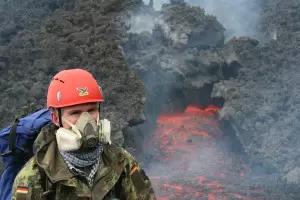
A volcanologist is a specialized geoscientist who studies volcanoes, volcanic activity, and eruption processes. They collect field samples from active and dormant sites, analyze data in laboratories, and work to predict eruptions for public safety. Volcanologists typically need a master's degree for professional roles, though some entry-level technician positions may be available with a bachelor's. Median salary is $99,240 annually.
Ever wondered who climbs active volcanoes for a living? That's a volcanologist—a type of geoscientist who dedicates their career to understanding one of Earth's most potent forces. If you're drawn to fieldwork, don't mind remote locations, and want to contribute to life-saving eruption predictions, this might be your path. Here's what you need to know about becoming a volcanologist.
What Does a Volcanologist Do?
Volcanologists collect data on volcanic activity and analyze it to understand volcanic behavior. They travel to locations with active or dormant volcanoes to gather samples, then examine the data in laboratories. Their work serves three primary purposes: understanding why volcanoes behave the way they do, explaining how volcanic processes work, and predicting future eruptions to protect nearby populations. Some volcanologists also study the geological history of specific volcanoes and may teach classes about volcanic systems and their importance to Earth's geology.
Where Does a Volcanologist Work?
You'll split your time between fieldwork and laboratory analysis. During field assignments, you might travel to exotic or isolated locations where active or dormant volcanoes are found. The work is physical—you'll collect samples and data outdoors, often in challenging terrain and weather conditions. If you're considering this career, be prepared for frequent travel, extended time away from home, strenuous physical activity, and sometimes adverse weather.
Once you've finished collecting samples, you return to your lab to analyze the data and communicate your findings to other scientists. If you work for a university, you'll also spend time teaching. Most volcanologists work full-time and have extended hours during field assignments, which occur regularly throughout the year.
What Is the Average Volcanologist's Salary?
Here's what you can expect to earn: Volcanologists fall under the broader Bureau of Labor Statistics category of geoscientists. As of May 2024, geoscientists earned a median annual salary of $99,240. However, your earnings can vary significantly based on experience, location, and employer type.
| Percentile | Annual Salary | Hourly Wage |
|---|---|---|
| 10th Percentile | $51,890 | $24.95 |
| 25th Percentile | $68,200 | $32.79 |
| 50th Percentile (Median) | $99,240 | $47.71 |
| 75th Percentile | $130,380 | $62.68 |
| 90th Percentile | $201,150 | $96.71 |
Entry-level technician positions with a bachelor's degree typically start around $52,000, while experienced volcanologists at research institutions or government agencies can earn over $130,000 annually. Senior researchers and those with specialized expertise can reach salaries exceeding $200,000.
Volcanologist Jobs & Job Description
Volcanologists work to decipher clues that rocks leave behind about Earth's inner workings and chemistry. While there are exciting aspects to this career, most assignments actually study the remains of dormant or extinct volcanoes rather than active eruptions. While jobs vary significantly by employer, these core tasks appear in every volcanologist position:
Field and Laboratory Responsibilities
- Study the processes and deposits of volcanic eruptions
- Gather data about where and how volcanoes are likely to erupt
- Map the distribution of rocks that make up volcanic systems
- Perform chemical analysis and dating of rock samples
- Measure volcanic seismicity, gravity, and magnetic fields
- Study changes in Earth's shape and correlate with ground deformation at eruption sites
- Analyze volcanic products such as emitted gases and ash
- Plan and conduct field studies in remote locations
- Analyze aerial photographs, drilling logs, and rock samples
- Conduct laboratory tests on field-collected samples
- Create maps and charts using interdisciplinary data sets
Communication and Documentation
- Prepare written scientific reports for publication
- Present findings to stakeholders, colleagues, and interested parties
- Review research conducted by other scientists
- Work with specialized hand tools, heavy equipment, and diagnostic lab instruments.
Senior Volcanologist Responsibilities
Senior volcanologists often have broader responsibilities that include project management and team leadership:
- Supervise the work of technicians and junior researchers
- Foster a positive and safe work environment for field teams
- Provide mentorship to junior team members
- Consult on project scopes, schedules, and budgets
- Navigate federal and international protocols and regulations
- Consult with government agencies about safety practices and volcanic hazards
- Oversee equipment and instruments in field and lab settings
- Ensure quality assurance and appropriate tracking of field data
- Supervise multiple field crews conducting surveys and monitoring
- Ensure safety protocols are followed during field operations
- Communicate project status through reports and presentations
What Is the Job Demand for Volcanologists?
The job outlook for volcanologists mirrors the broader geoscience field. Employment of geoscientists is projected to grow 3% from 2024 to 2034, which is as fast as the average for all occupations. This translates to approximately 800 new positions created over the decade. The current employment base of about 25,100 geoscientists includes volcanologists working in government agencies, research institutions, and consulting firms.
This growth stems from increasing public interest in natural hazard monitoring, environmental protection, and resource management. Approximately 2,500 geoscientist openings are projected each year over the decade, with many resulting from workers transferring to different occupations or retiring.
Volcanologists with strong quantitative skills, experience with data modeling, and expertise in Geographic Information Systems (GIS) will have the best job prospects. Positions with government agencies such as the U.S. Geological Survey and university research programs remain competitive while offering stable career paths.
What Are the Education Requirements to Become a Volcanologist?
You'll need at a minimum a bachelor's degree in geology, geophysics, or earth science. However, here's the reality: a bachelor's degree provides only entry-level knowledge and will limit you to basic field technician positions. Most practicing volcanologists hold a master's or doctoral degree, which allows them to specialize in volcanic processes.
If you're aiming for university positions or seeking academic research funding, you'll want to pursue a Ph.D. While geologists study all types of rocks and Earth processes, volcanology requires specialized knowledge of igneous petrology, geochemistry, and geophysical monitoring techniques that graduate programs provide.
In some regions, volcanologists who work in eruption prediction and public safety roles may need special licensing or certification. Check with your state's geological survey or professional board for specific requirements.
Degrees Related to Volcanology
What Kind of Societies and Professional Organizations Do Volcanologists Have?
Volcanologists and those entering the field can find valuable resources through these professional organizations:
- The Geological Society of America (GSA) unites all geoscientists, including volcanologists, into a community that promotes geological research and encourages communication across related disciplines. They provide annual meetings, continuing education opportunities, numerous publications, and a job center for career development.
- International Association of Volcanology and Chemistry of the Earth's Interior (IAVCEI) brings together people who study volcanology and work in related fields. This organization offers more specialized meetings and continuing education courses than GSA, and provides current news and research developments in volcanology on its website.
Frequently Asked Questions
How long does it take to become a volcanologist?
It typically takes 6-10 years after high school. You'll need a bachelor's degree in geology or geophysics (4 years), followed by a master's degree (2-3 years). Many volcanologists also complete a Ph.D. (4-6 years), especially if they're aiming for research or university positions. You can work as a field technician with just a bachelor's degree, but advancement requires graduate education.
Is being a volcanologist dangerous?
It can be, but modern safety protocols significantly reduce risks. Most volcanologists study dormant or extinct volcanoes rather than active eruptions. When working near active systems, you'll use specialized protective equipment, gas monitors, and evacuation plans. The physical demands of fieldwork—hiking in rough terrain, working in extreme weather—pose greater hazards than volcanic activity itself.
Do volcanologists only study active volcanoes?
No, actually most don't. Most volcanological work involves studying dormant and extinct volcanoes to understand past eruption patterns, magma chemistry, and long-term volcanic behavior. This research helps predict future activity at currently dormant systems. Only a small percentage of volcanologists regularly monitor active eruptions.
What's the difference between a volcanologist and a geologist?
Volcanologists are specialized geologists. While geologists study all types of rocks, minerals, and Earth processes, volcanologists focus specifically on volcanic systems, igneous processes, and eruption mechanisms. Think of it like the difference between a general physician and a cardiologist—both are doctors, but one specializes in a specific system.
Can you specialize in specific types of volcanic activity?
Yes. Some volcanologists focus on eruption prediction and hazard assessment, while others specialize in magma geochemistry, volcanic gas emissions, or volcanic seismology. You might study a specific volcano type (shield volcanoes vs. stratovolcanoes) or a particular geographic region. Your specialization usually develops during graduate school based on your research interests and your advisor's expertise.
Key Takeaways
- Specialized Field: Volcanologists are geoscientists who focus on volcanic processes and require advanced degrees and extensive field experience in challenging environments.
- Education Requirements: While you can start with a bachelor's degree for entry-level technician roles, most professional positions require a master's degree, and university or research roles typically need a Ph.D. in geology, geophysics, or earth science with a specialization in volcanology.
- Competitive Compensation: Median salaries around $99,240 annually, with experienced professionals earning over $130,000. Entry-level positions start around $52,000, with significant growth potential reaching $200,000+ for senior researchers.
- Diverse Work Environment: You'll split time between exciting field assignments at volcanic sites worldwide and detailed laboratory analysis. Expect frequent travel, physical demands, and extended time in remote locations.
- Steady Growth: Job growth of 3% through 2034 with approximately 800 new positions created, driven by increasing needs for natural hazard monitoring and environmental protection. Best opportunities for those with strong quantitative and GIS skills.


Ready to pursue a career in volcanology? Start by exploring accredited geology and geophysics programs that offer opportunities for volcanology research and field experience.
2024 US Bureau of Labor Statistics salary and job growth figures for geoscientists reflect national data, not school-specific information. Conditions in your area may vary. Data accessed January 2026.