

Pollution prevention technicians—classified under the broader Bureau of Labor Statistics category of environmental science and protection technicians—monitor and assess environmental hazards including air, water, noise, and waste pollution to protect public health and ecosystems. These professionals earn a median salary of $49,490 annually and typically need a bachelor's degree in environmental science, chemistry, or a related field. Employment is projected to grow 4% through 2034, creating approximately 1,600 new positions nationwide.
If you're concerned about environmental protection and want a career that prevents pollution before it happens, becoming a pollution prevention technician is a path worth exploring. These professionals work in environmental health and safety, examining how organizations handle hazardous materials and assessing landscapes threatened by contamination. Unlike cleanup specialists who respond after damage occurs, pollution prevention technicians focus on proactive measures—identifying risks, recommending safeguards, and ensuring compliance with environmental regulations.
What Does a Pollution Prevention Technician Do?
The world of environmental health and safety professionals encompasses many specialized roles. While environmental health and safety trainers educate workers on hazardous materials protocols and environmental health and safety managers oversee organizational compliance, pollution prevention technicians serve as on-the-ground investigators and assessors. They work alongside health and safety engineers who design protective systems and environmental health specialists who evaluate potential environmental damage.
Pollution prevention technicians fulfill two primary functions within environmental protection. First, they examine the premises and storage methods of organizations that use potentially hazardous materials. This includes facilities handling pesticides, chemical fertilizers, industrial cleaning products, and any substances that could cause environmental pollution if leaked or spilled.
During these inspections, technicians evaluate storage containers, handling procedures, containment systems, and emergency response protocols. They compile detailed reports documenting their findings and provide decision-makers with specific recommendations for improving safety practices.
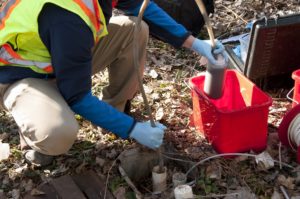
Their second primary responsibility is to enter areas at risk of pollution to assess potential or existing environmental damage. These field assessments require technicians to collect air and water samples to determine threats to wildlife, ecosystems, and public health.
They analyze contamination levels, document findings with photographic evidence, and create comprehensive assessment reports. Based on their field data, they make recommendations to individuals, businesses, and local organizations about protecting vulnerable landscapes and water sources.
Many industrialized countries now recognize noise pollution as a significant environmental concern, complete with specific guidelines and legislation. Pollution prevention technicians increasingly monitor sound levels in industrial and urban environments to ensure compliance with noise ordinances and protect community health.
Where Does a Pollution Prevention Technician Work?
Pollution prevention technicians work across all three major sectors—public, private, and nonprofit—and are employed across various industries. Understanding where these professionals work helps illustrate the diverse career paths available in this field.
| Employment Sector | Percentage of Workforce | Primary Responsibilities | Typical Work Environment |
|---|---|---|---|
| State & Local Government | 18% | Inspect private businesses, assess threatened landscapes, enforce environmental regulations, and report violations to decision-makers | Office-based with extensive field visits, travel to various sites within the jurisdiction |
| Manufacturing | 16% | Ensure daily compliance with safety requirements; conduct internal training; monitor production processes; and maintain safety documentation. | On-site at manufacturing facilities, factory floors, production areas |
| Federal Government | 11% | Oversee large-scale environmental protection programs, investigate federal land contamination, and develop national standards. | Federal facilities, national parks, military installations, research laboratories |
| Professional & Technical Consulting | 10% | Provide third-party assessments, prepare reports for clients or regulatory agencies, and offer expert guidance on prevention measures. | Client sites vary widely, and there is significant travel between projects |
| Construction | 7% | Monitor hazardous material storage on job sites, ensure proper handling of construction chemicals, and maintain compliance records. | Active construction sites, outdoor conditions, and changing locations |
State and local government employment offers the opportunity to protect entire communities by visiting multiple sites and enforcing environmental standards. Technicians in this sector report findings to government decision-makers who can impose sanctions or require corrective action from businesses.
Manufacturing positions involve working directly for companies to maintain ongoing compliance. These technicians become intimately familiar with their organization's processes and often provide direct training and mentoring to production staff. They're responsible for daily monitoring and producing health and safety reports that demonstrate regulatory compliance.
Third-party consulting work provides variety and independence. Consulting technicians are external experts hired to provide objective advice and guidance on storage, use, and prevention measures. They may produce reports for organizations seeking to improve their practices or for government agencies investigating potential violations.
Construction sites use and store vast quantities of potentially hazardous materials—from diesel fuel and industrial adhesives to specialized coatings and treatment chemicals. These materials require regular monitoring, proper storage protocols, and meticulous documentation to prevent soil and water contamination.
A typical workday varies significantly by sector and assignment. Government technicians might spend mornings reviewing inspection schedules and regulations in an office, then afternoons conducting site visits and collecting samples.
Manufacturing technicians often walk the production floor daily, checking storage areas, reviewing safety logs, and meeting with supervisors to discuss potential concerns. Consulting technicians travel between client sites, sometimes spending entire weeks on location for comprehensive assessments.
The work environment can be challenging. Technicians may work in very hot or very cold outdoor settings, in industrial facilities with loud machinery, or in confined spaces to inspect storage tanks. The position requires physical stamina for walking extensive distances, climbing ladders or stairs, and carrying sampling equipment. Personal protective equipment—including respirators, protective suits, safety goggles, and gloves—is standard gear for many inspections.
What Is the Average Pollution Prevention Technician Salary?
Pollution prevention technicians, classified under the broader Bureau of Labor Statistics category of environmental science and protection technicians, earned a median salary of $49,490 per year as of May 2024. This translates to approximately $23.79 per hour for full-time work. Like most careers, compensation varies based on experience, education, specialization, and geographic location.
Entry-level technicians typically start in the lower quartile of the pay range, earning approximately $32,000 to $38,000 annually as they build experience and industry knowledge. With 5-10 years of experience and possibly additional certifications, mid-career professionals often earn between $45,000 and $55,000.
The top 10% of environmental science and protection technicians earn more than $80,530 annually, usually in specialized roles, supervisory positions, or high-cost-of-living metropolitan areas.
Geographic location significantly impacts earning potential. Technicians working in major metropolitan areas or regions with extensive industrial activity generally earn higher salaries to reflect the cost of living and the demand for environmental compliance. Federal government positions often include competitive benefits packages alongside base salary, including health insurance, retirement contributions, and job security. Private consulting firms may offer performance bonuses tied to project completion or client acquisition.
Essential Skills & Competencies
Success as a pollution prevention technician requires both technical expertise and interpersonal capabilities. The most effective professionals develop a diverse skill set that combines scientific knowledge with practical problem-solving abilities.
Technical skills form the foundation of the role. Technicians must understand sampling methodologies for air, water, soil, and noise measurements. They operate specialized instrumentation, including gas detectors, water-quality meters, sound-level meters, and sample-collection devices.
Data analysis capabilities are essential—technicians interpret laboratory results, identify contamination patterns, and determine whether readings exceed regulatory thresholds. Computer proficiency matters significantly, as modern technicians use databases to track inspections, spreadsheets to analyze trends, and specialized software to generate reports and manage compliance documentation.
Attention to detail can mean the difference between catching a potential hazard and missing a critical safety issue. Technicians must notice subtle changes in storage conditions, recognize when safety equipment hasn't been adequately maintained, and ensure their own sample collection follows precise protocols. A single error in sample labeling or chain-of-custody documentation can invalidate an entire inspection.
Communication abilities enable technicians to translate technical findings into actionable recommendations. They write clear inspection reports that non-technical managers can understand and use for decision-making. They explain violations to facility operators who may feel defensive about criticism.
They collaborate with environmental inspectors and other regulatory professionals to coordinate enforcement actions. The ability to communicate complex ecological concepts in an accessible language helps technicians educate workers about proper handling procedures.
Physical capabilities and safety awareness protect technicians in challenging work environments. The job requires stamina for long days of walking through industrial facilities, climbing to inspect elevated storage tanks, and working in uncomfortable protective equipment.
Technicians must understand the requirements for personal protective equipment and correctly use respirators, chemical-resistant gloves, and protective clothing. They assess safety hazards before entering potentially dangerous areas and know when to request additional support or specialized equipment.
Problem-solving and critical thinking help technicians evaluate complex situations and develop practical solutions. When they encounter a storage method that technically meets regulations but still poses environmental risks, they must think creatively about alternative approaches.
When field measurements show unexpected contamination, they determine what additional testing might reveal the source. This analytical mindset distinguishes technicians who simply complete checklists from those who genuinely prevent pollution.
These competencies develop through a combination of formal education, hands-on training, and work experience. Most entry-level positions provide extensive on-the-job training, where new technicians shadow experienced colleagues and gradually take on more complex assessments as their skills grow.
Pollution Prevention Technician Jobs & Job Description
A pollution prevention technician's daily responsibilities center on monitoring and assessing variables that contribute to environmental pollution. The position requires a bachelor's degree in environmental studies, environmental science, chemistry, biology, or a related field as a minimum qualification. Some employers accept associate degrees combined with extensive relevant experience, though advancement opportunities typically require a four-year degree.
Computer competency extends beyond basic office software. Technicians use specialized database programs to track hazardous materials, environmental monitoring software to analyze sample data, and compliance management systems to document inspections. They generate digital reports incorporating data tables, photographs, and site diagrams. Geographic Information Systems (GIS) knowledge can be valuable for mapping contamination patterns or planning inspection routes.
The work environment demands adaptability to challenging physical conditions. Technicians must wear personal protective equipment correctly and understand how different types of protection guard against specific hazards. They work in extreme temperatures—inspecting outdoor storage facilities during summer heat or winter cold, entering refrigerated warehouses, or assessing industrial furnace areas.
Some positions require working in confined spaces, such as underground storage tanks or crawl spaces beneath buildings. The role involves maintaining physical positions that can be strenuous, such as crouching to collect low-level air samples or reaching overhead to inspect ventilation systems.
Documentation forms a crucial part of the technical work. Technicians produce and submit dangerous waste reports in accordance with local, state, and federal regulations. They organize the pickup and delivery of various waste types to ensure proper disposal and optimal pollution prevention.
Accurate record-keeping includes maintaining data logs for solid waste disposal volumes, chemical usage inventories, equipment maintenance schedules (like filter change-outs), hazardous waste disposal manifests, noise level measurements, and air particulate readings. These records serve multiple purposes—demonstrating regulatory compliance, tracking trends over time, and providing evidence in enforcement actions.
Regular inspections and audits measure levels of possible pollutants across various media. Technicians conduct these assessments in factories, construction sites, agricultural facilities, and at field locations that require travel to remote areas. They must accurately produce samples using specialized instrumentation, following strict protocols to ensure measurements are legally defensible.
Sample collection might involve positioning air monitoring equipment at specific heights and distances, collecting water samples at designated depths, or using sterile techniques to prevent contamination of soil samples.
Continuing education keeps technicians up to date on evolving pollution prevention topics. They participate in training programs covering new regulations, emerging contaminants, updated sampling methodologies, and innovative pollution prevention technologies. Professional development might include certifications in hazardous materials management, industrial hygiene, or specific analytical techniques.
Advanced positions as pollution prevention or environmental compliance managers require specialized training and a deeper academic background in an industry or pollution-prevention specialty.
Managers oversee multiple operations, including equipment maintenance schedules, coordination of chemical and waste shipments, stormwater system upkeep, noise-level monitoring programs, and management of air filtration systems. They develop working policies and procedures that address chemical usage standards, stormwater management protocols, and waste disposal systems.
Management roles require close collaboration with environmental health and safety personnel to ensure integrated policies provide optimal pollution control across all organizational functions. Strong interpersonal skills enable managers to communicate effectively with technician teams, facility employees, and upper management. They must work independently while managing personnel, balancing administrative responsibilities with maintaining technical expertise.
Managers perform pollution risk analyses at work sites, producing comprehensive reports with supporting data logs that demonstrate due diligence and regulatory compliance. Senior professionals acquire extensive knowledge of Environmental Protection Agency regulations and local, state, and federal environmental laws.
They stay current with regulatory changes, interpret new requirements for their organizations, and sometimes participate in regulatory comment periods or industry working groups. They develop and conduct routine meetings with technical personnel to collaborate on reports, discuss emerging issues, and review safety requirements and best practices.
What Is the Job Demand for Pollution Prevention Technicians?
Employment for pollution prevention technicians and other environmental science and protection technicians is projected to grow 4% between 2024 and 2034, matching the average growth rate for all occupations. This growth will create approximately 1,600 new positions over the decade.
Several factors contribute to the steady demand for these professionals. Stricter environmental regulations at the federal, state, and local levels create an ongoing need for compliance monitoring and documentation. As governments establish new standards for emerging contaminants—such as PFAS chemicals in water supplies or microplastics in ecosystems—organizations need qualified technicians to conduct required testing and reporting.
Climate change awareness has heightened focus on pollution prevention across all sectors. Companies increasingly recognize that preventing pollution is more cost-effective than cleanup, creating positions for technicians who can identify risks before they become expensive environmental problems. Corporate sustainability initiatives drive demand for environmental monitoring as businesses seek to document their environmental performance and meet stakeholder expectations.
Geographic variation in job opportunities reflects regional industrial concentrations. Areas with significant manufacturing, chemical production, oil and gas operations, or large-scale construction typically offer more positions. States with particularly rigorous environmental standards sometimes employ more government technicians to ensure compliance. However, even regions without heavy industry need technicians to monitor municipal water systems, assess agricultural impacts, and protect natural areas.
Job security in this field tends to be stable. Environmental compliance isn't optional—organizations face significant penalties for violations, making pollution prevention positions essential rather than discretionary. Government technician positions offer particular stability through civil service protections and consistent funding for environmental protection programs.
Career longevity benefits from the broad applicability of skills. Technicians who develop expertise in sampling methodologies, data analysis, and regulatory compliance can transition between industries or sectors throughout their careers. A technician might start in manufacturing, move to consulting, and eventually work for a government regulatory agency, with each transition building on core competencies while providing new challenges.
What Are the Education Requirements to Become a Pollution Prevention Technician?
Educational pathways for pollution prevention technicians begin with strong preparation in science and mathematics during high school. Students should focus on physics, chemistry, and biology to build the scientific foundation needed for understanding pollution processes and environmental impacts. Mathematics, particularly calculus, provides essential skills for data analysis and statistical interpretation.
| Education Level | Typical Timeline | Recommended Focus Areas | Career Outcomes |
|---|---|---|---|
| Bachelor's Degree (Minimum Required) | 4 years | Environmental Science, Environmental Health & Safety, Chemistry, Biology; minor or electives in industrial hygiene or pollution prevention | Entry-level technician positions, field sampling roles, and compliance monitoring positions |
| Master's Degree (Competitive Advantage) | An additional 2 years | Industrial Hygiene, Environmental Engineering, Public Health, specialized toxicology, or risk assessment | Senior technician roles, specialized consulting, and faster advancement to management positions |
| Professional Certifications | Varies (6 months - 2 years) | Hazardous Materials Management, OSHA Safety Certifications, state-specific environmental certifications | Enhanced credibility, meeting state requirements, and specialization in niche areas |
| Doctoral Degree (Optional) | An additional 4-6 years beyond a Master's | Environmental Science, Toxicology, Public Health, Environmental Policy | Academic research positions, policy development roles, and senior government advisory positions |
A bachelor's degree represents the minimum requirement for most pollution prevention technician positions. The ideal undergraduate program combines environmental science coursework with practical laboratory and field experience. Students benefit from programs that offer hands-on training in sampling techniques, instrument use, and data analysis.
Internships or cooperative education experiences with environmental consulting firms, government agencies, or industrial facilities provide valuable real-world exposure and often lead to job offers upon graduation.
Course selection matters significantly. While majoring in environmental science provides comprehensive preparation, students should ensure their program includes substantial coursework in chemistry and biology. Understanding chemical reactions helps technicians predict how pollutants behave in different environmental media. Biology knowledge enables assessment of ecological impacts and understanding of how contaminants move through food chains. Statistics courses prove invaluable for analyzing and monitoring data and identifying significant trends.
Some students pursue degrees in chemistry or biology and add environmental science as a minor or through elective coursework. This approach works well, particularly for those interested in specialized areas like water chemistry or ecological risk assessment. Regardless of major, coursework, or training in health and safety, industrial hygiene, or occupational safety significantly improves employment prospects.
Master's degrees aren't mandatory for most technician roles, but they can provide a competitive advantage in areas with many qualified candidates. A master's in industrial hygiene, environmental engineering, or public health positions graduates for advanced technical work, consulting roles, or faster promotion to management positions.
These graduate programs typically include specialized courses in toxicology, risk assessment, environmental regulations, and advanced analytical methods.
Professional certifications demonstrate commitment to the field and can fulfill state requirements for practice. Some states require specific environmental certifications before technicians can conduct certain types of sampling or inspections. Even where not mandated, certifications in hazardous materials management (such as HAZWOPER training), OSHA safety standards, or specialized sampling techniques enhance employability and can justify higher starting salaries.
Professional organizations offer various certification programs that combine coursework, examinations, and experience requirements.
Doctoral degrees suit individuals interested in academic careers, research positions, or high-level policy development work. PhD programs focus on original research and typically lead to careers in universities, government research laboratories, or senior advisory positions rather than technician roles.
The practical, hands-on nature of pollution prevention technician work doesn't require doctoral-level training, though some senior consulting positions or specialized research roles might value this credential.
Continuing education remains vital throughout a technician's career. Regulations change, new contaminants emerge, and analytical methods improve. Professional development through workshops, conferences, and additional certifications keeps technicians current and demonstrates ongoing competency to employers and regulatory agencies.
Pollution Prevention - Related Degrees
Career Advancement Opportunities
Pollution prevention technicians can advance through several career pathways, with progression typically following a combination of experience, additional education, and specialization development. Understanding these pathways helps new technicians set realistic goals and plan their professional development.
The typical progression begins with entry-level technician positions where new graduates spend 2-4 years building fundamental skills. During this phase, technicians learn specific sampling protocols, become familiar with relevant regulations, and develop proficiency with monitoring equipment. They work underthe supervision of senior technicians or managers, gradually taking on more complex assignments.
This period focuses on mastering technical competencies and understanding how theoretical knowledge from education applies to real-world situations.
After establishing core competencies, technicians advance to senior technician roles around years 5-7 of their career. Senior technicians take primary responsibility for complex assessments, mentor junior staff, and may specialize in specific types of pollution monitoring or industries.
They often conduct more independent work, managing their own inspection schedules and making preliminary recommendations without constant oversight. Senior technicians typically earn 15-25% more than entry-level positions and gain exposure to managerial responsibilities through project leadership.
Supervisory and management positions typically become accessible after 7-10 years of experience, especially for those who pursue master's degrees or professional certifications. Pollution prevention managers oversee teams of technicians, manage departmental budgets, develop organizational policies, and interact directly with senior executives.
They balance technical expertise with administrative responsibilities like hiring, training program development, and strategic planning. The transition to management often requires developing new skill sets in personnel management, budget administration, and strategic communication.
Specialization pathways allow technicians to become recognized experts in specific areas. Some focus on particular pollution media (air quality, water contamination, noise pollution), while others specialize in particular industries (petroleum, manufacturing, agriculture) or regulatory programs (stormwater management, hazardous waste).
Specialists command higher salaries due to their deep expertise and may work as independent consultants, expert witnesses in legal cases, or technical advisors to regulatory agencies.
Consulting careers attract experienced technicians seeking variety and independence. After 5-10 years in industry or government positions, some technicians transition to consulting firms or establish independent practices. Consultants work with multiple clients across diverse projects, though this path requires strong business development skills alongside technical expertise.
Successful consultants often earn significantly more than salaried positions but face income variability and the responsibility of generating their own work.
Regulatory and policy positions in government agencies appeal to those interested in shaping environmental protection at systemic levels. Experienced technicians move into roles developing new regulations, reviewing permit applications, or managing state or federal environmental programs.
These positions leverage technical knowledge in policy contexts and often offer excellent job security and benefits, though salary potential may be lower than in private-sector management roles.
Geographic mobility can accelerate advancement. Technicians willing to relocate for promotions have access to more opportunities, particularly for management positions. However, many find satisfying long-term careers within a single organization or region by systematically building expertise and taking on expanding responsibilities.
Related Environmental Careers
Pollution prevention technicians share common ground with several related environmental careers. Understanding these adjacent roles helps in career planning, identifying transfer opportunities, or exploring alternative paths that leverage similar skills and interests.
Environmental Inspectors focus specifically on regulatory compliance enforcement. While pollution prevention technicians often work for the organizations they monitor, environmental inspectors typically work for government agencies and have the authority to issue violations and citations.
Inspectors need similar technical knowledge but require a stronger understanding of legal procedures and enforcement protocols. This role suits those interested in regulatory authority and ensuring accountability.
Hazardous Materials Technicians handle the removal and disposal of dangerous substances rather than preventing their release. While pollution prevention technicians identify risks before contamination occurs, hazmat technicians respond to spills, clean up contaminated sites, and safely transport dangerous materials.
This parallel career often pays similarly but involves more direct physical risk and requires different certifications (particularly HAZWOPER training).
Environmental Health & Safety Managers oversee comprehensive programs protecting both workers and the environment. This management-level position integrates pollution prevention with occupational safety, requiring a broader organizational perspective than technician roles.
EHS managers coordinate between multiple departments, develop company-wide policies, and report to executive leadership. Pollution prevention technicians often transition into EHS management after gaining experience.
Environmental Compliance Managers ensure organizations meet all applicable environmental regulations. They manage permits, coordinate reporting requirements, and serve as primary contacts with regulatory agencies. This role emphasizes regulatory expertise and administrative capabilities more than hands-on technical work.
Experienced technicians with strong documentation skills and regulatory knowledge often move into compliance management.
Water Quality Technicians specialize in monitoring aquatic environments. They collect and analyze water samples, monitor treatment plant operations, and assess impacts on marine ecosystems. This specialized path suits those particularly interested in water resources and willing to develop deep expertise in water chemistry and aquatic biology.
Air Quality Analysts focus exclusively on atmospheric pollution, operating sophisticated air monitoring equipment and modeling pollutant dispersion. This specialization requires strong mathematics and computer modeling skills. Air quality work often centers on major metropolitan areas dealing with urban air pollution or non-site areas near extensive industrial facilities.
Each of these related careers shares the core mission of environmental protection while emphasizing different aspects of that work. Technicians can transition between these roles throughout their careers, with each move building on established competencies while developing new expertise. The environmental field rewards professionals who understand how different specialties interconnect to create comprehensive protection systems.
What Kind Of Societies and Professional Organizations Do Pollution Prevention Technicians Have?
Professional organizations provide pollution prevention technicians with continuing education, networking opportunities, certification programs, and resources for staying current in this evolving field. Active membership in relevant organizations demonstrates professional commitment and provides access to resources for career advancement.
National Environmental Safety and Health Training Association (NESHTA) is the primary body responsible for environmental health and safety training in the United States. They publish technical documents and guidance materials for environmental professionals and maintain an archive of training resources.
NESHTA membership provides access to specialized training programs, certification courses, and a network of safety professionals across industries. Their conferences bring together practitioners to share best practices and learn about emerging regulations.
Occupational Safety and Health Administration (OSHA) isn't a membership organization, but it provides essential resources for pollution prevention technicians. OSHA's website offers comprehensive safety and health data, training materials, and regulatory guidance that shape industry practices and legal requirements.
Their training programs—particularly HAZWOPER (Hazardous Waste Operations and Emergency Response) certifications—are often required for pollution prevention work. OSHA's regulations influence workplace safety standards, including environmental protection measures and pollution prevention protocols.
American Industrial Hygiene Association (AIHA) represents industrial hygiene and occupational health professionals, including many pollution prevention technicians. AIHA offers professional development courses, technical publications, and certification support for the Certified Industrial Hygienist (CIH) credential.
Their local chapters provide networking and educational events in communities across the country. AIHA's scientific journals publish research on exposure assessment methods, pollution control technologies, and risk management strategies directly applicable to pollution prevention work.
National Association for Environmental Management (NAEM) focuses specifically on corporate environmental, health, safety, and sustainability professionals. NAEM provides benchmarking data, peer networking opportunities, and guidance on emerging environmental management trends.
While more oriented toward managers than technicians, NAEM membership helps technicians understand strategic environmental management and prepare for advancement into leadership roles.
EPA Pollution Prevention Program offers technical assistance, grant programs, and informational resources directly from the federal regulatory agency. While not a membership organization, the EPA's P2 program provides case studies, pollution prevention techniques, and sector-specific guidance that technicians use in daily work.
Their resources help technicians stay up to date on EPA priorities and recommended practices.
Air & Waste Management Association (A&WMA) serves environmental professionals focused on air quality, waste management, and ecological sustainability. A&WMA offers technical conferences, professional development courses, and publications covering the latest developments in pollution control technologies and regulations.
Their certification programs include environmental manager credentials that enhance professional standing.
Participation in professional organizations provides multiple benefits beyond technical knowledge. Members can access job boards featuring positions that are often not publicly advertised. They build professional networks that can lead to career opportunities, mentorship, and collaborative problem-solving.
Many employers support membership fees and conference attendance as professional development investments, recognizing that current knowledge directly improves organizational environmental performance.
Frequently Asked Questions
What certifications do pollution prevention technicians need?
Certification requirements vary by state and employer. HAZWOPER (Hazardous Waste Operations and Emergency Response) training is commonly required for technicians who handle hazardous materials or conduct site assessments. Some states require specific environmental certifications before technicians can perform certain inspections or collect regulatory samples. Professional certifications from organizations such as the American Industrial Hygiene Association (Certified Industrial Hygienist) or the Institute of Hazardous Materials Management enhance credibility and career prospects. However, they're typically optional rather than mandatory.
How much travel is required in this career?
Travel requirements depend heavily on the specific position and employment sector. Government technicians may travel extensively within their jurisdiction, visiting multiple sites weekly but typically returning home each evening. Manufacturing technicians usually work at a single facility with minimal travel. Consulting technicians often travel the most, potentially spending several days per week at client sites and sometimes requiring overnight stays. Construction site technicians move between projects as sites change locations. During the job search, candidates should clarify travel expectations, as positions range from 0% travel to 75% or more.
Can pollution prevention technicians work remotely?
The hands-on nature of pollution prevention work limits remote opportunities. Site inspections, sample collection, and equipment monitoring require physical presence. However, some aspects of the role—report writing, data analysis, regulatory research, and training program development—can be completed remotely. Hybrid arrangements have become more common, allowing technicians to work from home on administrative tasks while conducting fieldwork on scheduled days. Fully remote positions are rare and typically limited to specialized consulting roles focused on regulatory compliance documentation or policy development rather than field assessment.
What's the difference between a pollution prevention technician and an environmental specialist?
The terms are often used interchangeably, and job duties frequently overlap. Generally, "technician" positions emphasize hands-on sampling, testing, and field assessment work. "Specialist" or "scientist" roles typically involve more data analysis, report interpretation, and policy recommendation work, often requiring advanced degrees. Specialists may supervise technicians, develop sampling protocols rather than executing them, and engage more extensively in regulatory interpretation. However, these distinctions aren't standardized across all employers, so reviewing specific job descriptions matters more than relying on titles alone.
Is this career recession-proof?
Pollution prevention technician positions show good stability through economic cycles. Environmental compliance isn't optional—organizations face legal penalties for violations regardless of economic conditions, making these positions more essential than discretionary. Government positions offer particular security through civil service protections and continued environmental regulation enforcement. However, no career is completely recession-proof. During severe economic downturns, some manufacturing facilities may close, and consulting work can slow as discretionary environmental assessments get postponed. Overall, the field demonstrates above-average job security compared to many other occupations, particularly for government employees and those working in essential industries.
Key Takeaways
- Competitive Compensation: With a median salary of $49,490 and top earners exceeding $80,530, pollution prevention technicians earn solid compensation that increases with specialization and experience.
- Stable Employment Outlook: Projected 4% growth through 2034 reflects steady demand driven by ongoing environmental regulations and corporate sustainability initiatives, providing reliable career prospects in an essential field.
- Clear Career Pathways: Entry requires a bachelor's degree in environmental science or a related field, with advancement to senior roles in 5-7 years and management positions in 7-10 years through experience and additional credentials.
- Proactive Environmental Protection: Technicians identify and prevent pollution before it occurs—protecting public health and ecosystems through inspections, assessments, and compliance monitoring rather than responding to contamination after damage occurs.
- Diverse Work Settings: Opportunities span government agencies, manufacturing facilities, consulting firms, and construction sites, allowing specialization in specific pollution media or industries based on individual interests.


Ready to start your career in environmental protection? Explore accredited ecological science degree programs that prepare you for work preventing pollution and safeguarding public health.

2024 US Bureau of Labor Statistics salary and job growth figures for environmental science and protection technicians reflect national data, not school-specific information. Conditions in your area may vary. Data accessed January 2026.