
Petroleum geologists specialize in locating and evaluating fossil fuel deposits using geological surveys, seismic studies, and advanced mapping technologies. They work primarily in oil and gas exploration, mining support, and engineering consulting, applying scientific methods to identify viable energy resources. A bachelor's degree in geology is the minimum requirement, though master's-level education significantly expands career opportunities and advancement potential.
Welcome to EnvironmentalScience.org, your comprehensive resource for exploring careers in environmental science and related fields. If you're considering petroleum geology as a career path, you're exploring a specialized discipline that sits at the intersection of earth science, technology, and energy resource management. While the energy industry continues evolving with increasing renewable energy development, petroleum geologists remain essential professionals who apply geological expertise to locate and assess fossil fuel resources that currently power much of our world.
Understanding what petroleum geologists do, the education required, and realistic career prospects can help you determine if this specialized field aligns with your interests and goals. This guide provides comprehensive information about the profession, from daily responsibilities to long-term career outlook.
What Does a Petroleum Geologist Do?
Petroleum geologists represent a specialized branch of geoscience focused specifically on locating and evaluating fossil fuel deposits. Despite ongoing discussions about peak oil and the global energy transition, the petrochemical industry continues to require these professionals to efficiently locate and assess remaining fossil fuel resources.
Core Responsibilities
The primary mission of petroleum geologists involves prospecting for oil and gas deposits using comprehensive scientific methodologies. These professionals examine geological evidence, analyze survey data, and follow leads indicating potential new energy sources. Their work has become increasingly sophisticated as easily accessible reserves diminish and the industry seeks resources in more challenging locations.
Petroleum geologists utilize diverse data sources and technologies in their exploration work. Survey equipment, geological maps, GIS technology, cartographic tools, and aerial photography all contribute evidence toward identifying new deposits. Many established fuel sources are depleting, creating pressure to develop advanced technologies and methodologies for discovering and accessing new reserves.
Global oil price fluctuations reflect the increasing difficulty of locating new deposits and extracting them economically. The industry continually develops new engineering methods to maintain supply while managing the geological challenges of accessing less accessible resources.
Work Environments and Settings
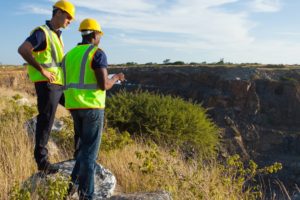
Petroleum geologists typically divide their time between field work and laboratory or office environments. In the field, they directly operate survey equipment, collect geological samples, and conduct seismic studies that reveal subsurface structures potentially containing fossil fuels. This hands-on data collection forms the foundation of their analytical work.
Laboratory and office work involves compiling field data into comprehensive reports for other professionals, including teams of petroleum engineers who design extraction systems. These reports combine geological analysis with practical recommendations about resource viability, extraction feasibility, and potential challenges.
The role requires balancing technical geological knowledge with practical field skills and the ability to communicate complex findings to diverse stakeholders, from engineering teams to corporate decision-makers.
Where Does a Petroleum Geologist Work?
Petroleum geologists work across several distinct sectors within and adjacent to the fossil fuel industry, each offering different professional experiences and responsibilities.
A substantial portion of petroleum geologists' work is in support activities for mining operations. These professionals serve on the front lines of fossil fuel prospecting, locating and evaluating potential new deposits. They provide critical advice and detailed reports to decision-makers, determining whether to develop specific sites for extraction.
Many petroleum geologists work directly in oil and gas extraction operations. These professionals typically work on-site at active extraction facilities, monitoring the viability of existing deposits and assessing ongoing production. They fulfill similar analytical roles as those in support activities while maintaining a continuous presence to identify potential problems and conduct ongoing assessments of facility performance.
Others work in engineering services, often operating independently of direct fossil fuel industry employment. These consultants serve diverse industries on varied projects, with fossil fuel potential analysis representing one among several services they provide. Similarly, some work in management and scientific technical consulting, fulfilling comparable roles either with consulting firms or as independent practitioners.
Some petroleum geologists work in testing laboratories. Increasingly, the profession involves both field and laboratory work, with few positions existing purely in laboratory settings. Available lab-only positions typically represent internships for undergraduate students or research assistant roles for doctoral candidates pursuing specialized research.
Petroleum Geologist Salary & Compensation
National Salary Data
Petroleum geologists fall under the broader Bureau of Labor Statistics category of "Geoscientists, Except Hydrologists and Geographers." According to the most recent BLS data (May 2022), geoscientists earned a median annual wage of approximately $87,480. However, petroleum geologists often command salaries at the higher end of this range due to their specialized expertise and the technical demands of their work.
The salary distribution for geoscientists shows significant variation based on experience, specialization, and position level. Entry-level positions typically start in the $50,000-$60,000 range, while experienced professionals and those in senior positions can exceed $130,000 annually. Geographic location, industry sector, and specialized technical skills significantly influence individual earning potential within this broad occupational category.
Geographic Variations
Geographic location significantly impacts petroleum geologist salaries. States with major oil and gas operations, including Texas, Alaska, California, Louisiana, and Oklahoma, typically offer higher compensation due to concentrated industry presence and competitive demand for qualified professionals. Offshore operations and remote locations often include additional compensation for challenging working conditions.
Metropolitan areas hosting major energy company headquarters or serving as regional energy industry hubs generally provide higher salaries than smaller markets. However, cost-of-living considerations matter when evaluating geographic salary differences, as higher wages in expensive metro areas may not translate to greater purchasing power.
Factors Affecting Earnings
Several factors influence individual salary levels within petroleum geology. Years of experience represent the most significant variable, with senior geologists earning substantially more than entry-level professionals. Advanced degrees, particularly master's degrees, typically correlate with higher starting salaries and faster advancement opportunities.
Industry sector also affects compensation. Private sector positions in oil and gas extraction generally offer higher salaries than consulting or government positions, though the latter may provide greater job security and benefits. Specializations in high-demand technical areas, such as unconventional resource extraction or deepwater exploration, can command premium compensation.
Professional certifications and state licensure, where applicable, demonstrate advanced competency and may increase earning potential. Additionally, professionals skilled with cutting-edge exploration technologies and data analysis tools often achieve higher compensation due to their enhanced value to employers.
Typical Job Duties & Responsibilities
Petroleum geologists' responsibilities vary considerably based on experience level and position within organizational hierarchies. Understanding these distinctions helps you envision potential career progression within the field.
Entry-Level Petroleum Geologist Duties
Entry-level petroleum geologists typically work under supervision while developing practical skills and industry knowledge. Their responsibilities commonly include:
- Applying physics, mathematics, and geological knowledge in exploration projects seeking oil, gas, or minerals
- Interpreting geophysical information and incorporating findings into project reports
- Conducting field studies to collect and analyze project data
- Estimating fuel quantities using various techniques, including geochemical analysis, ground-based sonar, and satellite mapping
- Operating specialized equipment such as diamond core drillers, atomic absorption spectrometers, and gas chromatographs
- Developing proficiency with geographic information systems (GIS) and global positioning systems (GPS),and interpreting data collected through these technologies
- Contributing to drilling strategy development for fuel extraction
- Creating post-project reports and maps for presentation to supervisors, including chief geologists or project managers
- Building interpersonal and communication skills through collaboration with other geoscientists and petroleum technicians
Senior Petroleum Geologist Duties
Senior petroleum geologists leverage accumulated experience to assume project management and leadership responsibilities. After establishing comprehensive expertise, they typically add these advanced duties to their portfolios:
- Providing supervision and guidance for staff-level positions and junior geologists
- Exercising oversight and management of field activities, including all field studies and geochemical analyses
- Reviewing field data comprehensively and creating sophisticated computer simulations
- Examining fossil records to determine the presence and viability of oil and gas deposits
- Presenting team findings to senior leadership, potentially including CEOs or the Board of Directors
- Developing advanced verbal and written communication skills, particularly regarding technical report preparation
- Mentoring junior staff members and contributing to team skill development
- Making strategic recommendations about exploration priorities and resource allocation
Job Outlook & Career Demand
Current Job Market
The petroleum geology job market reflects the complex dynamics of the global energy industry. While the field faces long-term questions about fossil fuel demand amid climate change concerns and renewable energy growth, current market conditions show a continued need for petroleum geologists. Existing operations require ongoing geological assessment, and global energy demand remains substantial despite renewable energy expansion.
Entry-level positions can be competitive, particularly during periods of low oil prices when exploration budgets contract. However, professionals with strong technical skills, particularly in data analysis and emerging exploration technologies, consistently find opportunities across the industry.
Future Projections
According to the Bureau of Labor Statistics employment projections covering 2022 to 2032, geoscientist positions overall are expected to grow approximately 6% from 2022 to 2032, with about 2,500 annual job openings projected. This growth rate tracks near the average for all occupations. However, petroleum geology specifically may experience more variable demand based on fossil fuel industry dynamics.
The United States' growing population continues to require substantial energy supplies. Despite increasing renewable energy investment, fossil fuel consumption shows no immediate signs of dramatic decline over the next decade. One potential growth area involves natural gas extraction, particularly through hydraulic fracturing (fracking) technologies that have expanded dramatically in recent years. Much of the demand for petroleum geologists may center on natural gas rather than oil exploration.
Industry Trends & Renewable Energy Impact
The energy industry's evolution toward renewable sources represents perhaps the most significant long-term factor affecting petroleum geology careers. While this transition unfolds gradually rather than abruptly, prospective petroleum geologists should realistically assess how this shift might impact their long-term career prospects.
Several factors suggest petroleum geologists will remain valuable for the foreseeable future. Existing fossil fuel infrastructure requires continued geological oversight throughout operational lifespans spanning decades. Global energy consumption continues to grow, and renewable sources cannot yet meet all demand, particularly in transportation and heavy industry sectors. Additionally, petroleum geologists' skills in subsurface analysis, geophysical data interpretation, and resource assessment transfer to emerging fields, including geothermal energy development and carbon capture and storage site identification.
Professionals entering petroleum geology should consider developing diverse skill sets applicable beyond traditional oil and gas exploration. Expertise in geological modeling, remote sensing, geophysical analysis, and environmental impact assessment positions petroleum geologists to transition toward related fields if industry dynamics shift significantly during their careers.
Education Requirements & Pathways
Becoming a petroleum geologist requires systematic educational preparation beginning in high school and continuing through university-level studies. Understanding the educational pathway helps you plan effectively for entering this specialized field.
Bachelor's Degree Requirements
Students aspiring to petroleum geology careers should establish strong foundations during high school. Focus particularly on mathematics, physics, and geography, as these subjects form the core of university applications and provide essential conceptual frameworks for geology studies. Strong performance in sciences proves critical for admission to competitive geology programs.
At the undergraduate level, pursuing a geology degree provides the most direct path toward petroleum geology. While majoring specifically in petroleum geology remains relatively rare at the bachelor's level, a general geology degree with a strategic minor and elective selections prepares you effectively for the profession. Complement your major with coursework in physics, mathematics, geography, and relevant information technology skills, including GIS technology.
Many technology-based skills, particularly advanced GIS applications and geological modeling software, may be more readily available in graduate programs than undergraduate curricula. However, bachelor's degree graduates should not experience difficulty finding relevant entry-level positions. These roles typically involve support functions rather than senior responsibilities like project management or team supervision, but they provide essential experience and professional development opportunities.
Master's Degree Advantages
Master's degree graduates find notably more positions available to them, particularly in research and project-oriented work. Graduate education's emphasis on independent study and specialized research means master's-level professionals typically assume greater responsibility earlier in their careers, with enhanced advancement potential and stronger salary prospects.
Advanced geoscience degree programs provide deep expertise in evidence interpretation, including aerial photography and GIS data analysis. These advanced analytical skills position graduates for advisory and consultation positions requiring sophisticated judgment and decision-making capabilities.
For professionals already working in the field with bachelor's degrees, pursuing master's education part-time or online represents a strategic investment in career advancement. Many employers support continuing education through tuition assistance programs, recognizing the value of advanced technical expertise within their teams.
Doctoral Programs & Research Careers
Doctoral degrees in petroleum geology or related geosciences suit those pursuing academic careers involving research and teaching. However, PhD graduates also find opportunities in industry, particularly at senior advisory, consultation, and decision-making levels. Their deep specialized knowledge and research capabilities prove valuable for addressing complex geological challenges and developing innovative exploration methodologies.
It's worth noting that PhD-level education represents a significant time investment—typically 4-6 years beyond the bachelor's degree—and focuses heavily on original research. Consider doctoral programs primarily if you're passionate about research, interested in teaching at the university level, or seeking to work on cutting-edge industry challenges requiring deep technical expertise.
Essential Skills & Coursework
Beyond formal degree requirements, successful petroleum geologists develop several critical competencies. Technical skills include proficiency with industry-standard software such as Petrel (geological modeling), DecisionSpace (seismic interpretation), ArcGIS (spatial analysis), and various geophysical data analysis tools. Programming abilities, particularly in Python for data analysis and automation, increasingly enhance career prospects.
Field skills remain essential despite advancing technology. Comfortable working outdoors in varied conditions, operating survey equipment, and collecting samples safely and accurately distinguishes effective petroleum geologists. Physical stamina matters, as field work often involves challenging terrain and weather conditions.
Analytical and problem-solving abilities form the profession's intellectual core. Petroleum geologists must interpret complex, sometimes contradictory data sets, develop viable hypotheses about subsurface conditions, and make sound recommendations despite inherent uncertainties in geological interpretation.
Communication skills deserve particular emphasis. Technical writing abilities enable you to create clear, comprehensive reports, translating complex geological findings for diverse audiences. Presentation skills help you communicate recommendations effectively to decision-makers who may lack geological expertise.
Professional Organizations & Resources
Professional organizations provide valuable resources for petroleum geologists, offering networking opportunities, continuing education, industry standards development, and career support throughout your professional journey.
American Association of Petroleum Geologists (AAPG) represents the premier professional organization for petroleum geologists. This US-based organization maintains a global presence with offices worldwide, working with the energy industry to improve professional standards and facilitate communication between oil-producing nations. AAPG regularly publishes scientific information about petroleum geology and provides ongoing professional development resources. Membership offers access to technical publications, conferences, networking opportunities, and certification programs, enhancing professional credentials.
The Society for Organic Petrology serves as an international organization promoting research and safety in organic petrology, particularly concerning coal and kerogen. They advance education and information sharing while maintaining a network of global industrial professionals. This organization proves particularly valuable for petroleum geologists working with organic-rich source rocks and unconventional hydrocarbon resources.
Independent Petroleum Association of America (IPAA) represents independent oil and gas producers. While focused primarily on industry advocacy rather than professional development, IPAA provides valuable industry perspectives and policy information affecting petroleum geologists' work environments. Understanding industry dynamics and policy frameworks enhances your effectiveness as a petroleum geology professional.
Beyond these specialized organizations, consider involvement with broader geological societies, including the Geological Society of America, which offers interdisciplinary networking and professional development applicable to petroleum geology.
Frequently Asked Questions
What's the difference between a petroleum geologist and a petroleum engineer?
Petroleum geologists and petroleum engineers work collaboratively but fulfill distinct roles. Petroleum geologists focus on finding and evaluating fossil fuel deposits using geological science. They study rock formations, analyze subsurface conditions, and determine where oil and gas likely exist and in what quantities. Their work answers "where is the resource and how much is there?"
Petroleum engineers, conversely, determine how to extract those resources efficiently and economically. They design drilling systems, develop extraction methods, and optimize production from established wells. Their work answers "how do we get the resource out?" While geologists find the resources, engineers develop methods to recover them. Both professions require specialized education and work together throughout exploration and production projects.
Do I need a PhD to work as a petroleum geologist?
No, you don't need a PhD to work as a petroleum geologist. A bachelor's degree in geology qualifies you for entry-level positions, and many petroleum geologists build successful careers with undergraduate degrees alone. A master's degree significantly enhances your career prospects, opening doors to more senior positions, research opportunities, and higher compensation, but it remains optional rather than required.
PhDs prove valuable primarily for academic careers involving university teaching and research, or for specialized industry roles requiring deep technical expertise in particular geological problems. Unless you're specifically interested in academic research or cutting-edge technical development, a bachelor's or master's degree provides sufficient education for a productive petroleum geology career.
Is petroleum geology a good career choice with the shift to renewable energy?
This question reflects legitimate concerns about long-term career prospects in the fossil fuel industry. The honest answer involves acknowledging both opportunities and challenges. In the near to medium term (next 10-20 years), petroleum geologists will likely remain in demand. Existing fossil fuel infrastructure requires continued geological oversight, global energy consumption continues growing, and renewable sources cannot yet meet all energy needs.
However, the long-term trajectory toward renewable energy will eventually reduce demand for petroleum geology specifically. If you're entering the field now, consider developing transferable skills applicable to related areas, including geothermal energy development, carbon capture and storage site identification, and groundwater resource management. Petroleum geologists' expertise in subsurface analysis, geophysical interpretation, and resource assessment applies across multiple geological specializations beyond fossil fuels.
If petroleum geology genuinely interests you and you're willing to remain adaptable as the energy industry evolves, it can represent a viable career choice. However, if you're seeking the most future-proof geological career, broader environmental geology or hydrogeology might offer more long-term security.
What software and technologies do petroleum geologists use?
Modern petroleum geologists work with sophisticated technological tools throughout their careers. Petrel, developed by Schlumberger, represents the industry-standard software for geological modeling and reservoir characterization. DecisionSpace and similar platforms provide comprehensive geophysical data interpretation capabilities, particularly for seismic analysis. ArcGIS enables spatial analysis and mapping, essential for visualizing geological data geographically.
Beyond these core platforms, petroleum geologists commonly use various specialized tools for petrophysical analysis, well log interpretation, and basin modeling. Programming skills, particularly Python, increasingly enhance career prospects as data analysis and automation become more prevalent. Remote sensing technologies, including satellite imagery interpretation, drone-based surveys, and LiDAR analysis, supplement traditional ground-based data collection.
Field equipment includes seismic acquisition systems, portable geochemical analyzers, GPS systems, and various drilling and coring apparatus. Proficiency with laboratory equipment for sample analysis, including spectrometers and chromatographs, remains important despite the field's increasing computational focus.
Can petroleum geologists work remotely?
Petroleum geology involves significant field work that cannot be performed remotely. You'll need to travel to exploration sites, conduct field surveys, collect samples, and examine geological formations in person. This field component represents an essential and often appealing aspect of the profession for those who enjoy outdoor work and varied environments.
However, the analytical, modeling, and reporting components of petroleum geology can often be performed remotely. Many petroleum geologists work in hybrid arrangements, conducting field work as needed while completing data analysis, modeling, and report preparation from home offices. The COVID-19 pandemic accelerated remote work adoption in analytical aspects of petroleum geology, though field requirements ensure the profession will never become fully remote.
Senior geologists focusing primarily on project management, data interpretation, and advisory roles may work remotely more frequently than entry-level professionals who need extensive hands-on field experience for skill development.
Key Takeaways
- Specialized Geological Expertise: Petroleum geologists apply scientific methods to locate and evaluate fossil fuel deposits, working at the intersection of geology, technology, and energy resource management.
- Diverse Work Settings: Professionals work in mining support activities, oil and gas extraction, engineering services, consulting, and laboratory settings, offering varied career environments.
- Educational Pathways: A bachelor's degree in geology represents the minimum requirement, with master's degrees significantly enhancing career advancement opportunities and starting compensation.
- Compensation and Outlook: Geoscientists, including petroleum geologists, earned median salaries around $87,480 as of 2022, with 6% job growth projected through 2032, though the renewable energy transition may impact long-term demand.
- Transferable Skills: Expertise in subsurface analysis, geophysical interpretation, and resource assessment applies beyond petroleum geology to emerging fields, including geothermal energy and carbon storage, providing career adaptability.
Ready to explore educational pathways toward a petroleum geology career? Discover accredited geoscience programs that can prepare you for this specialized field.
2022 US Bureau of Labor Statistics salary and job growth figures for geoscientists reflect national data, not school-specific information. Conditions in your area may vary. Data accessed January 2026. View BLS Occupational Outlook Handbook