

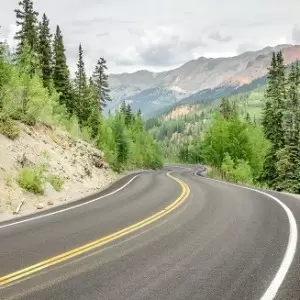
An estimated 1 million vertebrates may be killed daily on U.S. roads based on extrapolated studies, though this figure varies by methodology—making road mortality a leading cause of wildlife population declines. Beyond direct deaths, roads fragment habitats, disrupt genetic diversity, and introduce chemical, noise, and light pollution into ecosystems. Effective solutions include wildlife crossings, seasonal road closures, and strategic barrier placement studied by conservation professionals.
If you've ever driven past a turtle slowly crossing the highway or seen a deer frozen in your headlights, you've witnessed the collision between human infrastructure and wildlife. Roads are everywhere—over 4 million miles of them crisscross the United States, directly impacting an estimated 20% of the country's land. While roads connect us to jobs, schools, and communities, they create deadly barriers for the animals trying to navigate their own territories.
Understanding road ecology isn't just an academic exercise. It's a growing field within environmental science and conservation biology, where wildlife biologists study road ecology impacts, conservation planners design mitigation strategies, and environmental consultants assess infrastructure projects. If you're drawn to solving real-world environmental problems, road ecology offers meaningful career pathways that directly protect vulnerable species.
Let's explore how roads affect wildlife, what makes certain animals especially vulnerable, and the proven strategies that are saving lives.
Direct Mortality & Population Impacts
When animals attempt to cross roads, the results are often fatal. Road mortality isn't just a minor wildlife issue—it's the leading cause of death for many animal populations across North America. Hundreds of millions of vertebrates are killed annually on U.S. roads, representing a massive and ongoing conservation challenge.
This staggering mortality rate can push vulnerable populations toward extinction, particularly for species already facing habitat loss or climate pressures. In some regions, road mortality can contribute to an "extinction vortex" in species already facing other pressures—where multiple threats compound each other until recovery becomes nearly impossible.
Factors Influencing Road Mortality
Not all roads are equally dangerous, and not all animals face the same level of risk. Several factors determine whether a road becomes a death trap or a manageable obstacle.
Habitat overlap is the first major factor. When roads cut directly through an animal's preferred habitat, encounters become inevitable. Highway 27 in Florida is a stark example: it crosses a lake home to numerous turtle species, resulting in exceptionally high turtle mortality and making it one of the most dangerous roads for wildlife in the country.
Seasonal migrations dramatically increase risk. Amphibians like frogs and salamanders often undergo mass migrations during breeding seasons, with hundreds or thousands of individuals moving simultaneously. When these migrations cross roads, the carnage can be overwhelming. Groups of animals are particularly vulnerable during these predictable movement patterns.
Home range size also matters significantly. Animals with large territories—like Florida panthers with home ranges ranging from 190 to 630 km�—have a much higher probability of encountering roads as they patrol their territories. The math is simple: more ground covered means more road crossings.
Behavioral Responses That Increase Risk
Here's where things get tragically ironic: many animals have defense mechanisms that work brilliantly against natural predators but fail completely against fast-moving vehicles. What evolution perfected over millions of years simply can't adapt to threats moving at 60 miles per hour.
Turtles provide a heartbreaking example. When they perceive a car as a threat, they do what has always kept them safe—they pull into their shells and wait for danger to pass. But on a road, this survival instinct becomes a death sentence. They remain stationary targets, making them more likely to be struck.
Snakes demonstrate similar vulnerability. Research by zoologists shows that snakes may freeze when approached by vehicles and can remain immobilized for up to a minute after a car passes. Venomous species are especially prone to this behavior because they typically rely on venom rather than flight for defense.
Turkey vultures face a different challenge. These scavengers normally fly away from ground-based predators, but they can't initiate flight quickly enough when approached by a fast-moving vehicle. Their escape strategy, effective against coyotes or wolves, is useless against a car traveling 70 mph.
Some animals are even attracted to roads. Reptiles like snakes and turtles bask on warm asphalt to regulate their body temperatures—a behavior called thermoregulation. The road's heat-retaining surface becomes an irresistible sunbathing spot. Scavengers compound the problem by feeding on roadkill, which keeps them near traffic and puts them at risk of becoming the next casualty. It's a tragic feedback loop.
Movement Patterns & Vulnerable Life Stages
Mortality rates aren't constant throughout an animal's life. Certain life stages involve dramatically increased movement, which directly increases road mortality risk.
Reproduction drives much of this movement. Female turtles carrying eggs (called gravid females) undertake migrations to reach suitable nesting sites, journeys that males don't make. These necessary reproductive trips put females at disproportionate risk.
Male snakes show even more dramatic behavior changes during the breeding season. When searching for mates, males can increase their home range up to 6 times its normal size. More territory covered means more roads encountered. In red foxes, females repeatedly visit breeding den sites—sometimes up to 10 trips in a single night—dramatically increasing mortality exposure.
Dispersal after hatching creates another vulnerability window. Many reptiles begin moving immediately after hatching, with no parental guidance to help them avoid roads. These inexperienced juveniles disperse in all directions, and many encounter roads within their first hours of life.
Some studies have identified movement rate as the single greatest factor influencing road mortality risk. Simply put: the more an animal moves, the more likely it is to cross a road and potentially die doing so.
Demographic Shifts in Populations
When specific segments of a population face higher mortality, the entire population structure can shift—sometimes catastrophically.
Remember those egg-laying migrations that female turtles make? Because males don't undertake these dangerous journeys, female turtles die at much higher rates near roads. The result? Turtle populations near busy highways can become heavily male-biased, with far fewer females available for reproduction.
These demographic shifts create an Allee effect—where reduced population density or skewed sex ratios make it harder for individuals to find mates, further suppressing reproduction. It's a downward spiral: fewer females → fewer successful breeding events → fewer juveniles → smaller populations → even harder to find mates.
For populations already stressed by habitat loss, climate change, or other threats, this additional pressure from roads can tip the balance from survival to extinction.
Habitat Fragmentation & Connectivity
Death isn't the only way roads harm wildlife. Even when animals survive crossing attempts, roads can effectively divide populations and isolate habitats, undermining long-term survival.
Movement Barriers & Gene Flow
Here's something that might surprise you: many animals won't even attempt to cross roads, regardless of traffic volume. Research shows that some snake species turn around when they encounter roads, treating them as impassable boundaries. Birds that typically fly short distances from tree to tree may refuse to fly across wide, open road clearings, even when no vehicles are present.
This avoidance behavior effectively fragments continuous habitat into isolated patches. When populations become isolated, genetic diversity suffers. A study of timber rattlesnakes clearly demonstrated this: hibernation sites (called hibernacula) separated by roads showed significantly lower genetic diversity than those in continuous, unbroken habitats.
For some species, roads disrupt not only physical movement but also chemical communication. Male snakes often follow pheromone trails along the ground to locate females. Roads break these scent trails, making it difficult or impossible for males to track down potential mates. Imagine trying to follow directions when someone randomly erased half the street signs.
Ecologists study these patterns of habitat fragmentation, documenting how roads create invisible barriers that are just as effective as walls.
Access to Critical Resources
Roads don't just separate animals from each other—they can separate animals from the resources they need to survive.
During droughts, water becomes the most critical resource. Roads can prevent animals from reaching water sources, essentially landlocking populations on the wrong side of the pavement. When temperatures soar and natural water sources dry up, being unable to cross a road can mean the difference between survival and death from dehydration.
Nesting sites present another challenge. Female turtles seeking optimal egg-laying locations may find their preferred sites blocked by roads. When they can't reach ideal habitat, they're forced to nest in suboptimal locations where predation rates on eggs are much higher. Studies found that turtles nesting in secondary sites experienced significantly reduced reproductive success due to increased nest predation.
Edge Effects on Wildlife
Building a road through a forest doesn't just remove trees—it creates something entirely new: edge habitat. The portion of forest that fringes the road experiences different light levels, wind patterns, temperature fluctuations, and predator access than the interior forest. These changes ripple through the ecosystem.
For birds, edge habitat can mean higher nest predation rates. Predators hunt more successfully along forest edges where canopy cover is reduced, and visibility is better. Bird nests that would be safely hidden in dense forest become exposed targets near road edges.
Interestingly, some turtles prefer to nest along road edges because disturbed soil and increased sunlight create ideal nesting conditions. In heavily degraded wetlands, road edges may even be the only viable nesting habitat remaining. Unfortunately, turtles nesting near roads put themselves at greater mortality risk during crossing attempts, and hatchlings must also navigate traffic as they disperse from nests.
Amphibians also show higher predation rates near roads. The combination of altered habitat structure and increased predator access makes road edges dangerous zones for many species.
Pollution from Roads
Think roads only harm wildlife through direct contact? Think again. Roads function as pollution corridors, channeling contaminants into surrounding ecosystems in ways that affect animals far from the pavement itself.
Chemical Pollution
Every time a tire rolls down a road, microscopic particles wear off and accumulate on the surface and in adjacent soil. Research on wood frogs shows that tire debris in water can decrease the time to metamorphosis—potentially affecting survival rates.
Deicing salts create even more serious problems. In northern states where roads are salted heavily during winter, runoff carries high concentrations of sodium and chloride into nearby ponds and wetlands. These salts decrease survivorship in wood frogs and spotted salamanders—two species that rely on seasonal wetlands for breeding. But it's not just about survival. Deicing salts also alter behavior and decrease locomotor performance, making exposed frogs less adept at catching prey and avoiding predators.
Studies have documented higher rates of skeletal abnormalities in frogs living near roads, possibly due to chemical contamination. Motor oil, brake fluid, antifreeze, and fuel residues all wash off roads during rain events, entering streams and wetlands where sensitive amphibians breed and develop.
Noise & Light Pollution
Pollution isn't just chemical. The constant hum of traffic and the glow of streetlights create 24/7 disturbances that profoundly affect wildlife behavior and survival.
Noise pollution particularly impacts species that rely on acoustic communication. Birds use songs for territory defense, mate attraction, and alarm calls. Road noise can completely drown out these critical signals, especially for species whose song frequencies overlap with traffic sounds.
The result? Bird populations decline near busy roads, and not all species are affected equally. Those with songs similar in frequency to vehicle noise are more likely to be completely absent from roadside areas. This selective exclusion changes the entire bird community composition—certain species simply can't survive near loud roads.
Frogs face similar challenges. Males call to attract females, but when road noise interferes with these calls, successful mating becomes difficult or impossible.
Light pollution disrupts animals that use natural light cycles to regulate biological activities. Robins normally use dawn light as a cue to begin singing, but artificial street lights can trigger singing in the middle of the night—wasting energy and exposing birds to nocturnal predators.
Bats alter their flight routes in response to artificial lights. Some species avoid lit areas entirely, further fragmenting their habitat. Exposure to artificial night lighting may delay metamorphosis in certain frog species.
Perhaps most tragically, sea turtle hatchlings use light to navigate to the ocean. When they emerge from beach nests at night, they instinctively move toward the brightest horizon—which should be the moon and stars reflecting off the water. But coastal road lights can confuse them, causing hatchlings to crawl toward roads instead of the ocean. Most die from dehydration, predation, or vehicle strikes before ever reaching the water. Adult females emerging to lay eggs can also become disoriented by lights and have difficulty finding their way back to the ocean.
Invasive Species Facilitation
Roads don't just transport people—they transport invasive species, too. Cleared road corridors provide ideal pathways for non-native plants and animals to spread into new territories.
Cane toads in Australia provide a textbook example. These incredibly invasive amphibians have used roadside areas as highways for expansion, dramatically increasing their range across the continent. The open, disturbed habitat along roads suits them perfectly.
Invasive fire ants build mounds preferentially in the cleared areas alongside roads. Several invasive plant species similarly exploit roads for colonization, encountering less competition in newly cleared areas than in intact ecosystems.
Mitigation Strategies That Work
Here's the good news: we're not helpless. Scientists, wildlife managers, and engineers have developed and tested numerous strategies to reduce road impacts on wildlife. Some work better than others, but the most effective approaches share one thing in common—they're informed by research on animal behavior and movement patterns.
Road Closures & Speed Reductions
When mortality patterns are predictable, temporary solutions can be remarkably effective. If you know that salamanders migrate to breeding ponds every March, you can close or restrict that road during March.
Several Canadian provinces, including Ontario, have implemented seasonal closures to protect migrating amphibians like Jefferson's salamanders. By blocking vehicle access during the brief period when thousands of salamanders cross roads to reach vernal pools, wildlife managers have dramatically reduced mortality.
Speed limit reductions during high-risk periods offer a middle ground when full closures aren't feasible. Slower vehicles give animals more time to cross and give drivers more time to react and brake.
For species where females are killed while searching for nesting sites, constructing artificial nesting sites on the safe side of the road can eliminate the need for dangerous crossings entirely. Similarly, artificial hibernation sites (hibernacula) can reduce the distances snakes must travel, decreasing road encounter rates.
Wildlife Crossings & Barriers
For animals that avoid road surfaces even without traffic, reducing vehicle speed won't help. These species need alternative crossing routes. That's where wildlife crossings come in—and they work remarkably well when properly designed.
Culverts are tunnels that pass beneath roads, allowing small to medium-sized animals to cross safely underground. When combined with barrier fencing that guides animals toward culvert entrances, these structures can be extremely effective. Some projects have reported near-total elimination of road mortality for target species after culvert installation.
The success of culverts depends heavily on design. Diameter matters—too narrow, and animals won't enter. Lighting matters—some species prefer darkness, while others need to see daylight at the far end. Substrate matters—frogs strongly prefer culverts lined with gravel rather than bare concrete or metal pipes.
Wildlife overpasses work for larger animals that won't use underground passages. These vegetated bridges span entire highways, essentially reconnecting habitats on both sides. Studies show that red deer and wild boar can use these structures, though effectiveness varies and usage often increases over time as animals become accustomed to them.
Wildlife managers work with engineers to implement crossing structures, balancing engineering requirements with animal behavior research to create solutions that actually work. Organizations like the Federal Highway Administration's wildlife crossing program provide guidance on effective design and placement.
| Crossing Type | Best For | Key Success Factors |
|---|---|---|
| Culverts (under-road tunnels) | Small to medium mammals, amphibians, reptiles | Appropriate diameter, natural substrate, guidance fencing, placement in low-noise areas |
| Wildlife overpasses | Large mammals (deer, elk, bears, panthers) | Vegetation mimicking natural habitat, width sufficient for species comfort, connectivity to habitat corridors |
| Seasonal road closures | Species with predictable mass migrations (salamanders, toads) | Timing aligned with migration periods, adequate signage, community buy-in |
| Barrier fencing | Guiding animals to safe crossing points | Sufficient height/depth to prevent climbing or burrowing, leads to culverts or overpasses, regular maintenance |
Design Considerations for Success
Building a wildlife crossing isn't enough—you have to build the right crossing in the right place, designed for your target species.
Culvert diameter significantly impacts which animals will use it. A tunnel that works perfectly for foxes might be too small for deer. Vegetation around entrance areas matters too—many animals feel safer approaching crossings that offer some cover.
Noise levels influence usage rates. Some animals avoid loud environments, so placing culverts in areas of lower traffic density may result in increased use. This seems counterintuitive—if there's less traffic, why do you need a crossing?—but remember that roads create barriers even when traffic is light.
Substrate preference varies by species. What works for frogs (gravel-lined passages) might not work as well for snakes or small mammals. Surface texture, moisture levels, and temperature all affect whether animals perceive a crossing as safe passage or as a trap.
The most successful projects don't use generic, one-size-fits-all designs. They're informed by research on specific target species in specific geographic regions. Conservation biology research directly translates into practical infrastructure improvements that save thousands of animal lives annually.
Careers in Road Ecology & Conservation
If studying and solving these problems sounds compelling, you're looking at genuine career pathways within environmental science. Road ecology is a growing specialty where your work can have immediate, measurable impacts on wildlife survival.
Wildlife Biologist
Wildlife biologists conduct field research to inform mitigation strategies. They track animal movements using GPS collars and radio telemetry, document mortality patterns, analyze population genetics, and test the effectiveness of wildlife crossings.
A wildlife biologist might spend months monitoring road mortality rates before and after a culvert installation to prove whether the investment actually works. They collect data on which species use crossings, at what times, and under what conditions. This research directly influences infrastructure planning and wildlife management decisions.
Typical work includes field surveys, camera-trap monitoring, roadkill data collection, GIS mapping of mortality hotspots, population monitoring, and collaboration with transportation departments. The Bureau of Labor Statistics projects steady growth in wildlife biology careers through 2033.
Conservation Biologist
Conservation biologists take a broader view, examining how roads affect entire ecosystems and populations. They study genetic diversity in fragmented populations, model extinction risks, and develop landscape-level conservation strategies that account for road networks.
When a new highway is proposed, conservation biologists assess potential impacts on threatened species and recommend mitigation measures. They work with government agencies, conservation organizations, and private landowners to protect critical habitat connectivity.
Typical work includes: population viability analysis, habitat connectivity modeling, conservation planning, environmental impact assessments, grant writing, and policy advocacy. Organizations such as The Nature Conservancy employ conservation biologists to work on infrastructure and wildlife connectivity projects.
Environmental Consultant
Environmental consultants bridge the gap between research and implementation. When a state transportation department plans a new road or highway expansion, consultants conduct environmental impact assessments, identify sensitive species and habitats, and design mitigation plans.
This role combines field biology, regulatory knowledge, and project management. You might oversee the installation of wildlife crossings, ensure compliance with environmental regulations, and coordinate between engineers, biologists, and government agencies.
Typical work includes: environmental impact reports, permit applications, mitigation design, construction monitoring, compliance documentation, and client communication. The U.S. Fish and Wildlife Service often partners with consultants on projects affecting protected species.
Frequently Asked Questions
Which animals are most at risk from road mortality?
Amphibians experience the highest mortality rates, particularly during mass breeding migrations. Reptiles (turtles and snakes) are also extremely vulnerable due to slow movement speeds and behavioral responses that don't work against vehicles. Large mammals such as deer and Florida panthers face significant risk due to their large home ranges and their need to cross multiple roads regularly.
Do wildlife crossings actually work?
Yes, when properly designed. Studies show that well-designed culverts combined with barrier fencing can reduce road mortality by 80-95% for target species. Wildlife overpasses can reduce large-mammal mortality, though effectiveness varies and use typically increases over time as animals become accustomed to the structures. The key is designing crossings specifically for the local species and habitat.
Why can't animals just learn to avoid roads?
Learning to avoid roads requires surviving multiple encounters, but many animals die on their first crossing attempt. Young animals dispersing from birth sites have no experience with roads. Additionally, some life activities—such as finding mates, accessing water, or reaching nesting sites—require crossing roads regardless of the risk. For species with instinctive defensive behaviors (such as turtles retreating into their shells), evolution simply hasn't had time to adapt to vehicles.
How does road noise affect wildlife beyond just scaring animals?
Road noise interferes with acoustic communication that's essential for survival. Birds can't hear alarm calls warning of predators, males can't attract females with mating calls, and territorial boundaries break down when songs can't be heard. Frogs face similar problems—males call to attract females, but road noise can make these calls inaudible. The result is reduced breeding success and population declines even in animals that never cross roads.
What can I do to help reduce road impacts on wildlife?
Drive cautiously in areas with wildlife crossing signs, especially during dawn and dusk when many animals are most active. If you see a turtle or snake on a road and can safely move it to the side it was heading toward, you might save its life. Support wildlife crossing projects in your community and contact local representatives to advocate for wildlife-friendly infrastructure. Consider a career in wildlife biology, conservation, or environmental consulting, where you can address these issues professionally.
Are some roads more dangerous than others?
Absolutely. Roads that cut through preferred habitat, cross migration routes, or pass near water bodies tend to have much higher mortality rates. Highway 27 in Florida, which crosses a turtle-rich lake, is one of the most dangerous roads for wildlife in the US. Roads near wetlands are particularly deadly for amphibians during breeding season. Even low-traffic roads can be dangerous if they're located ina critical habitat.
What careers involve studying road impacts on wildlife?
Wildlife biologists conduct field research on animal movements and mortality patterns. Conservation biologists study population-level impacts and design mitigation strategies. Environmental consultants assess infrastructure project impacts and design wildlife crossings. Ecologists examine habitat fragmentation. Wildlife managers implement and monitor crossing structures. Transportation planners increasingly need professionals who understand wildlife needs and can integrate conservation into infrastructure planning.
Key Takeaways
- Scale of Impact: Hundreds of millions of vertebrates are killed annually on U.S. roads, making road mortality a primary threat to many wildlife populations. The country's 4 million miles of roads cover 20% of the land, resulting in widespread ecosystem impacts.
- Multiple Threat Pathways: Beyond direct mortality, roads fragment habitats, reduce genetic diversity, disrupt animal communication through noise pollution, disorient wildlife with artificial lighting, and introduce toxic chemicals into ecosystems through runoff. These combined effects can push vulnerable populations toward extinction.
- Behavioral Vulnerabilities: Many animals possess defense mechanisms that work against natural predators but fail completely against vehicles. Turtles withdrawing into shells, snakes freezing when threatened, and scavengers attracted to roadkill all demonstrate how evolution hasn't prepared wildlife for modern roads.
- Proven Solutions Exist: Wildlife crossings (culverts and overpasses), seasonal road closures, and strategically placed barriers can reduce mortality by 80-95% when properly designed. Success depends on understanding species-specific behavior and designing infrastructure accordingly.
- Growing Career Field: Road ecology represents an expanding specialty within environmental science, offering meaningful career pathways for wildlife biologists, conservation biologists, environmental consultants, and wildlife managers who want to solve real-world conservation problems.
Ready to make a real difference in wildlife conservation? Explore environmental science degree programs that prepare you for careers in road ecology, wildlife biology, and conservation planning.

- Invasive Species: Causes, Impacts & Environmental Effects - February 23, 2015
- How Climate Change Affects Birds - February 11, 2015
- Environmental Consequences of Fishing Practices - February 6, 2015
Related Articles


Featured Article
How Geographic Information Systems (GIS) Transform Sustainability Work