

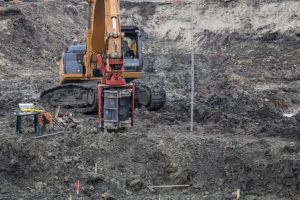
A geotechnical engineer is a specialized civil engineer who analyzes soil, rock, and groundwater conditions to ensure safe construction and development. These professionals earn a median salary of $99,590 annually (BLS May 2024 data for Civil Engineers) and typically need a bachelor's degree in civil or geotechnical engineering from an ABET-accredited program. The field is projected to grow 5% through 2034, creating approximately 23,600 annual job openings nationwide.
If you're drawn to solving complex environmental challenges where engineering meets geology, geotechnical engineering offers a rewarding career path. These specialized civil engineers analyze soil, rock, and groundwater conditions to ensure construction projects are safe, sustainable, and environmentally sound. As infrastructure demands grow and environmental protection becomes increasingly critical, geotechnical engineers play an essential role in building our future responsibly.
What Does a Geotechnical Engineer Do?
A geotechnical engineer focuses on the land's topography and the properties of rocks and soils during the building process. You'll study water tables and floodplains to develop the best approach to developments. Your specialist knowledge of environmental engineering issues will be invaluable as developers seek to leverage the landscape to complement construction and minimize potential problems.
In this role, you'll explain the properties and potential applications of rock types and soils, examine environmental issues such as floodplains and water tables, and examine how a building or development might sustain itself against the natural order of the landscape. Your information will be invaluable to construction managers, geologists, researchers, and the development industry. You'll work on embankments and around waterworks, such as relief tunnels and floodplains, as well as on the direction and siting of irrigation for home water supplies and agriculture. You'll also monitor drilling operations.
Day-to-Day Responsibilities
On a typical week, you might spend Monday analyzing soil samples in the lab, Tuesday at a construction site evaluating bedrock stability, and Wednesday writing detailed reports for project stakeholders. You'll be tackling questions like:
- Is the bedrock firm enough to construct something of this height?
- What is the potential for subsidence?
- Is it a flood plain? If so, what improvements to the below-ground utilities are needed to improve the situation?
- How will seasonal water table fluctuations affect foundation integrity?
- Which soil reinforcement techniques are needed to improve slope stability?
What Are the Education Requirements to Become a Geotechnical Engineer?
The recognized shortage in geotechnical engineering means there are more opportunities today to get involved in this growing discipline. While there are no standalone bachelor's degrees specifically in geotechnical engineering, you'll start with one of the many civil engineering degree programs and build your specialization from there.
Education Pathway
| Degree Level | Typical Duration | Career Level | Key Focus |
|---|---|---|---|
| Bachelor's Degree (BS) | 4 years | Entry-level positions | Civil engineering fundamentals with minors in geology, soil mechanics, and environmental science |
| Master's Degree (MS/MA) | 2 years | Senior roles, project management | Advanced geotechnical analysis, specialized soil mechanics, and research methodologies |
| Doctorate (PhD) | 4-6 years | Academia, research, consulting | Original research, teaching, and cutting-edge geotechnical solutions |
All engineers need a bachelor's degree at a minimum for entry-level jobs. As a recognized core STEM subject (Science, Technology, Engineering, and Math), there's a documented skills shortage creating strong opportunities for qualified candidates. When you pursue geotechnical engineering, you should take minors and electives in math, physics, and environmental science to ensure a solid understanding of the discipline.
A master's degree will provide a significant advantage, especially if you're seeking senior roles and project management in the long term. Successful geotechnical engineers have advanced critical thinking, analytical, and communication skills for report writing. You'll need to write reports for a variety of stakeholders, from construction managers to environmental regulatory agencies.
Professional Licensing
Once you complete your degree program, you'll need to seek accreditation to work as a professional engineer. The Professional Engineer (PE) License is only granted to those who completed an ABET-accredited degree program. The licensing process involves:
- Passing the Fundamentals of Engineering (FE) exam after graduation
- Gaining four years of work experience under a licensed PE
- Passing the Principles and Practice of Engineering (PE) exam
Where Does a Geotechnical Engineer Work?
About 75% of geotechnical engineers work in geophysical engineering services, typically employed by dedicated organizations. You'll work full-time with a standard 40-hour workweek, though project deadlines may occasionally require additional hours. Organizations contract to provide services rather than contracting individual engineers directly. Some professionals work as freelance consultants or on a contract basis, providing the same services but as self-employed specialists.
Field Work vs. Office Work
You'll split your work time between fieldwork and office responsibilities. This balance is one of the field's appealing aspects if you enjoy variety in your work environment.
Field responsibilities include collecting soil and rock samples at construction sites, conducting subsurface investigations, monitoring drilling operations, and evaluating site conditions. You'll need to be comfortable working outdoors in various weather conditions, from summer heat to winter cold. Safety gear and protocols are essential parts of fieldwork.
Office responsibilities involve analyzing collected data, conducting research, producing detailed reports for decision-makers, and using specialized geotechnical software programs and databases. You'll often work in an advisory capacity, making recommendations to construction teams, architects, and project managers. While you're seen as an expert on environmental and geological issues related to construction and development, you'll usually not be part of the final decision-making process.
Government Employment
About 25% of geotechnical engineers work in government at the state, federal, and local levels as engineers for public works and public utility improvement. You may be involved in building new highways, public buildings, and other civic features. Government positions often offer stable employment, comprehensive benefits, and opportunities to work on large-scale infrastructure projects that serve the public good.
What Is the Average Geotechnical Engineer Salary?
Geotechnical engineers earn competitive salaries that reflect the specialized nature of their work. According to the Bureau of Labor Statistics (May 2024 data for Civil Engineers, which includes geotechnical engineers under SOC 17-2051), the median annual salary is $99,590. However, your earning potential varies significantly based on experience, location, and specialization.
Salary Ranges by Experience Level
| Percentile | Annual Salary | Career Stage |
|---|---|---|
| 10tPercentilele | $63,220 | Entry-level positions, recent graduates |
| 25tPercentilele | $76,500 | Early career, 1-3 years of experience |
| Median (50th) | $99,590 | Mid-career, 4-7 years of experience |
| 75tPercentilele | $123,010 | Senior engineers, project managers |
| 90tPercentilele | $150,640 | Principal engineers, specialized consultants |
Geographic Salary Variations
Location significantly impacts earning potential. According to BLS data, California offers the highest average salaries for civil engineers at $115,100 annually, followed by New York at $113,610. Alaska, Louisiana, and Massachusetts also provide above-average compensation. These higher salaries typically reflect both the cost of living in these areas and the complexity of geotechnical challenges posed by demanding geological conditions, seismic activity, or harsh climates.
What Is the Job Demand for Geotechnical Engineers?
The job outlook for geotechnical engineers remains positive as infrastructure development and environmental protection needs continue to grow. According to the Bureau of Labor Statistics, employment of civil engineers (including geotechnical engineers) is projected to grow 5% from 2024 to 2034, which is faster than the average for all occupations.
This growth translates into approximately 23,600 job openings per year, on average, over the decade. Many of those openings are expected to result from the need to replace workers who transfer to different occupations or exit the labor force, such as through retirement.
Factors Driving Demand
Several factors contribute to sustained demand for geotechnical engineers:
- Infrastructure renewal: Aging infrastructure across the United States requires assessment, repair, and replacement, all of which require geotechnical expertise
- Climate change adaptation: Rising sea levels, increased flooding, and extreme weather events create demand for geotechnical solutions to protect existing structures and design resilient new developments
- Sustainable development: Growing emphasis on environmentally responsible construction practices requires geotechnical engineers to balance development needs with environmental protection
- Urban expansion: As cities grow and develop previously unused land, geotechnical expertise becomes essential for safe, stable construction
- Natural disaster preparedness: Earthquake-prone regions, flood zones, and areas susceptible to landslides require ongoing geotechnical assessment and monitoring
Demand will be greater in towns and cities and in states with more development and redevelopment. Your specialized knowledge of the natural world, particularly geology, makes your role more nuanced than that of a general civil engineer, potentially creating stronger opportunities in areas with complex geological challenges.
Essential Skills & Job Requirements
The specialized skills required for a geotechnical engineer reflect the technical and analytical nature of the work, as well as the need to communicate complex information effectively.
Entry-Level Geotechnical Engineer Skills
- Bachelor's degree in geotechnical or civil engineering from an ABET-accredited program
- Capability to work outdoors in various environmental and weather conditions
- Ability to work as part of a team or independently
- Conduct research and analyses of geotechnical data and reports inside a laboratory or office
- Proficiency in written, oral, and technical communication skills to communicate with supervisors, clients, and stakeholders
- Determine site conditions by sampling water, soil, and rock at field sites
- Use standard sampling methods in collecting samples
- Label samples accurately and record all observations with attention to detail
- Possess excellent computer skills and the ability to use specialized geotechnical software programs and databases
- Participate in meetings, workshops, and training seminars
Senior Geotechnical Engineer & Project Manager Skills
A Senior Geotechnical Project Manager or Senior Geotechnical Engineer uses many of the same skills as an entry-level engineer, plus additional management responsibilities. Jobs vary from company to company, but typically, you'll need to possess the following:
- Master's degree or PhD in geotechnical engineering
- Substantial experience working as a geotechnical engineer, typically 5-10 years, plus project management experience
- Professional Engineer (PE) license
- Offer new approaches and recommendations to projects to reduce costs and improve efficiency.
- Design site projects describing sampling methods and project schedules
- Develop budgets for site projects, outlining all associated costs
- Manage teams of geotechnical engineers at field sites
- Ensure that timelines are being met and projects stay on schedule
- Provide training to staff and participate in developing new training programs
- Preserve current clients and develop new clients by providing exceptional service and consultation
- Possess excellent oral, written, and technical communication and presentation skills
- Mentor junior engineers and contribute to their professional development
Questions to Guide Your Career Path
Consider the following questions to help determine if geotechnical engineering aligns with your interests and strengths:
- Are you comfortable working in both field and office environments?
- Do you enjoy problem-solving that combines technical analysis with practical application?
- Are you interested in the intersection of geology, engineering, and environmental science?
- Can you communicate complex technical information to non-technical stakeholders?
- Do you prefer working on projects with tangible, visible outcomes?
- Are you willing to pursue ongoing professional development and licensing?
Professional Organizations for Geotechnical Engineers
Geotechnical engineering is a growing discipline with several professional organizations that support career development, continuing education, and networking opportunities.
International Society for Soil Mechanics and Geotechnical Engineering (ISSMGE)
The ISSMGE is the world's largest body for geotechnical engineers, representing contractors, researchers, and applied engineers worldwide. Membership provides access to international conferences, technical publications, and networking opportunities with professionals worldwide. This is particularly valuable if you're interested in international projects or staying current with global best practices.
ASCE Geo Institute
The Geo Institute is a division of the American Society of Civil Engineers representing this growing body of academics and professionals. Founded in 1996, it's one of eight sub-bodies within ASCE. The Geo Institute offers specialized conferences, technical resources, continuing education credits for PE license maintenance, and opportunities to contribute to industry standards and best practices.
Frequently Asked Questions
How much do geotechnical engineers make?
According to the Bureau of Labor Statistics (May 2024), geotechnical engineers, classified under civil engineers, earn a median annual salary of $99,590. Entry-level positions start around $76,500, while experienced professionals in the 75th percentile earn $123,010 or more. Senior engineers and those in high-demand locations like California or New York can exceed $150,640 annually. Your earning potential increases with experience, advanced degrees, and Professional Engineer licensure.
What degree do I need to become a geotechnical engineer?
You'll need at a minimum a bachelor's degree in civil engineering or geotechnical engineering from an ABET-accredited program. Many employers prefer candidates with a master's degree for advanced positions and project management roles. You'll also need to obtain a Professional Engineer (PE) license, which requires passing the FE exam after graduation, gaining four years of work experience under a licensed PE, and passing the PE exam.
Is geotechnical engineering a growing field?
Yes, the Bureau of Labor Statistics projects 5% employment growth for civil engineers, which includes geotechnical engineers, from 2024 to 2034. This is faster than the average for all occupations. This translates to approximately 23,600 annual job openings when accounting for new positions and the need to replace retiring workers. Growth is driven by infrastructure development, environmental protection needs, climate change adaptation projects, and urban expansion, all of which require geotechnical expertise.
What's the difference between a geotechnical engineer and a civil engineer?
Geotechnical engineering is a specialized branch of civil engineering focused specifically on soil, rock, and groundwater behavior. While civil engineers design structures and infrastructure broadly, geotechnical engineers analyze ground conditions to ensure those structures can be built safely. You'll need civil engineering fundamentals, along with specialized knowledge in geology, soil mechanics, and subsurface investigation. Most geotechnical engineers start with a civil engineering degree and then specialize.
Do geotechnical engineers work outdoors?
Yes, you'll typically split your time between fieldwork and office work. Field responsibilities include collecting soil and rock samples at construction sites, conducting subsurface investigations, and monitoring drilling operations, often in varying weather conditions. Office work involves analyzing data, creating engineering reports, and making recommendations to construction teams and project stakeholders. The balance between field and office work varies by employer and project phase,e but typically ranges from 30-50% fieldwork.
Key Takeaways
- Strong Salary Potential: Geotechnical engineers earn a median salary of $99,590 annually, with experienced professionals earning $123,010 or more at the 75th percentile and top earners exceeding $150,640 in high-demand markets.
- Positive Job Growth: The field is projected to grow 5% from 2024 to 2034, faster than the average for all occupations, creating approximately 23,600 annual job openings nationwide, driven by infrastructure renewal, climate adaptation, and sustainable development needs.
- Education Requirements: Entry-level positions require a bachelor's degree in civil or geotechnical engineering from an ABET-accredited program. In contrast,e senior roles often require a master's degree and a Professional Engineer (PE) license.
- Diverse Work Environment: You'll split time between fieldwork (analyzing soil and rock samples at construction sites in various weather conditions) and office work (creating detailed reports and engineering recommendations using specialized software).
- Critical Role: Geotechnical engineers ensure construction safety by analyzing ground conditions, preventing structural failures, and minimizing environmental impact, making this essential work for sustainable infrastructure development.
Ready to start your geotechnical engineering career? Explore ABET-accredited civil and environmental engineering programs that will prepare you for this rewarding, in-demand profession.
2024 US Bureau of Labor Statistics salary and job growth figures for Civil Engineers reflect state and national data, not school-specific information. Conditions in your area may vary. Data accessed January 2026.