
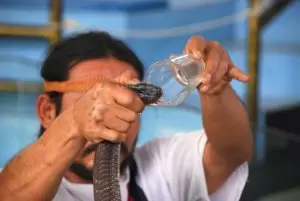
A snake milker is a specialized herpetologist who extracts venom from snakes and venomous reptiles for medical research and anti-venom production. These professionals typically work in serpentariums, university labs, zoos, or independent research facilities. Snake milkers fall under the broader BLS occupational category of zoologists and wildlife biologists, which has a median salary of $67,430, though actual compensation for snake milking roles may vary. Positions are extremely limited, with some sources estimating 50-100 roles nationwide, though this figure is not verified by official labor statistics.
Snake milking might sound like something from an adventure movie, but it's a legitimate and vital career within the field of herpetology. A snake milker is a specialized herpetologist—a type of zoologist who focuses specifically on reptiles and amphibians. These professionals extract venom from snakes and other venomous reptiles whose venom can cause serious illness or death. They receive extensive training in safely handling these sensitive and often legally protected animals.
What Does a Snake Milker Do?
Snake milkers serve two critical functions in medical science and public health. The work requires precision, patience, and a deep understanding of reptile behavior.
The first purpose for venom extraction is medical research. Biological scientists study snake venom for specific genetic markers and attributes that show promise in various medical applications. Treatments and cures often come from surprising sources. Snake venoms have been used to develop medications that treat blood clots, combat high blood pressure, and reduce the risk of heart attacks. Researchers continue discovering new therapeutic applications for these complex biological compounds.
The second main reason for extracting venom is emergency medical procedures. When someone suffers a venomous snake bite, they may have just hours to live without proper treatment. Snake milkers extract and process venom so medical professionals can create anti-venom to treat affected patients. This work directly saves lives every year.
Where Does a Snake Milker Work?
A snake milker who works in the field typically finds employment at a "serpentarium"—a specialized laboratory that houses and researches venomous snakes and related reptiles. These facilities serve multiple functions beyond venom extraction, including conservation, breeding programs, rehabilitation, and veterinary services. Most snake milkers handle several responsibilities within these labs rather than focusing solely on venom extraction.
Serpentariums exist in various institutional settings. Some operate within major zoos, others function as university research facilities, and still others run as small independent labs that offer contract services. Geographic concentration matters in this field. The majority of serpentariums are located in the Southeast United States, California, and Arizona—regions with native venomous snake populations and established herpetology research communities.
The typical workday involves tending to snakes, performing venom extraction using specialized techniques, and freeze-drying the venom for shipment to researchers, hospitals, animal charities, and other entities with legitimate medical needs. Physical demands include standing for extended periods, maintaining steady hands during delicate procedures, and managing the psychological stress that comes with handling potentially lethal animals.
Safety Protocols and Training
Every serpentarium maintains strict safety protocols. Snake milkers receive comprehensive training in emergency medical response, including immediate treatment procedures for snake bites. They learn to read reptile body language, recognize stress signals, and understand when an animal is too agitated for safe handling. This situational awareness is as important as the technical skill of venom extraction itself.
What Is the Average Snake Milker Salary?
Snake milking is a small and heavily regulated industry. Given the extensive training required and the specialized nature of the work, compensation can be competitive within the broader field of zoology. Most positions offer hourly pay structures.
Snake milkers typically fall under the broader BLS occupational category of zoologists and wildlife biologists. As of May 2023, this occupational group earned a median annual wage of $67,430. However, actual pay for snake milking positions may vary and is often lower than this median, particularly for entry-level roles. Experienced professionals with specialized certifications and those working at prestigious research institutions may approach or exceed the median. Career progression into senior roles is limited due to the small number of positions nationwide.
| Career Level | Typical Annual Salary | Role Description |
|---|---|---|
| Entry-Level Lab Assistant | $35,000 - $45,000 | Animal care, basic extraction support, facility maintenance |
| Snake Milker (Median) | $67,430 | Primary venom extraction, specimen care, research support |
| Senior Research Specialist | $80,000+ | Specialized research, teaching, protocol development |
Geographic location influences earning potential. Serpentariums in major metropolitan areas or associated with prestigious research institutions typically offer higher compensation. Independent contractors who provide specialized venom-extraction services may set their own rates but face less job stability.
Snake Milking Jobs & Job Description
Snake milking is a highly specialized niche within the zoology industry. Most snake milkers work in laboratory settings, extracting venom for medical research or the production of treatments. The role requires both technical precision and animal husbandry skills.
Core Responsibilities
Job responsibilities for snake milkers generally include:
- Use specialized laboratory equipment to extract venom from living snakes using proper techniques that minimize stress to the animals
- Calibrate and maintain laboratory equipment, ensuring accuracy and sterility for medical-grade venom collection
- Develop expertise in safe handling of venomous snakes, including mastery of emergency medical treatment procedures for snake bites
- Handle, label, catalog, and store snake venom after extraction, following strict documentation protocols
- Perform daily care tasks for snake specimens, including feeding schedules, administering medications, and documenting health status, diet changes, and behavioral patterns
Essential Skills
Success in this field requires several specialized competencies beyond basic knowledge of zoology. Manual dexterity and exceptionally steady hands are critical—venom extraction demands precision work with potentially lethal animals. Attention to detail matters in every aspect of the job, from properly documenting extraction quantities to noticing subtle changes in reptile behavior that might indicate health issues.
Patience and a calm demeanor are equally important. Snakes respond to handler stress levels, and rushed or anxious movements increase danger for both the milker and the animal. The ability to remain composed during unexpected situations—such as when a snake becomes agitated or equipment malfunctions—separates competent snake milkers from exceptional ones.
What Is the Job Demand for Snake Milkers?
Understanding the realities of the job market is essential for anyone considering this career path. Snake milking represents one of the most specialized niches in zoology, which means opportunities are genuinely limited.
The Bureau of Labor Statistics projects employment of zoologists and wildlife biologists to grow 5% between 2022 and 2032, roughly in line with the average for all occupations. However, this modest growth rate translates to very few snake milker positions. While some sources estimate 50-100 snake milker roles exist nationwide at any given time, this number is not verified by official labor statistics. What is clear is that opportunities in this specialty are genuinely limited, and even with normal growth rates, new openings are rare.
The concentration of serpentariums in specific regions further limits opportunities. Job seekers should be prepared for geographic flexibility, as positions most commonly open in the Southeast, California, Arizona, and areas near major research universities with herpetology programs.
Career Path Considerations
Many aspiring snake milkers begin their careers in related animal care positions—working as zoo technicians, wildlife biology research assistants, or veterinary technicians specializing in exotic animals. These entry points provide valuable experience handling animals and working in laboratory or zoo settings. Some professionals transition into snake milking after establishing themselves in broader conservation and breeding programs.
Given the limited positions, prospective snake milkers should consider this career as one option within a broader herpetology or zoology career path rather than as a standalone goal. Having skills that transfer to related fields—such as reptile rehabilitation, zoo education, or wildlife research—provides career stability while keeping opportunities for snake milking accessible.
What Are the Education Requirements to Become a Snake Milker?
Snake milking follows a clear but demanding educational pathway. The journey requires commitment to hard science education and specialized training in herpetology.
High School Preparation
Students interested in this career should focus on strong performance in mathematics and biology during high school. Chemistry courses provide a helpful background for understanding venom's chemical properties and how it affects biological systems. Building a solid foundation in the biological sciences at this stage makes subsequent degree work more manageable.
Undergraduate Education
A bachelor's degree in a hard science field is essential. While biology degrees provide a relevant background, we strongly recommend pursuing a degree specifically in zoology. This focus allows you to concentrate your studies on animals, eliminating biology coursework that won't apply to your intended career. Fish and wildlife management degrees may also provide appropriate entry points, particularly programs with strong herpetology components.
During undergraduate study, seek out minors or elective courses in chemistry, particularly toxicology. Understanding how venoms function at the molecular level enhances your value as a researcher and practitioner. Take advantage of any opportunities to work with reptiles through university labs, local zoos, or wildlife rehabilitation centers.
Graduate Education
Advanced degrees in zoology or related fields can benefit career advancement in this specialized field. Many professionals pursue a Master of Science degree in herpetology, focusing their thesis research and coursework on snake biology, venom composition, or related topics. This specialized knowledge can set you apart in a competitive job market.
However, many snake milkers begin their careers with a bachelor's degree in biology or zoology and gain hands-on experience through labs, zoos, or internships. Practical experience handling reptiles and working in research settings may be valued as highly as advanced degrees, particularly for entry-level venom extraction roles. Graduate education becomes more important if you plan to pursue university teaching positions or lead original research programs.
Certification and Licensing
Following completion of your academic studies, you may need certification or professional licenses. Requirements vary significantly by state, as different jurisdictions regulate the handling of venomous reptiles differently. Check with your state's department of wildlife resources or equivalent agency for specific requirements. Some states require special permits for working with venomous species, while others have less stringent regulations.
Snake Milking - Related Degrees
Frequently Asked Questions
Is snake milking a real job?
Yes, snake milking is a legitimate specialized career within herpetology and zoology. Snake milkers work in serpentariums, research labs, zoos, and universities, extracting venom for medical research and anti-venom production. However, it's a very small field with limited opportunities nationwide, making it one of the most specialized niches in animal science.
How dangerous is snake milking?
Snake milking involves inherent risks when working with venomous reptiles. However, properly trained professionals follow strict safety protocols that minimize danger. Snake milkers receive extensive training in safe handling techniques, reptile behavior, and emergency medical response. Facilities maintain comprehensive safety equipment and procedures. While snake bite incidents can occur, they are rare among experienced professionals who follow established protocols.
How much does a snake milker make per hour?
Snake milkers fall under the broader BLS category of zoologists and wildlife biologists, which has a median annual salary of $67,430 (approximately $32-34 per hour). However, actual pay for snake milking positions may vary and is often lower, particularly for entry-level roles. Entry-level lab assistants may earn $17-22 per hour, while experienced specialists at prestigious institutions may earn $38+ per hour. Pay varies based on geographic location, employer type, and individual experience level.
What degree do you need to become a snake milker?
While advanced degrees in zoology or herpetology can be beneficial, many snake milkers begin with a bachelor's degree in biology or zoology and gain hands-on experience through labs, zoos, or internships. Practical experience handling reptiles safely is highly valued. Graduate education (Master's or PhD) is increasingly important for those pursuing research leadership roles or university teaching positions, but entry-level venom-extraction work is often accessible with a bachelor's degree plus relevant experience.
How many snake milker jobs are available?
Snake milking is one of the most specialized careers in zoology, with very limited opportunities nationwide. While some sources estimate 50-100 positions exist at any given time, this number is not verified by official labor statistics. What is clear is that new openings are rare, with perhaps only a handful of positions becoming available annually. Most opportunities are concentrated in the Southeast United States, California, and Arizona. Prospective snake milkers should consider this career as one specialization within a broader herpetology career path rather than as a standalone career goal.
Key Takeaways
- Highly Specialized Niche: Snake milking is among the most specialized roles in zoology, requiring extensive education in herpetology and years of hands-on training in safe reptile handling and venom-extraction techniques.
- Critical Medical Applications: Extracted venom serves two vital purposes—creating life-saving anti-venom for snake bite victims and providing researchers with compounds for developing treatments for blood clots, high blood pressure, and heart disease.
- Advanced Education Beneficial: While many snake milkers start with a bachelor's degree in biology or zoology and gain hands-on experience through labs and internships, advanced degrees in herpetology can enhance career advancement opportunities in this specialized field.
- Limited Career Opportunities: Opportunities in snake milking are genuinely scarce, though exact numbers are not verified by official labor statistics. Most positions are concentrated in the Southeast, California, and Arizona ,where serpentariums and research facilities cluster.
- Competitive Compensation: Snake milkers fall under the broader BLS category of zoologists and wildlife biologists, which has a median salary of $67,430, though actual pay for snake milking roles may vary and is often lower, particularly for entry-level positions.
Ready to explore careers in zoology and herpetology? Discover degree programs that can prepare you for specialized roles working with reptiles and other wildlife.

What Kind Of Societies and Professional Organizations Do Snake Milkers Have?
The specialized field of snake milking doesn't have dedicated professional organizations, but snake milkers benefit from membership in broader herpetology research and conservation societies. These organizations provide networking opportunities, access to current research, and professional development resources.
- American Society of Ichthyologists and Herpetologists: This is the premier organization for research and conservation of fish, amphibians, and reptiles in the United States, serving both academic and public interest communities.
- Society for the Study of Amphibians and Reptiles: Founded in 1958, this is one of the world's largest organizations dedicated to advancing research, education, and conservation of reptiles and amphibians.
2024 US Bureau of Labor Statistics salary and job growth figures for zoologists and wildlife biologists reflect national data, not school-specific information. Conditions in your area may vary. Data accessed January 2026.