
Emergency and Disaster Response Technicians clean up hazardous materials at disaster sites including chemical spills, nuclear accidents, and terrorist attacks. Working primarily for government agencies like FEMA and the military, these specialized professionals require OSHA certification and extensive on-the-job training. The role demands physical stamina, technical expertise, and the ability to work in high-stress, dangerous environments while protecting public health and safety.
When disasters strike—whether natural catastrophes, industrial accidents, or human-made emergencies—someone needs to handle the toxic aftermath. Emergency and Disaster Response Technicians are the specialists who step into contaminated zones after oil spills, chemical releases, nuclear incidents, and terrorist attacks to neutralize hazardous materials and protect communities from ongoing threats.
This career combines environmental science, public health, and emergency management. If you're drawn to work that matters, can handle high-pressure situations, and want to be at the forefront of disaster relief, this field offers meaningful opportunities to make a real difference when communities need help most.
What Does an Emergency and Disaster Response Technician Do?
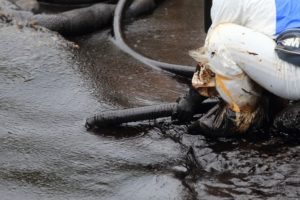
Emergency and Disaster Response Technicians work in disaster relief at accident and emergency sites, handling areas contaminated with toxic or hazardous materials. They respond to terrorist attacks, oil spills, truck and railroad derailments, chemical releases, nuclear disaster zones, and other areas that pose threats to human health.
These aren't simply cleanup crews that move in after a disaster. They're specialized hazardous materials removal workers focused on identifying, containing, and safely eliminating toxic waste and dangerous substances that are either the cause or byproduct of emergencies.
They work alongside disaster planners and emergency management specialists. Still, where those professionals focus on directing groups and resource planning, Emergency Response Technicians are hands-on at the frontline of relief. Many develop specialties in specific areas—chemical contamination, nuclear decontamination, biological hazards—though some maintain general emergency response skills. All share deep knowledge of environment and public health principles.
Where Does an Emergency and Disaster Response Technician Work?
The overwhelming majority of emergency and disaster response professionals work for government organizations. In the United States, this primarily means FEMA (Federal Emergency Management Agency), the Army, and other military branches. Individual states also maintain their own disaster relief organizations. Looking at international opportunities, technicians can work for the UNHCR (United Nations High Commissioner for Refugees) and the WHO (World Health Organization).
The charitable sector offers both paid specialist positions and volunteer opportunities. Organizations like the Red Cross (International and American), AmeriCares, International Relief Teams, Oxfam, and ActionAid hire experienced professionals. While many positions are paid, volunteer roles exist for those who work other jobs and want to contribute during major disasters.
Private industry opportunities exist but remain limited. Companies occasionally contract specialists to perform decommissioning work, including cleaning up toxic spills and neutralizing nuclear or chemical waste. However, private firms rarely deploy to active disaster zones since they typically lack the infrastructure and personnel resources required for large-scale emergency response.
Core Responsibilities
Emergency and Disaster Response Technicians handle complex, high-stakes work that changes with each incident. On any given deployment, they ensure the health and safety of their team while protecting the affected community. They must understand and apply federal, state, and local environmental and emergency regulations, often making quick decisions with incomplete information.
Documentation plays a critical role. Technicians accurately complete internal reports and project documentation, briefing team members about disaster conditions and response progress. They follow specific incident protocols proactively and safely, maintaining clear communication within their team to respond quickly as situations evolve.
The physical demands are significant. Technicians execute fieldwork in stressful conditions, sometimes without clear direction and often in limited visibility. They respond to chemical releases, fires, transportation accidents, and similar events under varying weather conditions. This means loading and unloading equipment and machinery from transport to emergency sites, and operating specialized equipment such as forklifts, ATVs, bobcats, pumps, remediation equipment, and field survey instruments.
Technical skills are essential. Technicians use OSHA-regulated contaminant reduction zones, calibrate and operate chemical and hazard monitoring equipment, and apply their skilled trade knowledge to emergency scenarios. The work requires both technical precision and the ability to adapt rapidly to changing conditions.
Essential Skills for Success
Success in emergency and disaster response demands a specific combination of technical knowledge, physical capability, and mental resilience. Here's what the role requires:
Technical Competencies: Understanding hazardous materials classification, proper use of personal protective equipment (PPE), decontamination procedures, and monitoring equipment operation. You'll need to interpret chemical data, understand contamination pathways, and apply environmental regulations correctly under pressure.
Physical Fitness: This work is physically demanding. You'll wear heavy protective gear in extreme temperatures, lift equipment, work in confined spaces, and maintain stamina during 12+ hour shifts when disasters require extended response.
Stress Management: Disaster zones are chaotic. You'll work with incomplete information, face potential dangers, and need to stay focused when conditions are traumatic or disturbing. Mental resilience and the ability to compartmentalize stress are crucial.
Communication: Clear, direct communication with team members prevents accidents and saves lives. You'll brief colleagues, report to supervisors, coordinate with other agencies, and sometimes interact with affected community members—all while maintaining professionalism under challenging circumstances.
Problem-Solving: Every disaster is different. You'll encounter situations not covered in training manuals and need to apply your knowledge creatively while maintaining safety protocols. Quick thinking combined with systematic assessment keeps everyone safe.
Teamwork: No one works alone in disaster response. Success depends on coordinating closely with team members, supporting colleagues, and contributing to group decisions even when exhausted or stressed.
What Are the Education Requirements?
No formal education beyond a high school diploma is required to work in disaster and emergency relief. With a strong high school background, selected candidates receive extensive on-the-job training before deployment to actual emergencies.
Certification through professional organizations is mandatory. Typically, 40 hours of OSHA (Occupational Safety & Health Administration) training represents the minimum requirement. Requirements vary by state, so check regulations where you intend to work and study. Expect many hours of training in simulated disaster zones before you're permitted to operate in actual emergencies.
An associate's degree becomes particularly valuable for those intending to work in nuclear, chemical, or biological waste disposal and treatment. While not a prerequisite for most positions, a degree gives candidates a competitive edge and more profound technical knowledge. Those who want to advance into emergency planning roles will need thousands of hours of on-the-ground experience, combined with additional education in emergency and disaster management.
Emergency & Disaster Response - Related Degrees
Emergency and Disaster Response Technician Salary & Compensation
Emergency disaster response technicians fall under the broader BLS category of hazardous materials removal workers. According to 2024 data, these professionals earned a median annual salary of $48,490. The field currently employs approximately 51,300 workers nationwide.
Overtime significantly affects actual earnings. Due to the unpredictable nature of disasters and accidents, overtime opportunities are common. When major disasters occur, technicians may work extended shifts for weeks, substantially increasing their annual compensation. Some government positions offer hazard pay for hazardous assignments, which can add thousands of dollars to base salaries.
Geographic location and employer type influence earnings. Federal positions through FEMA or the military branches typically offer higher base salaries, plus comprehensive benefits such as health insurance, retirement plans, and paid training. State and local government positions vary widely based on regional budgets and disaster frequency. Private sector specialists working on contracted decommissioning projects often command premium rates but with less job stability.
Voluntary roles with charitable organizations are typically unpaid, though organizations cover essential costs, including protective clothing, housing, and food, during deployments to domestic and international disaster zones.
Job Outlook & Career Prospects
Employment for hazardous materials removal workers is projected to grow 1 percent from 2024 to 2034, which is slower than the average for all occupations. This growth translates to approximately 500 new positions over the decade, or about 50 openings per year.
Despite modest overall growth, job openings will continue to occur regularly as workers leave the occupation for other careers or retire. The physically demanding nature of the work means many professionals transition to less strenuous roles as they age, creating ongoing opportunities for new entrants.
Demand for nuclear decontamination experts may increase significantly as older nuclear facilities undergo decommissioning over the coming decades. Additionally, while climate change is increasing the frequency and severity of natural disasters, technological improvements and better preventive measures are moderating the growth rate for emergency response positions.
Job security in this field remains relatively strong, particularly within government agencies. Disasters are unpredictable, but they're constant. Communities will always need professionals trained to handle hazardous-material emergencies, making this an essential occupation unlikely to be automated or eliminated. The specialized skills and certifications required create barriers to entry, protecting existing positions.
Career Advancement Opportunities
Emergency and Disaster Response Technicians have several peer growth opportunities. With experience, technicians can advance to team lead or supervisor roles, coordinating groups of responders during deployments. These positions require strong decision-making skills, logistics management, and extensive field experience.
Some technicians transition into related specialized HAZMAT positions focusing on specific types of contamination. Others move into environmental health and safety technician roles with regular hours and less physical demands, applying their emergency response knowledge to prevention and compliance.
Senior-level emergency and disaster professionals are promoted based on their ability to make quick logistical decisions during disaster management and the breadth of their experience. Every disaster is different, but everyday leadership responsibilities include:
Setting goals and ensuring team actions lead to the efficient achievement of those objectives. Ensuring proper staffing of response teams and leading employees by example in stressful situations. Effectively communicating with support personnel, management, and site stakeholders while maintaining clarity under pressure.
Looking for opportunities to improve systems and processes in disaster response based on lessons learned. Providing solutions to complex situations with limited resources. Creating and monitoring worker schedules, especially during extended emergency operations.
Advocating for mental health support for frontline responders and technicians who face traumatic situations. Supporting employees in pursuing professional development opportunities. Nurturing working relationships with vendors and suppliers to ensure supply chain integrity during crises. Advocating for transparency and comprehensive training under OSHA standards.
Those interested in management often pursue additional education in emergency management, earning bachelor's or master's degrees while accumulating field experience. The combination of hands-on disaster response knowledge and formal education in planning and logistics opens doors to senior leadership positions.
Professional Organizations & Resources
Several professional organizations support disaster and emergency relief professionals:
BHA (Bureau for Humanitarian Assistance): Enables American citizens to work abroad on disaster relief, helping them respond to and aid local communities recovering from natural disasters and environmental accidents.
FEMA (Federal Emergency Management Agency): The most significant government body of its kind in the US, responding to terror attacks, emergencies, and disasters. FEMA offers numerous training programs and certifications for prospective professionals, making it an essential resource for career development.
Red Cross (International Committee): Although most countries have their own Red Cross organizations, the ICRC coordinates international efforts. Beyond helping in disaster and war zones, they hold international committees each year on humanitarian work and law, providing networking and learning opportunities for professionals.
Frequently Asked Questions
What's the difference between an Emergency Response Technician and a HAZMAT Specialist?
Emergency Response Technicians typically respond to a broader range of disasters, including natural disasters, accidents, and emergencies involving hazardous materials. HAZMAT Specialists focus specifically on handling, transporting, and managing hazardous materials in both emergency and non-emergency situations. There's significant overlap, and many professionals hold certifications in both areas. Emergency Response Technicians often specialize in HAZMAT work as they gain experience.
Is Emergency and Disaster Response work dangerous?
Yes, this work involves inherent risks. You'll work in contaminated environments, handle toxic substances, and operate in unstable disaster zones. However, extensive safety protocols, protective equipment, and rigorous training significantly reduce risks. No one works alone, and safety is the top priority for every response team. The danger is real but manageable with proper training and adherence to protocols.
Do I need a college degree to become an Emergency Response Technician?
No, a college degree isn't required. A high school diploma plus OSHA certification (typically 40 hours minimum) and extensive on-the-job training will qualify you for entry-level positions. However, an associate's degree in environmental science, emergency management, or a related field can give you a competitive advantage. It may be valuable if you want to specialize in nuclear, chemical, or biological waste management.
How long does OSHA certification take?
The basic OSHA HAZWOPER (Hazardous Waste Operations and Emergency Response) certification requires 40 hours of training for most positions. More advanced roles may require an 80-hour certification. After initial certification, you'll need annual 8-hour refresher courses to maintain your credentials. Beyond OSHA requirements, expect additional months of supervised training in simulated disaster scenarios before deployment to actual emergencies.
Can I work for private companies or only government agencies?
While most Emergency Response Technicians work for government agencies such as FEMA, the military, or state emergency management offices, private-sector opportunities also exist. Environmental remediation companies, industrial facilities, nuclear power plants, and specialized consulting firms hire technicians for decommissioning projects, spill response, and facility management. However, these positions are more limited and often focus on specific industrial applications rather than broad disaster response.
Key Takeaways
- Critical Public Safety Role: Emergency Response Technicians protect communities by neutralizing hazardous materials at disaster sites, working at the frontline of relief when disasters strike.
- Government Employment Dominates: Most positions are with federal agencies such as FEMA, military branches, or state emergency management offices, with additional opportunities in charitable organizations and limited private-sector roles.
- Accessible Entry Requirements: No college degree required—a high school diploma plus 40 hours of OSHA certification and extensive on-the-job training qualify you for entry-level positions.
- Competitive Median Salary: Hazardous materials removal workers earn a median salary of $48,490 annually, with significant overtime opportunities during major disasters, which substantially increase earnings, plus potential hazard pay for dangerous assignments.
- Stable Employment with Modest Growth: Currently 51,300 workers nationwide with 1% projected growth through 2034 (approximately 50 new positions annually), plus regular openings as workers retire or transition to less physically demanding roles.


Ready to explore a career in emergency and disaster response? Discover degree programs and training opportunities that can prepare you for this critical field.

2024 US Bureau of Labor Statistics salary and job growth figures for hazardous materials removal workers reflect national data, not school-specific information. Conditions in your area may vary. Data accessed January 2026.