A CBP Agricultural Specialist is a federal officer who protects U.S. agriculture by inspecting international shipments, detecting invasive pests, and enforcing import regulations at borders, airports, and seaports. They earn competitive federal salaries (Glassdoor reports median around $74,000, with variation based on experience and location), require a bachelor's degree in agriculture-related fields, and work for U.S. Customs and Border Protection.
An Agricultural Specialist is a specific type of Customs and Border Protection (CBP) official responsible for understanding and enforcing rules governing the transfer of agricultural items across borders. If you're passionate about protecting American agriculture while working in a federal law enforcement role, this career combines scientific knowledge with hands-on field work at some of the nation's busiest entry points.
The role is unique in that it blends agricultural science expertise with federal security responsibilities. You'll spend your days examining everything from commercial cargo shipments to travelers' luggage, looking for threats most people never consider. It's a career that matters because a single missed inspection could introduce pests or diseases that devastate entire crop regions.
What Does an Agricultural Specialist Do?
Agricultural Specialists are specially trained CBP officers who expertly identify potential violations of U.S. import policies, particularly in agriculture. They're essentially agricultural detectives, spotting hidden threats in luggage, incoming shipments, and containers of agricultural imports.
A major threat they detect, assess, and intercept regularly is pests that could compromise the integrity of American crops. Think about it: a single invasive insect species or plant disease could cause billions in agricultural damage if it enters the country undetected. That's where Agricultural Specialists come in.
The work breaks down into several key categories:
Inspection Duties
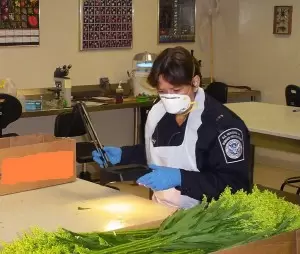
- Cargo examination: Physically inspecting commercial shipments of fruits, vegetables, plants, and animal products for signs of contamination or invasive species.
- Passenger screening: Checking travelers' luggage and agricultural products they're bringing into the country, often at international airports.
- Risk assessment: Determining which shipments pose the highest risk based on origin country, commodity type, and historical data.
- Sample collection: Taking specimens of suspicious materials for laboratory analysis when immediate identification isn't possible.
Regulatory Enforcement
- Import compliance verification: Ensuring agricultural products meet all federal regulations, including proper documentation and phytosanitary certificates.
- Quarantine enforcement: Implementing quarantine measures when prohibited items or pests are discovered.
- Violation documentation: Recording and reporting instances of attempted illegal importation, which can result in fines or criminal charges.
- Educational outreach: Explaining regulations to importers and travelers to prevent future violations.
Documentation and Reporting
- Official paperwork: Completing detailed inspection reports, import permits, and compliance certifications.
- Database management: Entering inspection results into federal tracking systems that help identify emerging threats.
- Record keeping: Maintaining accurate logs of all inspections, findings, and enforcement actions taken.
Inter-Agency Collaboration
- USDA coordination: Working closely with the USDA's Animal and Plant Health Inspection Service (APHIS) on pest identification and response protocols.
- Laboratory partnerships: Submitting samples to specialized labs for definitive identification of unknown organisms.
- Intelligence sharing: Communicating with other CBP divisions about smuggling patterns and emerging agricultural threats.
The exact nature of the work performed largely depends on the location or checkpoint where an Agricultural Specialist works. Someone stationed at a major West Coast seaport handling produce from Asia will have different daily routines than someone at a southern border crossing or an East Coast airport.
Where Does an Agricultural Specialist Work?
Most Agricultural Specialists work for the Federal Government at U.S. Border Protection posts, airports, seaports, or other stations that deal with imports. This means they spend significant time working outdoors, which can include challenging weather conditions depending on location and season.
Common work locations include:
- International airports: Major hubs like LAX, JFK, Miami International, and O'Hare, where millions of international passengers arrive annually
- Seaports: Commercial ports in Los Angeles, Long Beach, Houston, Savannah, and Seattle handling container ships from around the world
- Land border crossings: Checkpoints along the Mexican and Canadian borders, particularly in Texas, California, Arizona, and New York
- Express consignment facilities: Locations where international packages and mail are processed for companies like FedEx and DHL
However, Agricultural Specialists also spend some time in an office environment, usually completing official paperwork or reviewing local, state, and federal regulations. These workplaces may be located along the border or at other checkpoints, which can require a long commute for some positions.
Many Agricultural Specialists work a full-time schedule and may be required to work overtime, since border protection must be provided at all hours. Weekend and holiday work is common, especially at busy international airports and seaports that operate 24/7.
What Is the Average Agricultural Specialist Salary?
CBP Agricultural Specialists are paid under the federal General Schedule (GS) pay system, which provides structured salary levels based on grade and step. According to Glassdoor and similar employment data sources, CBP Agricultural Specialists report median salaries of around $74,000. However, actual compensation varies significantly by GS level, locality pay adjustments, overtime opportunities, and years of experience. Some experienced specialists in high-cost areas earn over $100,000 annually when including locality pay and overtime.
| Salary Metric | Typical Range | What This Means |
|---|---|---|
| Entry-Level (GS-5) | $35,000-$45,000 | Starting salary for positions requiring a bachelor's degree with no experience |
| Mid-Career (GS-7/9) | $48,000-$65,000 | Typical range after 3-5 years, with advancement through pay grades |
| Experienced (GS-11/12) | $65,000-$85,000 | Senior specialists with supervisory duties or specialized expertise |
| Federal Benefits | Comprehensive package | Health insurance, retirement pension (FERS), paid leave, job security |
It's important to note that federal salaries also include locality pay adjustments. Agricultural Specialists working in high-cost areas such as San Francisco, New York, or Washington, D.C., receive additional compensation (typically 15-35% above base pay) to offset living expenses.
Additionally, CBP positions often include opportunities for overtime pay, especially at busy ports of entry. Some Agricultural Specialists report earning an additional 10-20% of their base salary through overtime during peak travel seasons.
What Is the Job Demand for Agricultural Specialists?
Job availability for CBP Agricultural Specialists depends primarily on federal budget allocations and border security policy priorities rather than market-driven demand. Specific job growth projections for CBP Agricultural Specialist positions aren't published separately from the broader agricultural and food scientist category tracked by the Bureau of Labor Statistics.
Several factors influence the need for Agricultural Specialists:
- Increased global trade: More international shipments require more inspections to protect U.S. agriculture.
- Emerging pest threats: Climate change and global transportation are introducing new invasive species that require expert detection.
- Retirement wave: Many current Agricultural Specialists are reaching retirement age, creating openings for new professionals.
- Enhanced biosecurity: Recent agricultural disease outbreaks have highlighted the need for robust border inspection programs.
However, job growth largely depends on federal budget allocations to CBP and border security programs, which can fluctuate with political priorities and economic conditions. That said, agricultural protection is generally seen as a bipartisan priority since it directly affects farmers and food security.
Competition for positions can be moderate to high, especially in desirable locations such as major metropolitan areas. Applicants with advanced degrees, multilingual skills, or prior federal experience often have an advantage in the hiring process.
What Are the Education Requirements to Become an Agricultural Specialist?
Agricultural Specialists must have a bachelor's degree or higher. This is a firm requirement for federal employment with CBP in this role. Majors in botany, entomology, plant pathology, agricultural sciences, natural resource management, or related fields are preferred and will make your application more competitive.
Here's what you need to know about the educational pathway:
Undergraduate Education
Your bachelor's degree should focus on agriculture, plant science, or related biological sciences. The most directly relevant programs include:
- Agricultural sciences: Broad foundation in crop production, soil science, and pest management
- Entomology: Study of insects, which is directly applicable to pest detection work
- Plant pathology: Focus on plant diseases and how they spread
- Botany: Plant biology and identification skills
- Natural resource management: Broader environmental and resource conservation perspective
If you're interested in pursuing this career path, you might also consider agricultural engineering degree programs, which provide strong technical backgrounds that can be valuable for understanding agricultural systems and technology used in modern farming.
Helpful Certifications and Experience
While not required, certain certifications and experiences can strengthen your application:
- Pest identification certification: State or federal programs that train you to identify specific pest species
- Pesticide applicator license: Demonstrates knowledge of agricultural chemicals and safety protocols
- Foreign language skills: Spanish, Mandarin, or other languages common in international trade are highly valued
- Internships: USDA, state agriculture departments, or cooperative extension programs provide relevant experience
- Research experience: Laboratory or field research in plant pathology or entomology
Advanced Education
While a bachelor's degree is the minimum requirement, advancement in the field may involve graduate education. A master's degree or PhD can lead to:
- Higher starting pay grades (GS-7 or GS-9 vs. GS-5)
- Faster promotion opportunities
- Eligibility for specialized or supervisory positions
- Higher salary potential throughout your career
Many Agricultural Specialists also have backgrounds in related environmental science careers, including agricultural and food science, which provides complementary knowledge of food safety and quality control.
Security Clearance Requirements
As a federal law enforcement position, you'll need to pass:
- Background investigation: Thorough review of your criminal, financial, and employment history
- Drug screening: Pre-employment and random testing throughout your career
- Medical examination: Ensuring you can perform the physical demands of the job
- Security clearance: Typically Secret clearance for access to sensitive agricultural and security information
How Do You Apply to Become an Agricultural Specialist?
The application process for CBP Agricultural Specialist positions follows federal hiring procedures, which can be lengthy but are designed to ensure qualified candidates. Here's what to expect:
Step 1: Find Open Positions
All federal positions, including Agricultural Specialist roles, are posted on USAJobs.gov, the federal government's official employment site. You'll need to:
- Create a USAJobs account with your resume and transcripts
- Search for "Agricultural Specialist" or "CBP Agricultural Specialist"
- Set up job alerts to be notified when new positions open
- Note that positions are often location-specific, so you'll apply to specific ports of entry
Step 2: Submit Your Application
Federal applications require more documentation than typical private sector jobs:
- Detailed resume: Must include specific dates, hours per week, and supervisor contact information for all positions
- Transcripts: Unofficial copies are acceptable initially, but you'll need official transcripts if selected
- Veterans' preference documentation: DD-214 if you're a military veteran (provides hiring preference)
- Supplemental questions: Detailed questions about your qualifications and experience
Step 3: Assessment and Testing
If your application is competitive, you'll be invited to complete:
- Written examination: Tests knowledge of agricultural science, pest identification, and regulations
- Interview: Structured interview with CBP officials, often including scenario-based questions
- Practical assessment: May include specimen identification or inspection simulation exercises
Step 4: Background Investigation
This is often the longest part of the process (3-6 months or more):
- Extensive background check covering 10+ years of history
- Reference interviews with former employers, neighbors, and associates
- Financial records review
- Drug testing
Step 5: Training Academy
Once hired, new Agricultural Specialists attend CBP training:
- Basic CBP training: Several weeks at a CBP training facility covering law enforcement basics, agency policies, and physical fitness
- Agricultural Specialist specific training: Additional training on pest identification, import regulations, and inspection procedures
- On-the-job training: Mentorship with experienced specialists at your assigned location (typically 6-12 months)
Timeline Expectations
The entire process from application to first day of work typically takes 6-12 months, sometimes longer. Patience is essential when pursuing federal employment. Don't be discouraged if you don't hear back immediately after applying.
Career Advancement and Growth Opportunities
One advantage of federal employment is the clear career progression path. Agricultural Specialists have several options for advancement:
Pay Grade Progression
Federal employees advance through the General Schedule (GS) pay grades:
| Career Stage | Typical GS Level | Years of Experience | Key Responsibilities |
|---|---|---|---|
| Entry-Level | GS-5 to GS-7 | 0-2 years | Basic inspections under supervision, learning procedures |
| Journey-Level | GS-9 to GS-11 | 3-7 years | Independent inspections, specialized commodity expertise |
| Senior Specialist | GS-12 to GS-13 | 8-15 years | Lead complex inspections, mentor junior staff, and provide policy input |
| Supervisory | GS-13 to GS-14 | 15+ years | Manage teams, port-level coordination, and program oversight |
Specialization Opportunities
As you gain experience, you can develop specialized expertise:
- Commodity specialists: Become the go-to expert for specific products like tropical fruits, nursery stock, or timber
- Pest identification specialists: Advanced training in entomology or plant pathology for definitive field identification
- Canine handler: Work with agricultural detector dogs trained to sniff out prohibited items
- Training coordinator: Develop and deliver training programs for new specialists
- Compliance officer: Focus on regulatory enforcement and violation processing
Management Track
Experienced specialists can move into supervisory and management roles:
- Supervisory Agricultural Specialist: Oversee teams of 5-15 specialists at a specific port of entry
- Port Director for Agriculture: Manage all agricultural programs at major ports
- Regional coordinator: Oversee agricultural programs across multiple ports in a region
- Policy and program development: Work at CBP headquarters on national agricultural inspection policies
Lateral Moves Within CBP
Agricultural Specialists can also transition to other CBP career paths:
- CBP Officer (broader customs inspection role)
- Border Patrol Agent
- Import Specialist (focus on trade compliance)
- Intelligence Analyst
Your agricultural expertise remains valuable in these roles, particularly for positions dealing with agricultural commodities or environmental crimes.
Related Career Paths in Agriculture
If you're interested in protecting agriculture but want to explore other options, consider these related careers:
- Agricultural Inspector: State-level inspectors who monitor farms and agricultural facilities for compliance with regulations
- USDA APHIS Officer: Work directly for the USDA's Animal and Plant Health Inspection Service on pest surveys and eradication programs
- State Plant Health Director: Manage state-level agricultural protection programs
- Quarantine Officer: Enforce plant and animal quarantines to prevent disease spread
- Agricultural Commodity Inspector: Inspect domestic agricultural products for quality and grading
What Kind of Societies and Professional Organizations Do Agricultural Specialists Have?
Agricultural Specialists and those who wish to become Agricultural Specialists can look to the following resources for guidance and professional development:
Government Resources
- U.S. Customs and Border Protection (CBP)
This federal government entity governs U.S. borders by combining law enforcement efforts with awareness of immigration policy and agricultural protection programs. It's the primary employer of Agricultural Specialists. The website offers detailed career information, application instructions, and resources on current regulations. Use this site to explore job openings, learn about training requirements, and understand what a career with CBP entails. - U.S. Department of Agriculture's Animal and Plant Health Inspection Service (APHIS)
The USDA's special service focuses on inspecting animal and plant health, ensuring that imports and exports won't pose a danger to domestic flora and fauna. Agricultural Specialists work closely with APHIS on pest identification and quarantine decisions. This website contains information on permits, fees, and current pest alerts affecting agricultural imports. - USAJobs.gov
The federal government's official employment website, where all Agricultural Specialist positions are posted. Create a profile here to search for openings, set up job alerts, and submit applications when positions become available. - Bureau of Labor Statistics: Agricultural and Food Scientists
Provides current salary data, job outlook projections, and detailed information about the broader field of agricultural science careers.
Professional Associations
- Entomological Society of America: Professional organization for entomologists, offering continuing education and networking opportunities relevant to pest detection work
- American Phytopathological Society: Focuses on plant disease research and management, valuable for understanding plant pathogen threats
- National Association of Government Employees (NAGE): Union representing federal employees, including some CBP Agricultural Specialists
Frequently Asked Questions
What qualifications do I need to become a CBP Agricultural Specialist?
You need a bachelor's degree in agricultural sciences, botany, entomology, plant pathology, natural resource management, or a related field. Preference is given to candidates with work experience in pest control, cargo inspection, or farm management. You must also pass a background investigation, drug screening, and medical examination. U.S. citizenship is required for federal CBP positions.
How much do Agricultural Specialists make?
Agricultural Specialists typically start at GS-5 to GS-7 pay levels, earning approximately $35,000-$48,000 annually, depending on location and qualifications. According to Glassdoor, the median salary for CBP Agricultural Specialists is around $74,000, though compensation varies significantly based on GS level, locality pay, and overtime opportunities. With experience, specialists can advance to GS-9 through GS-12 levels, with some earning over $100,000 in high-cost areas when including locality pay and overtime. Federal positions also include comprehensive benefits such as health insurance, retirement benefits, and paid leave.
What does a typical day look like for an Agricultural Specialist?
A typical day involves inspecting international cargo shipments and passenger luggage for prohibited agricultural items, identifying potential pest threats, enforcing import regulations, and completing detailed documentation. You might examine commercial shipments of produce at a seaport in the morning, screen international passengers at an airport terminal in the afternoon, and spend time in the office reviewing regulations and completing reports. The work varies significantly depending on your assigned location and the type of traffic it handles.
Is being an Agricultural Specialist a good career?
It's an excellent career for people who want to combine their knowledge of agricultural science with federal law enforcement work. The position offers job security, competitive pay, regular advancement opportunities, comprehensive federal benefits, including a pension, and the satisfaction of protecting American agriculture. The work can be physically demanding and requires flexibility for shift work, including nights, weekends, and holidays. It's ideal for detail-oriented individuals who enjoy working both outdoors and in office settings.
How do I apply for an Agricultural Specialist position?
All applications must be submitted through USAJobs.gov, the federal government's official employment website. Create an account, upload your resume and transcripts, and search for "Agricultural Specialist" or "CBP Agricultural Specialist" positions. The application process typically takes 6-12 months from initial application to your first day of work, including written exams, interviews, background investigations, and training at the training academy. Be patient and thorough with your application, as federal hiring processes are comprehensive.
Key Takeaways
- Federal Career Path: CBP Agricultural Specialists are government employees who protect U.S. agriculture by inspecting imports at international borders, airports, and seaports.
- Education Required: A Bachelor's degree in agricultural sciences, botany, entomology, plant pathology, or a related field is mandatory. Advanced degrees can lead to higher starting salaries and faster advancement.
- Competitive Compensation: Median salary around $74,000 (Glassdoor), with starting salaries ranging from $35,000-$48,000 (GS-5/7) and experienced specialists earning $65,000-$100,000+ depending on GS level, locality pay, and overtime opportunities.
- Clear Advancement Path: Federal employment offers structured career progression through the GS pay grades, opportunities to specialize in specific commodities or pests, and potential management roles.
- Unique Work Environment: Combines outdoor fieldwork inspecting cargo and shipments with office-based regulatory work, requiring flexibility for shift work, including nights, weekends, and holidays.
Ready to start your path toward protecting U.S. agriculture? Explore accredited agricultural science and environmental science degree programs to begin your journey toward a CBP Agricultural Specialist career.
2024 US Bureau of Labor Statistics salary and job growth figures for agricultural and food scientists reflect national data, not school-specific information. Conditions in your area may vary. Data accessed January 2026. Salary data for CBP Agricultural Specialists also sourced from federal General Schedule pay scales and employment data sources including Glassdoor.