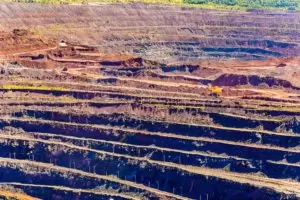


Metallurgical, Mining and Geological Engineers design and oversee mining operations to safely extract minerals, metals, and resources. These engineers earn a median salary of $101,020 annually, with top earners exceeding $163,740. The field employs approximately 7,000 professionals nationwide, with projected growth of 1% through 2034 and about 400 annual openings primarily from workforce replacements.
A Metallurgical, Mining, and Geological Engineer oversees the complex process of extracting valuable resources from the earth. This specialized engineering role combines hands-on fieldwork with strategic planning to ensure mining operations run safely, efficiently, and sustainably. Whether you're drawn to the challenge of designing underground mine systems or the precision of optimizing mineral processing, this career offers diverse opportunities across multiple industries.
Understanding what these engineers do, where they work, and what education you'll need provides the foundation for pursuing this technically demanding yet rewarding profession.
What Does a Metallurgical, Mining, and Geological Engineer Do?
Engineering demands a firm understanding of scientific principles, and metallurgical, mining, and geological engineers apply these concepts to one of humanity's oldest industries. These professionals function as specialized engineering geologists, focusing on the logistics of existing and new mining operations. Their responsibilities span from initial mine planning through daily operations to eventual site restoration.
The role is divided between field-based and office-based work. In the field, these engineers supervise the construction of mine shafts and tunnels, monitor production efficiency, and ensure operations meet safety standards. They design methods for transporting extracted materials and make real-time decisions to improve operations. Their hands-on responsibilities require frequent site visits to remote mining locations or active extraction facilities.
Office-based duties involve analyzing primary data and producing technical reports for decision makers. Engineers evaluate potential mining sites, design extraction systems, and develop comprehensive land use plans that balance resource extraction with environmental responsibility. Modern practitioners also integrate technology—particularly GIS mapping and geophysical surveying tools—to assess site viability and track ongoing operations.
Twenty-first-century mining engineering increasingly emphasizes sustainability and environmental protection. Engineers now design extraction processes that minimize ecological disruption, manage pollution through advanced filtration and containment systems, and plan comprehensive site reclamation after mining concludes. This environmental focus represents a significant evolution from traditional mining practices, requiring engineers to balance economic efficiency with safe and responsible resource management.
Specialization within the field allows engineers to focus on specific aspects of mining operations. Geological engineers search for mineral deposits and evaluate potential sites before extraction begins. Mining engineers often specialize in particular resources—coal, precious metals, or industrial minerals—developing expertise in the unique challenges each material presents. Mining safety engineers focus specifically on worker protection, inspecting mine structures, monitoring air quality, and ensuring compliance with federal and state safety regulations.
Where Does a Metallurgical, Mining, and Geological Engineer Work?
According to 2024 data, approximately 7,000 metallurgical, mining, and geological engineers work across the United States. Work environments vary considerably, ranging from remote mining facilities far from population centers to urban offices and gravel pits near cities.
The distribution across employer sectors reflects the industry's diversity:
| Industry Sector | Percentage of Engineers | Typical Work Setting |
|---|---|---|
| Engineering Services | 32% | Office-based consulting and design work |
| Metal Ore Mining | 17% | Active mining sites, field oversight |
| Coal Mining | 11% | Coal extraction facilities, mines |
| Support Activities for Mining | 5% | Mixed office and on-site support |
| Oil and Gas Extraction | 2% | Extraction sites, field operations |
Engineering services firms employ nearly one-third of these professionals. These privately owned and managed facilities require full-time engineers who divide their time between office-based planning and on-site project oversight. The work combines strategic design with practical implementation, often serving multiple client mining operations.
Engineers working directly in metal ore, coal, oil, and gas extraction spend considerably more time at active sites. These positions involve hands-on supervision of extraction processes, real-time problem solving, and daily interaction with mining crews. The 5% working in support activities fulfill hybrid roles, providing technical expertise both remotely and through on-site consultation.
Work schedules typically follow a full-time pattern, though many engineers work beyond the standard 40-hour work week. Remote mining locations often require extended on-site periods followed by time off, creating variable schedules that differ from traditional office employment. This reality makes the profession well-suited for those who appreciate diverse work environments and don't mind spending time away from urban centers.
What is the average metallurgical, mining, and Geological Engineer Salary?
Compensation for metallurgical, mining, and geological engineers reflects the technical complexity and specialized skills required for the role. The median annual salary stands at $101,020, positioning these engineers well above the national median for all occupations. However, earnings vary significantly based on industry sector, experience level, and geographic location.
The salary range demonstrates substantial earning potential. The lowest 10% of engineers earn less than $62,500 annually, typically representing entry-level positions or roles in smaller operations. Conversely, the highest 10% earn more than $163,740, nearly 62% above the median. These top earners generally hold senior positions, possess extensive specialized expertise, or work in high-demand sectors.
| Industry Sector | Median Annual Salary (2024) | Comparison to Overall Median |
|---|---|---|
| Oil and Gas Extraction | $156,200 | +55% above median |
| Metal Ore Mining | $102,610 | +2% above median |
| Coal Mining | $98,500 | -2% below median |
| Support Activities for Mining | $98,490 | -2% below median |
| Engineering Services | $96,460 | -4% below median |
The oil and gas industry offers the highest compensation, with a median salary of $156,200—substantially above the profession's overall median. This premium reflects the sector's technical demands, often remote work locations, and the specialized knowledge required for petroleum-related extraction processes. Metal ore mining pays slightly above the overall median at $102,610, while coal mining, support activities, and engineering services cluster in the $96,000-$98,500 range.
These salary variations highlight an important career consideration: your choice of specialization and industry sector significantly impacts earning potential. Engineers willing to work in oil and gas extraction or who develop expertise in high-value mineral extraction can command premium compensation. Those preferring consulting roles in engineering services accept somewhat lower salaries in exchange for office-based work and greater project variety.
Metallurgical Engineering Jobs & Job Description
Metallurgical engineers study metals and minerals, focusing on their identification, extraction, and processing. The role requires a bachelor's degree in metallurgy, geological engineering, or a related field, along with practical skills spanning laboratory analysis and fieldwork. Success in this career depends on blending theoretical knowledge with hands-on technical competence.
Entry-level metallurgical engineers perform fundamental tasks, including metallurgical testing and analysis in laboratory settings, conducting fieldwork to evaluate mineral deposits, and operating specialized equipment for machining and welding when required. The position may involve exposure to extreme temperatures during heat treatment processes. Engineers must possess the dexterity to create detailed maps and technical drawings, often using computer-aided design software such as AutoCAD. Supporting mining projects requires physical capability for tasks such as material transport and pit development.
Professional competence demands knowledge of environmental and safety regulations, with strict adherence to all applicable laws. Modern metallurgical engineering relies heavily on specialized software for design work and field equipment, including GPS systems for site mapping and resource location. Engineers collect extensive field data, analyze findings, and produce regular interval reports documenting their work. This data-driven approach informs decisions about extraction methods, processing techniques, and resource viability.
The research component involves identifying new products and opportunities through systematic field investigation. Engineers study how different metals behave under various conditions and develop and refine methods for isolating and extracting specific materials. This investigative work drives innovation in extraction efficiency and helps mining operations adapt to changing market demands.
Metallurgical Engineering Managers oversee large-scale projects and provide specialized insight into complex operational challenges. This advanced position requires a Master's degree or PhD in metallurgy, geological engineering, or a related field, along with demonstrated experience in developing mining projects and conducting metallurgical investigations. Managers present project designs to leadership and clients, requiring strong verbal and written communication skills to translate technical concepts to diverse audiences.
Management responsibilities extend to budget preparation and work schedule coordination, balancing technical requirements with financial and time constraints. These professionals design and deliver training programs for field and laboratory staff, mentor junior engineers, and perform quality assurance functions. They examine and validate engineering drawings, ensuring designs meet safety standards and operational requirements. Critical thinking and problem-solving abilities become essential when addressing difficult technical situations that lack obvious solutions.
Advanced metallurgical engineering involves identifying new metal alloys for industrial applications and designing processing methods to utilize them effectively. Managers conduct market analysis to determine product needs that support company profitability, research innovative methods that decrease operational costs, and continuously seek ways to increase productivity without compromising safety or environmental standards.
What is the Job Demand for Metallurgical, Mining, Geology, and Geological Engineers?
Employment projections for metallurgical, mining, and geological engineers indicate modest growth over the next decade. The Bureau of Labor Statistics projects 1% employment growth from 2024 to 2034, which qualifies as slower than the average for all occupations. This translates to essentially flat employment, with the field maintaining approximately 7,000 positions throughout the projection period.
Despite limited growth, the profession anticipates about 400 annual job openings. These openings primarily result from workforce replacement rather than expansion—experienced engineers retiring, transitioning to other occupations, or leaving the labor force create consistent opportunities for new entrants. This replacement demand provides stable entry points for qualified candidates even as overall employment remains relatively constant.
Several factors influence this outlook for measured growth. Demand for coal, metals, and minerals continues as these resources remain essential for construction materials, electric vehicles, smartphones, computers, and countless other products. The growing demand for consumer electronics and renewable energy technologies may increase the need for rare earth minerals and specialized metals. However, mining automation increasingly offsets this potential growth, allowing fewer engineers to oversee more efficient operations.
The energy sector presents particular uncertainty. While global energy needs continue to rise, the shift away from coal toward renewable sources reduces the demand for coal mining engineers specifically. Conversely, the transition to electric vehicles and renewable energy infrastructure increases demand for lithium, cobalt, rare-earth elements, and other minerals essential to batteries and advanced electronics. Engineers who develop expertise in these emerging extraction areas position themselves advantageously.
Geographic considerations also shape employment patterns. Mining operations concentrate in regions with rich mineral deposits, meaning job opportunities cluster in specific states rather than being distributed evenly nationwide. Engineers willing to relocate for opportunities or work in remote locations generally face better employment prospects than those seeking positions in major metropolitan areas.
The profession's outlook suggests stability rather than explosive growth. Engineers entering this field should anticipate steady but competitive employment conditions, with the strongest opportunities for those who combine traditional mining expertise with knowledge of emerging resource needs and sustainable extraction practices.
What are the Education Requirements to become a Metallurgical, Mining, and Geological Engineer?
A bachelor's degree represents the essential foundation for entering this profession, and accreditation matters significantly. Programs must be accredited by ABET (Accreditation Board for Engineering and Technology) to ensure graduates meet industry standards. High school students planning this career path should emphasize mathematics, physics, and other hard sciences in their coursework.
College students typically pursue degrees in general engineering, as relatively few schools offer undergraduate programs specifically in metallurgical, mining, and geological engineering. When available, specialized programs include geology, physics, and advanced mathematics alongside practical coursework in mining safety, mineral processing, and extraction techniques. Students at institutions without dedicated mining engineering programs should select electives and minors in relevant science and mathematics subjects to build a foundation that combines geological knowledge with engineering principles.
The curriculum balances theoretical knowledge with hands-on experience. Expect courses covering thermodynamics, mine design and safety, fluid mechanics, and geological systems. Laboratory work develops practical skills in material testing, analysis, and equipment operation. Field experiences—an essential program component—expose students to actual mining environments, teaching them to apply classroom concepts in real-world settings. Many programs require capstone projects that simulate professional engineering challenges.
Graduate education becomes increasingly important for career advancement. A Master's degree proves preferable and may be essential in competitive employment markets or for positions requiring greater responsibility. Master's programs typically span two years and offer concentrated study in specialized subjects, including mineral resource development, mining regulations, environmental impact assessment, and advanced extraction technologies. Most programs require a thesis demonstrating original research or advanced problem-solving in a specialized area.
The decision to pursue doctoral-level education depends on career goals. Engineers seeking academic positions as engineering lecturers require a PhD, as do those pursuing research-focused roles in industry or government. For purely practical or advisory positions in mining operations, doctoral study generally proves unnecessary. The investment of time and resources in PhD work makes sense primarily for those committed to advancing the field's theoretical knowledge or training the next generation of engineers.
Beyond formal degrees, professional development continues throughout an engineering career. Many engineers pursue Professional Engineering (PE) licensure after gaining work experience, though it's not required for entry-level positions. Licensure requires passing the Fundamentals of Engineering exam, accumulating relevant work experience (typically four years), and then passing the Professional Engineering exam. Licensed PEs can oversee other engineers' work, sign off on projects, and provide services directly to the public—capabilities that open advancement opportunities.
Metallurgical Engineering - Related Degrees
What Kind Of Societies and Professional Organizations Do Metallurgical, Mining, and Geological Engineers Have?
Professional organizations provide valuable resources for engineers at all career stages. These groups offer networking opportunities, continuing education, industry updates, and advocacy for the profession. Two organizations particularly relevant to metallurgical, mining, and geological engineers stand out:
The Society for Mining, Metallurgy, and Exploration serves as the field's primary professional organization. With 15,000 members spanning over 100 countries, this international body provides support and guidance for engineers working in mineralogy and mining. The organization hosts conferences where engineers share research findings and emerging techniques, publishes technical journals covering industry developments, and facilitates connections between practitioners facing similar challenges. Membership provides access to specialized technical resources, career development opportunities, and a community of professionals who understand the field's unique demands.
The International Mining and Minerals Association represents all professional strands within IOM3 (Institute of Materials, Minerals and Mining). This organization functions as a bridge between industry practitioners and academic researchers, supporting a multipronged mission that advances both practical applications and theoretical understanding. The association helps engineers stay current with evolving regulations, emerging technologies, and best practices in sustainable resource extraction.
Participation in these organizations benefits engineers by keeping them connected to industry trends, providing forums for addressing technical challenges, and offering structured opportunities for professional development. Many employers value—and sometimes require—membership in relevant professional organizations as evidence of commitment to the profession and ongoing learning.
Frequently Asked Questions
What is the difference between a metallurgical engineer and a mining engineer?
Metallurgical engineers focus on the properties, processing, and applications of metals and minerals, studying how to extract, refine, and utilize these materials effectively. Mining engineers focus on designing and managing the physical extraction process—developing mine layouts, overseeing excavation operations, and ensuring safe extraction of resources. While the roles overlap, metallurgical engineers emphasize material science, while mining engineers emphasize operational logistics.
Do I need a Professional Engineering (PE) license to work as a metallurgical engineer?
A PE license is not required for entry-level positions. However, obtaining licensure later in your career enables you to oversee other engineers' work, approve and sign off on engineering projects, and provide consulting services directly to clients. Most engineers pursue PE licensure after gaining four years of relevant work experience, as it opens advancement opportunities and demonstrates professional credibility.
How does automation affect job prospects for mining engineers?
Automation increasingly handles routine mining tasks, from ore extraction to material transport, which reduces the total number of engineers needed for a given operation. However, automated systems require sophisticated oversight, programming, and maintenance—creating demand for engineers who understand both traditional mining principles and modern automation technologies. Engineers who develop expertise in automated mining systems position themselves advantageously in an evolving industry.
Can I work as a metallurgical engineer with a degree in civil or environmental engineering?
Yes, degrees in civil engineering, environmental engineering, or geoscience are often acceptable for entry-level positions, particularly since few schools offer dedicated metallurgical or mining engineering programs. However, you should supplement your primary degree with relevant coursework in geology, mineral processing, and mining safety. Some employers prefer candidates who have completed graduate work specifically in mining or metallurgical engineering.
What are the most in-demand specializations within metallurgical engineering?
Demand currently favors engineers with expertise in rare-earth element extraction, battery-material processing (lithium, cobalt, nickel), sustainable mining practices, and mine reclamation. As electric vehicle production expands and renewable energy infrastructure grows, engineers who understand the unique challenges of extracting and processing materials for these technologies face strong employment prospects. Additionally, mining safety engineering remains consistently in demand across all extraction sectors.
Key Takeaways
- Dual Work Environment: Metallurgical, mining, and geological engineers split time between office-based design work and hands-on field oversight at mining sites, requiring both analytical skills and practical problem-solving abilities.
- Strong Earning Potential: The median salary of $101,020 places these engineers well above national averages, with top earners in oil and gas extraction exceeding $156,000 annually.
- ABET Accreditation Essential: Employers require bachelor's degrees from ABET-accredited programs, with master's degrees increasingly preferred for competitive positions and career advancement.
- Stable But Competitive Outlook: Employment growth of 1% through 2034 creates approximately 400 annual openings, primarily from workforce replacement rather than field expansion, making competition moderate but consistent.
- Sustainability Focus Growing: Modern mining engineering increasingly emphasizes environmental responsibility, requiring engineers to balance efficient resource extraction with pollution control, site reclamation, and sustainable practices.


Ready to explore metallurgical and mining engineering programs? Browse ABET-accredited schools offering specialized coursework in geology, mineral extraction, and sustainable resource management.
2024 US Bureau of Labor Statistics salary and job growth figures for mining and geological engineers reflect national data, not school-specific information. Conditions in your area may vary. Data accessed January 2026.