
Air quality forecasters are specialized atmospheric scientists who predict pollution levels to protect public health. These professionals earn a median salary of $99,740 annually, with federal positions paying competitive wages. The field is projected to grow 8% through 2032, driven by increasing concerns about air quality's impact on health and climate change.
If you're passionate about combining meteorology with environmental health, air quality forecasting offers a specialized career path where your predictions directly protect communities. Air quality forecasters work alongside meteorologists, analyzing pollution patterns to help millions of people prepare for air quality events that affect respiratory health, outdoor activities, and daily planning.
This specialized field sits at the intersection of atmospheric science and public health. Your work influences everything from school recess schedules to EPA regulatory decisions, making it one of the most impactful applications of meteorological expertise in protecting human and environmental well-being.
What Does an Air Quality Forecaster Do?
Air quality forecasters translate complex atmospheric data into actionable public health guidance. When you check your weather app and see an air quality index, that prediction comes from professionals who analyze pollution patterns, meteorological conditions, and emission sources to forecast tomorrow's air quality.
The work involves sophisticated modeling. Forecasters use accumulated meteorological data, combined with emission inventories, to develop predictive models relevant to specific communities. They account for variables like temperature inversions, wind patterns, and seasonal factors that affect how pollutants disperse or concentrate.
Modern air quality forecasting extends beyond simple measurements. These specialists integrate real-time sensor data, satellite imagery, and chemical transport models to predict not only overall air quality but also specific pollutant concentrations that affect vulnerable populations differently. Their forecasts inform public health alerts, help individuals with respiratory conditions plan their activities, and guide policy decisions about emission controls.
Where Does an Air Quality Forecaster Work?
Air quality forecasters find opportunities across multiple sectors, each offering distinct focus areas and work environments. The most visible positions are with meteorological organizations at the state, national, and international levels. These forecasters work with complex datasets and translate findings into language accessible to television viewers and app users, bridging the gap between technical science and public communication.
Government agencies represent another major employment sector. The EPA relies heavily on air quality forecasters to implement and monitor the Clean Air Act's provisions. National Parks and environmental monitoring agencies employ these specialists to make decisions about local environments and advise on regulatory effectiveness. The work directly connects to public health outcomes, particularly for communities with air quality challenges.
Education and research institutions also employ air quality forecasters. High schools need geography teachers with meteorological expertise. Universities with environmental science research programs, especially those studying the effects of airborne pollution on local, national, and global ecologies, require forecasters who can conduct and teach advanced atmospheric modeling.
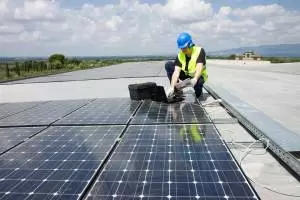
The private sector increasingly values air quality forecasting, particularly in renewable energy. Energy companies investing in wind and solar power need specialized weather information that includes air quality variables affecting equipment performance and siting decisions. Consulting firms also hire forecasters to support environmental engineering projects and regulatory compliance assessments.
Skills Required for Success
Air quality forecasting demands a blend of technical proficiency and communication skills. Success requires mastering both the science and the ability to make complex atmospheric processes understandable to diverse audiences.
| Technical Skills | Professional Skills |
|---|---|
| Statistical modeling and linear regression analysis | Clear communication of technical concepts to public audiences |
| GIS software and spatial data analysis | Collaboration with multidisciplinary teams |
| Neural network algorithms and pattern recognition | Decision-making under uncertainty |
| 3D atmospheric modeling software | Stakeholder communication and public education |
| Programming (Python, R, MATLAB) | Project management and resource allocation |
| Remote sensing and satellite data interpretation | Attention to detail and quality control |
The technical skills evolve with technology. Today's forecasters must understand machine learning applications in atmospheric prediction, cloud computing for processing large datasets, and mobile app development for public communication. Familiarity with EPA regulatory frameworks and air quality standards adds crucial context to the technical work.
What is the Average Air Quality Forecaster Salary?
Air quality forecasters, categorized as atmospheric scientists by the BLS, earned a median salary of $99,740 as of May 2022. Compensation varies significantly by sector and experience level.
Research and development represents the highest-paying sector for air quality forecasters, with median salaries in the upper range of the field. Federal government positions offer competitive compensation, comprehensive benefits, and job stability. State and local government positions typically pay slightly less but offer strong benefits packages and work-life balance.
Geographic location significantly impacts earning potential. Metropolitan areas with air quality challenges, particularly in California, the Northeast corridor, and industrial regions, typically offer higher salaries due to demand and cost of living. Entry-level positions generally start in the range appropriate for recent graduates with relevant degrees, while experienced forecasters with specialized expertise can earn significantly more in senior technical or management roles.
Private sector consulting positions may offer higher base salaries, but with more variability depending on the firm and clientele. Academic positions typically fall in the mid-range of salaries but offer additional compensation through research grants, summer work, and consulting opportunities.
Daily Work Environment
Most air quality forecasters split time between computer-based analysis and collaborative meetings. A typical day involves reviewing overnight air quality sensor data, updating atmospheric models with current meteorological observations, and generating forecasts for the next 24-72 hours. The work is largely office-based, though some positions include periodic fieldwork for sensor calibration or data collection.
The pace varies with air quality conditions. During wildfire season, high ozone days, or pollution events, forecasters work intensively to provide frequent updates and public health guidance. These peak periods may require extended hours or weekend work. Under normal conditions, the schedule follows regular business hours and maintains predictable routines.
Collaboration characterizes much of the work. Forecasters regularly consult with meteorologists, environmental health specialists, policy makers, and communication teams. Presenting findings to non-technical audiences—whether through media briefings, public meetings, or educational programs—forms a significant part of the role, especially in government positions.
Air Quality Forecaster Jobs & Job Description
Air quality forecasters use scientific data, GIS, and field studies to combat a worldwide problem: air pollution. While air quality has improved in North America over the past three decades, exposure to airborne pollutants still has devastating effects on plant, animal, and human life. The following core responsibilities reflect what air quality forecast personnel encounter regularly:
- Monitor current research and developments to maintain expertise in emerging forecasting techniques
- Analyze agricultural yields in relation to ozone levels and air quality patterns
- Track and report air pollution-related health impacts in vulnerable populations
- Provide data to economists and policymakers that drives clean air regulations
- Develop and maintain public warning systems when pollution levels exceed safety thresholds
- Use neural networks and machine learning to identify patterns in climate and pollution data
- Create 1-3 day ozone forecasts using statistical methods and climatological trends
- Apply 3D modeling to represent factors affecting ambient pollution levels mathematically
- Coordinate with aviation agencies to advise safety precautions during poor visibility conditions
- Ensure emission control programs are implemented correctly and evaluate their effectiveness
Senior-Level Responsibilities
Project Management & Technical Leadership: Senior air quality forecasters develop and approve complex modeling schematics showing the interrelation of elements that determine air pollution. They lead and manage projects spanning air quality surveys, climate assessments, air monitoring programs, data management, and statistical analysis. This involves coordinating assignments, scopes, schedules, benchmarks, budgets, and deliverables across multiple initiatives simultaneously.
Team & Resource Management: Managing resources in both field and laboratory settings becomes central at senior levels. This includes supervising administrative and scientific personnel, managing timelines for deliverables, and directing technicians, administrative assistants, and junior staff members. Senior forecasters mentor field work teams and laboratory workgroups, developing the next generation of air quality professionals while maintaining research quality and safety standards.
Stakeholder Communication & Business Development: Senior professionals manage communication with internal and external stakeholders, from regulatory agencies at local, state, and federal levels to community groups affected by air quality decisions. They develop new projects and business leads, demonstrating interpersonal skills across professional and field work environments. This role requires reconciling differing scientific and interpersonal viewpoints while providing expertise on air pollution's local and international impacts.
Regulatory Compliance & Strategic Direction: Interpreting and applying relevant legislation, regulations, policies, procedures, and guidelines forms a crucial senior responsibility. These professionals provide input for steering discussions on remediation or mitigation of air pollution effects on humans and the natural world. They develop proactive health and safety cultures across professional venues and demonstrate leadership when managing human resources, processes, or assets related to air quality monitoring and forecasting.
Career Progression
Air quality forecasting offers a clear advancement pathway with increasing responsibility and compensation at each level. Understanding this progression helps you set realistic expectations and plan your professional development.
| Career Level | Typical Timeline | Key Responsibilities | Salary Range |
|---|---|---|---|
| Entry-Level Forecaster | 0-3 years | Data collection, model operation, basic forecasting under supervision, quality control checks | Starting range for recent graduates |
| Mid-Level Forecaster | 3-7 years | Independent forecasting, model development, public communication, training junior staff | Mid-career compensation |
| Senior Forecaster | 7-12 years | Complex modeling, specialized research, policy consultation, team leadership | Senior-level compensation |
| Principal Forecaster/Manager | 12+ years | Program management, strategic planning, inter-agency coordination, budget oversight | Top-tier management compensation |
Advancement typically requires demonstrated technical excellence, effective communication skills, and an increasing ability to manage complex projects. Many forecasters pursue additional certifications or advanced degrees during their mid-career years to qualify for senior technical or management positions. Some transition into related fields like climatology, atmospheric research, or environmental policy after building forecasting experience.
What is the Job Demand for Air Quality Forecasters?
The job demand for atmospheric scientists, such as air quality forecasters, is projected to grow by 8% through 2032. This growth rate exceeds the average for physical science occupations and reflects several converging factors driving demand.
Concerns about climate change underscore the importance of air quality monitoring. As extreme weather events become more frequent—including wildfires producing widespread smoke and heat waves that worsen ozone formation—communities need more sophisticated forecasting to protect public health. This creates demand for forecasters who understand both traditional pollution sources and climate-related impacts on air quality.
The renewable energy sector's expansion also drives opportunities. Energy companies investing heavily in wind, solar, and other renewable sources require specialized meteorological expertise that includes air quality variables. These positions often offer competitive salaries and involve cutting-edge applications of atmospheric science to optimize energy production.
Regulatory developments continue to create positions. As air quality standards evolve and enforcement becomes more data-driven, government agencies at all levels need forecasters who can provide the technical foundation for policy decisions. State and local governments particularly seek professionals who can localize national air quality data to their specific regions and communicate findings to community stakeholders.
What are the Education Requirements to Become an Air Quality Forecaster?
Most air quality forecasters begin with a foundation in Earth Science. Geography, geology, atmospheric science, or meteorology programs provide the essential background, with coursework emphasizing physics, mathematics, and chemistry. Currently, no degrees specifically in "Air Quality Forecasting" exist due to its specialized nature within the broader field of atmospheric sciences.
For most entry-level positions, a Bachelor of Arts or Bachelor of Science degree in atmospheric science, meteorology, environmental science, or a related field suffices. These programs should include substantial coursework in atmospheric dynamics, weather analysis, statistical methods, and computer modeling. Many programs now incorporate air quality-specific courses covering emission inventories, chemical transport modeling, and public health applications.
Research-focused careers, particularly in educational institutions or policy development, typically require a Master's degree. You don't necessarily need an undergraduate degree in atmospheric science to pursue graduate study in meteorology or air quality—strong backgrounds in mathematics, physics, chemistry, or biology often provide sufficient preparation. Graduate programs allow specialization in air quality modeling, atmospheric chemistry, or related concentrations.
Research and teaching at universities almost certainly require a doctorate. PhD programs in atmospheric science with an air quality focus prepare you for advanced research positions and academic careers. These programs typically take 4-6 years beyond the bachelor's degree and involve original research contributing new knowledge to the field.
Consider these questions as you plan your educational path:
- Are you more interested in real-time operational forecasting or long-term research and policy analysis?
- Do you prefer working with live data and public communication, or detailed atmospheric modeling in a research setting?
- Is your strength in atmospheric physics and meteorology, or in environmental health and policy applications?
- Do you want to work directly with communities affected by air quality, or focus on the technical science behind the forecasts?
Your answers will help determine whether to emphasize meteorology with environmental applications, environmental science with atmospheric specialization, or a balanced approach incorporating both perspectives. Each pathway can lead to air quality forecasting, but the emphasis shapes which positions best fit your interests and strengths.
Air Quality Forecasting - Related Degrees
Challenges & Considerations
Air quality forecasting, while rewarding, presents distinct challenges worth understanding before committing to this career path. Geographic concentration of positions means opportunities cluster in certain regions—primarily metropolitan areas with significant air quality concerns, federal agency hubs, and research universities. Smaller communities rarely employ dedicated air quality forecasters, potentially limiting where you can live while pursuing this specific specialization.
The field is moderately competitive. While demand remains strong and growth projections are positive, the number of qualified applicants often exceeds the number of available positions, particularly for desirable federal and research roles. Entry-level positions may require geographic flexibility or a willingness to start in related meteorological roles before transitioning specifically to an air quality focus.
Work intensity varies seasonally and with environmental conditions. Wildfire seasons, summer ozone episodes, and pollution events create high-pressure periods that require extended hours and weekend work. While overall work-life balance is reasonable, you should expect cyclical periods of intense activity that demand flexibility and responsiveness, particularly in operational forecasting roles.
The technical demands are substantial and ongoing. Air quality forecasting involves continuous learning as modeling techniques, regulatory frameworks, and data sources evolve. Comfort with complex mathematical concepts, programming, and abstract atmospheric processes is essential—this isn't a career where you master the basics and coast. Staying current requires regular professional development, often on your own time.
What Kind of Societies and Professional Organizations Do Air Quality Forecasters Have?
Air quality forecasters maintain close connections with meteorological professional organizations. These bodies provide networking opportunities, continuing education, access to research, and career development resources.
- National Oceanic and Atmospheric Administration: The largest organization of its kind in the US, NOAA provides environmental data for weather forecasters through monitoring and modeling, protects the coasts and environment of the US as a steward organization, and engages in environmental research. Many air quality forecasters work for NOAA or collaborate with its research programs.
- Agricultural Air Quality Task Force: Part of the USDA, this task force was formed in 1996 during the Federal Agriculture Improvement and Reform process, which charged the federal government with addressing air quality issues across the country. Their site holds information for the public and research bodies, particularly relevant for forecasters working on agricultural air quality impacts.
- World Meteorological Organization: A division of the World Health Organization, the WMO is an international organization that discusses, promotes, and researches meteorological issues. As a major body of the United Nations, its research guides UN policy on the environment, including air quality standards and global monitoring protocols.
Frequently Asked Questions
Do I need a degree in meteorology specifically to become an air quality forecaster?
No, while meteorology degrees are common, air quality forecasters also come from atmospheric science, environmental science, geography, physics, chemistry, and related fields. What matters most is strong coursework in atmospheric processes, statistical analysis, and environmental science. Many successful forecasters have environmental science backgrounds with additional meteorology coursework, or physics/math backgrounds with atmospheric applications. Graduate programs in atmospheric science often accept students from various STEM backgrounds.
Can I work remotely as an air quality forecaster?
Remote work opportunities vary by employer and role. Operational forecasters who issue daily public forecasts typically need on-site access to real-time monitoring systems and coordination with meteorological teams, limiting full-time remote work. However, research positions, modeling work, and some consulting roles offer more flexibility for remote or hybrid arrangements. The COVID-19 pandemic expanded remote capabilities in the field, and some agencies now offer partial remote options even for operational roles. Private-sector and consulting positions generally offer the most flexible remote work.
What's the difference between an air quality forecaster and an atmospheric scientist?
Air quality forecaster is a specialization within the broader atmospheric scientist category. All air quality forecasters are atmospheric scientists, but not all atmospheric scientists focus on air quality. Atmospheric scientists study the atmosphere broadly, including weather forecasting, climate research, atmospheric chemistry, and other specializations. Air quality forecasters specifically apply atmospheric science to predict pollutant concentrations and their public health impacts. The distinction is similar to how a cardiologist is a type of doctor, specialized training focused on a specific application of the broader field.
What software and tools do air quality forecasters use?
Air quality forecasters use a diverse technology toolkit. GIS software like ArcGIS processes spatial air quality data. Statistical packages, including R, Python (with libraries such as NumPy and SciPy), and MATLAB, support data analysis and model development. Specialized atmospheric models like CMAQ (Community Multiscale Air Quality model), CAMx, and WRF-Chem simulate pollutant transport and chemistry. Many forecasters also use proprietary forecasting systems developed by their agencies, real-time data dashboards that pull from air quality sensor networks, and visualization tools to create public-facing graphics and maps.
How is this career affected by climate change concerns?
Climate change significantly increases demand for air quality forecasters while making the work more complex and important. Rising temperatures worsen ozone formation, wildfires create unprecedented smoke events affecting millions, and changing weather patterns alter the dispersion of pollution. These factors make accurate air quality forecasting more critical for public health protection. The heightened focus on climate and environmental issues also drives funding for air quality research and monitoring programs, creating career opportunities. Forecasters increasingly work at the intersection of climate science and air quality, making it an expanding rather than shrinking field as environmental concerns grow.
Key Takeaways
- Specialized Impact: Air quality forecasters protect public health by predicting pollution levels that affect millions daily, from school activity decisions to EPA regulatory actions.
- Strong Compensation: Median salaries nationally reach $99,740, based on May 2022 BLS data, with federal and research positions offering competitive compensation, placing this specialty among the higher-paying environmental science careers.
- Diverse Pathways: You don't need a meteorology degree specifically—atmospheric science, environmental science, geography, physics, or chemistry backgrounds all provide valid entry points with appropriate coursework in atmospheric processes and statistical analysis.
- Growing Demand: Projected 8% growth through 2032 exceeds the average physical science occupations, driven by climate change impacts, renewable energy expansion, and evolving air quality regulations.
- Technical & Social Skills: Success requires mastering sophisticated modeling, GIS, and programming while developing the communication skills to translate complex atmospheric science into actionable public health guidance for diverse audiences.
Ready to explore atmospheric science programs that prepare you for air quality forecasting? Discover degree options that combine meteorology, environmental science, and public health applications to launch your career protecting communities through science.

2022 US Bureau of Labor Statistics salary and job growth figures for atmospheric scientists, including meteorologists reflect national data, not school-specific information. Conditions in your area may vary. Data accessed January 2026.