Geoscientists study Earth's composition, structure, and processes to locate natural resources, predict natural hazards, and understand environmental changes. They earn a median salary of $80,060 annually as of May 2024, with the field projected to grow 6% through 2032, creating 6,900 job openings each year. Most positions require at least a bachelor's degree in geosciences, though master's degrees significantly improve career prospects and earning potential.
Geoscience unlocks the secrets of our planet—from tracking earthquakes and volcanic activity to locating precious mineral deposits and understanding climate patterns. If you've ever wondered how scientists predict natural disasters, find new energy resources, or reconstruct Earth's ancient history, geoscientists are the experts behind those discoveries. This field combines geology, physics, chemistry, and environmental science to solve some of humanity's most pressing challenges, from sustainable resource management to climate change mitigation.
Whether you're drawn to fieldwork in remote locations, laboratory analysis using cutting-edge technology, or computational modeling of Earth systems, geoscience offers diverse career pathways. The profession demands both scientific rigor and practical problem-solving skills, making it ideal for students who enjoy connecting theoretical knowledge with real-world applications. Here's what you need to know about pursuing this dynamic and essential career.
What Does a Geoscientist Do?
Geoscientists study Earth's many different facets, including its geological composition, processes, and history. Their work helps us understand everything from natural resource location to environmental protection and hazard prediction. Rather than working in isolation, geoscientists collaborate with engineers, environmental scientists, and policymakers to apply their findings to practical challenges.
Core Responsibilities
The day-to-day work of a geoscientist varies considerably depending on their specialization and employer, but several core activities remain consistent across the profession. Geoscientists spend significant time planning and conducting field studies, which involve traveling to specific locations to collect rock, soil, and water samples. These field investigations might take them to mountain ranges, ocean floors, desert regions, or industrial sites—anywhere Earth's processes need examination.
Back in the laboratory or office, geoscientists analyze their collected samples using specialized equipment and computer programs. They examine mineral composition, measure geological properties, and interpret data patterns to understand subsurface conditions. Modern geoscience relies heavily on sophisticated technology, including geographic information systems (GIS), remote sensing tools, and three-dimensional modeling software that can visualize what's happening miles beneath Earth's surface.
Documentation and communication form another crucial aspect of the work. Geoscientists prepare detailed reports of their findings, create maps and visualizations, and present their conclusions to clients, stakeholders, or regulatory agencies. They might testify at public hearings about environmental impacts, advise drilling operations on optimal locations, or brief government officials on earthquake preparedness strategies.
Typical Projects and Fieldwork
Real-world geoscience projects illustrate the profession's diversity. A petroleum geologist might analyze seismic data to identify potential oil and gas reservoirs, then oversee exploratory drilling operations to confirm the findings. An environmental geoscientist could investigate a contaminated industrial site, determining how pollutants are moving through soil and groundwater to design an effective cleanup strategy.
Hydrogeologists study underground water systems, mapping aquifer locations and flow patterns to help communities manage their water resources sustainably. Volcanologists monitor volcanic activity using ground sensors, gas measurements, and thermal imaging to assess eruption risks and advise evacuation plans. Engineering geologists evaluate slope stability for construction projects, ensuring buildings and infrastructure can withstand the local geological conditions.
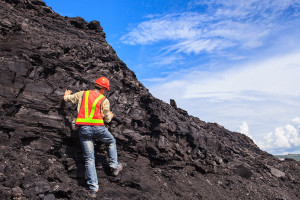
Fieldwork often means embracing adventure and occasionally uncomfortable conditions. You might spend weeks at a remote drilling site in Alaska, board a research vessel to collect ocean floor samples, or hike through mountainous terrain carrying specialized equipment. This hands-on exploration is what draws many people to the profession—the opportunity to work directly with Earth rather than just studying it from a desk.
Laboratory Analysis and Research
When geoscientists return from fieldwork, the laboratory becomes their primary workspace. Here, they use advanced analytical instruments like electron microscopes, mass spectrometers, and X-ray diffraction equipment to examine samples at microscopic levels. These tools can reveal a rock's mineral composition, determine its age, identify trace elements, or detect subtle chemical changes that provide clues about past environmental conditions.
Computer modeling represents another major laboratory activity. Geoscientists build digital simulations of geological processes—how groundwater flows through porous rock, how tectonic plates interact along fault lines, or how sediment accumulated over millions of years. These models help predict future conditions and test hypotheses without expensive or impossible real-world experiments.
Research-focused geoscientists, particularly those in academia or government laboratories, might spend months analyzing data from a single field season, publishing their findings in scientific journals, and refining theories about Earth processes. This work advances our fundamental understanding of the planet while also informing practical applications in industry and environmental management.
Geoscience Specializations
Geoscience encompasses numerous subspecialties, each focusing on different aspects of Earth systems. Understanding these specializations helps prospective students identify which area aligns best with their interests and career goals.
Petroleum Geology
Petroleum geologists focus on locating and extracting oil and natural gas reserves. They interpret seismic surveys, analyze well logs, and study rock formations to identify potential hydrocarbon deposits. This specialization typically offers the highest salaries in geoscience, particularly when working for major energy companies. The work involves both office-based data analysis and field supervision of drilling operations. As the energy industry evolves, petroleum geologists increasingly apply their expertise to geothermal energy development and carbon sequestration projects.
Hydrogeology
Hydrogeologists study underground water systems, investigating how water moves through soil and rock formations. They assess groundwater quality, determine sustainable extraction rates for wells, and design remediation systems for contaminated aquifers. This specialization has strong environmental applications, helping communities manage water resources responsibly while protecting ecosystems that depend on groundwater discharge. Hydrogeologists often work for environmental consulting firms, water utilities, or government agencies managing natural resources.
Environmental Geology
Environmental geologists apply geological knowledge to environmental problems and human health concerns. They investigate contaminated sites, assess natural hazard risks, and evaluate the geological suitability of locations for waste disposal facilities. This specialization overlaps considerably with environmental toxicology, particularly when studying how pollutants interact with geological materials. Environmental geologists play crucial roles in regulatory compliance, site assessment for real estate transactions, and environmental impact studies for development projects.
Engineering Geology
Engineering geologists work at the intersection of geology and civil engineering, assessing geological conditions for construction projects. They evaluate slope stability for roads and buildings, investigate foundation conditions for large structures, and assess earthquake and landslide hazards. This specialization requires strong practical problem-solving skills and the ability to communicate technical findings to engineers, architects, and construction managers who may not have geological backgrounds.
Where Does a Geoscientist Work?
Geoscientists typically divide their time between multiple work environments, with the exact balance depending on their specialization and employer. Understanding these different settings helps students evaluate whether the work lifestyle fits their preferences.
Work Environments
Laboratory settings provide controlled conditions for detailed sample analysis and data interpretation. Modern geology labs feature sophisticated analytical equipment requiring careful operation and maintenance. These climate-controlled spaces offer comfortable working conditions but can feel constraining for geoscientists who prefer outdoor work. Lab time often involves extended periods of focused analysis, requiring patience and attention to detail.
Office environments support data analysis, report writing, and project planning. Geoscientists use specialized software for mapping, modeling, and visualization, often working with multiple monitors displaying different data layers simultaneously. Office work enables collaboration with colleagues and allows for a regular schedule, but it provides less variety than fieldwork. Many geoscientists appreciate office time as an opportunity to process field observations and develop comprehensive interpretations.
Field locations range from readily accessible sites near urban areas to remote wilderness locations requiring helicopter access or extended expeditions. Field conditions can be physically demanding and sometimes uncomfortable—working in extreme heat or cold, carrying heavy equipment over rough terrain, or spending weeks away from home. However, many geoscientists consider fieldwork the most rewarding aspect of their careers, providing direct engagement with geological phenomena and offering adventure that most office workers never experience.
Field vs. Laboratory Balance
The field-to-lab ratio varies considerably by position. Petroleum geologists might spend 70% of their time in offices analyzing seismic data and only occasionally visiting drilling sites. Environmental consultants could alternate between field investigations and office-based report writing, perhaps spending 40% of their time at project sites. Academic researchers might conduct intensive field campaigns during the summer months, then spend the academic year analyzing data and teaching.
Entry-level positions typically involve more fieldwork, as junior geoscientists gain hands-on experience with sampling protocols and field equipment. As careers progress, many professionals shift toward more analysis and management responsibilities, though some senior geoscientists deliberately seek positions that maintain significant field components. When evaluating job opportunities, ask specifically about the expected field-to-office ratio to ensure it matches your preferences.
Travel Requirements and Schedule
Most geoscientists work full-time schedules, but the definition of "full-time" varies significantly. Field-intensive positions might require extended periods away from home—sometimes several weeks at remote locations—followed by compensatory time off or office-based work periods. Petroleum geologists working on offshore platforms or remote drilling operations might work rotational schedules like two weeks on-site followed by two weeks off.
International travel opportunities exist, particularly with large consulting firms or energy companies with global operations. Some geoscientists build careers that regularly take them to different countries for project work. Others prefer a regional focus, working primarily within their home state or neighboring areas. Government positions, such as those with the U.S. Geological Survey or similar agencies like park ranger positions in national parks, often involve more predictable schedules with less extreme travel demands.
Weather plays a significant role in field schedules. Geoscientists working in northern climates might conduct most fieldwork during summer months when conditions permit access to remote areas. Those studying desert regions might prefer cooler months for intensive field campaigns. This seasonal variation can provide work-life balance advantages, allowing for concentrated field efforts followed by extended analysis periods that accommodate family schedules or academic commitments.
Geoscientist Salary and Compensation
Understanding salary expectations helps prospective geoscientists make informed educational and career decisions. Compensation varies significantly based on specialization, experience, employer type, and geographic location.
| Percentile | Annual Salary |
|---|---|
| Top 10% | $134,830 |
| 75th Percentile | $103,730 |
| Median (50th) | $80,060 |
| Mean (Average) | $88,640 |
| 25th Percentile | $62,090 |
| Bottom 10% | $50,130 |
Source: Bureau of Labor Statistics, May 2024. Data represents Environmental Scientists and Specialists, including Health (SOC 19-2041), which includes geoscientists.
Factors Affecting Salary
Several factors create the wide salary range shown in the table above. Education level significantly impacts earning potential—geoscientists with master's or doctoral degrees typically command higher salaries than those with only bachelor's degrees, particularly in research and advanced technical positions. The salary gap between bachelor's and master's holders often ranges from $15,000 to $25,000 annually, making graduate education a worthwhile investment for many professionals.
Experience naturally increases compensation, though the progression isn't always linear. Entry-level geoscientists might start near the 25th percentile, with salaries increasing steadily during the first decade of their careers as they develop specialized expertise and assume greater project responsibility. Senior geoscientists with 20+ years of experience and established reputations in their subspecialty can reach the top 10% of earners.
Geographic location creates substantial salary variations. Geoscientists working in states with active oil and gas industries—such as Texas, Alaska, or North Dakota—often earn significantly above the national median. Urban areas with higher costs of living typically offer higher salaries to compensate, though the purchasing power may be equivalent to lower salaries in less expensive regions. Government positions provide stable employment with comprehensive benefits, but may offer lower cash compensation compared to private industry roles.
Industry Comparison
Most geoscientists work for oil and gas extraction companies, which typically offer the highest salaries in the field. Petroleum geologists working for major energy corporations can significantly exceed the median salary, particularly when working on offshore platforms or managing large exploration projects. These positions often include additional compensation like housing allowances, rotation bonuses, and profit-sharing arrangements.
Private engineering services and consulting companies represent another major employer category. These firms hire environmental geologists, hydrogeologists, and engineering geologists to serve diverse clients. Salaries at consulting firms vary based on firm size, client base, and individual billable hour targets. Consultants often experience variable workloads, with intense periods during active field seasons balanced by slower periods for analysis and reporting.
Government employment—whether at federal agencies like the U.S. Geological Survey, state geological surveys, or local regulatory bodies—provides job stability and excellent benefits packages, including retirement plans and health insurance. While government salaries may track slightly below private sector compensation for equivalent experience, the work-life balance and job security attract many professionals, particularly those prioritizing research over profit-driven objectives.
Academic positions at universities and research institutions typically offer lower salaries than industry roles but provide other benefits like intellectual freedom, flexible schedules, and opportunities to mentor students. Academic geoscientists often supplement their salaries through research grants and summer consulting work.
Job Outlook and Growth Opportunities
Understanding employment trends helps prospective geoscientists make realistic career plans and identify the most promising specialization areas.
Employment Projections (2022-2032)
The U.S. Bureau of Labor Statistics projects 6% growth in geoscience employment between 2022 and 2032, adding approximately 4,800 new positions during this decade. This growth rate roughly matches the average for all occupations, indicating steady but not explosive demand. More significantly, the field expects about 6,900 annual job openings throughout the projection period when accounting for replacement needs as experienced geoscientists retire or change careers.
Several factors drive this moderate growth. Increasing global demand for energy—both traditional fossil fuels and emerging renewable sources—sustains the need for petroleum geologists and those studying geothermal energy systems. Growing awareness of environmental protection and remediation creates ongoing opportunities for environmental geologists and hydrogeologists. Climate change concerns increase demand for geoscientists who can study long-term climate patterns through geological records and help communities prepare for geological hazards that may intensify with changing climate conditions.
However, the field also faces headwinds. Automation and improved remote sensing technologies enable some work to be done more efficiently with fewer professionals. Cyclical patterns in the energy industry create boom-and-bust hiring cycles, particularly for petroleum geologists. When oil prices drop, energy companies reduce exploration activities and lay off geoscience staff, only to scramble for talent when prices recover.
Career Advancement Paths
Geoscience careers typically follow several progression patterns. The technical specialist path involves developing deep expertise in a subspecialty—becoming the person others consult for particularly challenging problems. Senior technical specialists often work independently, command premium consulting rates, and publish research that advances their field. This path suits professionals who prefer hands-on scientific work over management responsibilities.
The management track involves transitioning from individual contributor to project manager, then potentially to department head or executive positions. Project managers coordinate teams of geoscientists and other professionals, manage budgets and timelines, and interface with clients or stakeholders. This path offers higher compensation ceilings but requires developing business skills, communication abilities, and leadership capabilities beyond pure technical expertise.
Some geoscientists build entrepreneurial careers, founding consulting firms or specialized service companies. Others transition into related fields—petroleum geologists might move into energy trading or resource economics, while environmental geologists could shift into regulatory compliance management or environmental policy development. The analytical and problem-solving skills developed through geoscience training transfer well to various adjacent careers.
Advanced degrees open additional pathways. Doctoral graduates can pursue academic careers, conducting research and teaching the next generation of geoscientists. Ph.D. holders also access senior research positions at national laboratories, think tanks, and corporate research divisions that bachelor's or master's graduates cannot reach.
Education Requirements to Become a Geoscientist
The path to becoming a geoscientist involves significant educational commitment, with specific degree levels opening different career opportunities.
Bachelor's Degree Pathways
A bachelor's degree in geosciences, geology, earth science, or a closely related field forms the minimum requirement for entry-level geoscientist positions. Strong undergraduate programs combine classroom instruction with substantial field experience, typically including a field camp—an intensive, several-week course where students practice geological mapping, sample collection, and data interpretation in actual field settings. This hands-on training proves invaluable when entering the profession.
Coursework typically includes physical geology, mineralogy, petrology, structural geology, sedimentology, and stratigraphy. Students also take supporting classes in chemistry, physics, and mathematics—calculus, differential equations, and statistics form the mathematical foundation for understanding geological processes and analyzing data. Computer science courses covering programming and data analysis have become increasingly important as geoscience embraces computational methods.
Many programs offer specialized tracks or concentrations, allowing students to focus on particular subspecialties during their undergraduate years. A student interested in hydrogeology might emphasize chemistry and hydrology courses, while someone targeting petroleum geology would focus on sedimentology and basin analysis. These focused tracks help students build relevant knowledge for their intended career path while maintaining broad geoscience foundations.
Degrees Related to Geoscience
Master's and PhD Programs
While bachelor's degrees suffice for some entry-level positions, master's degrees have become the practical minimum for career advancement and higher-paying roles. Most geoscientists who intend to work professionally rather than simply qualify for entry-level jobs pursue master's degrees. These programs typically require two years and include both coursework and a thesis project involving original research.
Master's programs allow deeper specialization. Students might focus on specific topics like carbonate geology for petroleum applications, contaminant hydrogeology for environmental work, or volcanology for hazards research. The thesis project develops research skills and often results in published papers that enhance employability. Many students fund master's degrees through research or teaching assistantships, making graduate school financially feasible.
Doctoral degrees (Ph.D.) become necessary primarily for academic careers, high-level research positions, and some senior consulting roles. Ph.D. programs typically require 4-6 years beyond the bachelor's degree and involve extensive original research culminating in a dissertation. While not essential for most industry positions, doctorates open doors to university faculty positions, national laboratory research roles, and positions requiring recognized expertise in highly specialized areas.
Licensing and Certification by State
Some states require geoscientists to be licensed, particularly those providing consulting services directly to the public or signing off on certain regulatory documents. State licensing requirements vary significantly—some states have no licensure requirements, while others mandate it for specific types of work. Typical requirements include a combination of education (bachelor's degree minimum), experience (often 4-7 years under a licensed professional), and passing a licensing examination.
The most common credential is the Professional Geologist (PG) license, administered at the state level with requirements set by individual state geological licensing boards. The national ASBOG (Association of State Boards of Geology) examination provides a standardized testing option that many states accept. This exam covers fundamental geology knowledge and tests the ability to apply geological principles to real-world problems.
Even when not legally required, professional certification can enhance career prospects. The American Institute of Professional Geologists offers the Certified Professional Geologist (CPG) designation, which signals competence and ethical commitment to clients and employers. Similarly, specialized certifications exist for hydrogeologists and other subspecialties.
Essential Skills and Software
Beyond formal education, successful geoscientists develop several crucial competencies. Computer proficiency ranks as increasingly important—modern geoscience is data-intensive and computation-heavy. Geoscientists should master geographic information systems (GIS) software like ArcGIS or QGIS for mapping and spatial analysis. Three-dimensional visualization and modeling programs help interpret subsurface conditions. Statistical analysis software enables proper data interpretation. Programming skills in languages like Python or R allow custom analysis and automation of repetitive tasks.
Field skills remain fundamental despite technological advances. Geoscientists must accurately describe rock outcrops, collect representative samples, and operate field equipment ranging from hand tools to sophisticated portable analytical instruments. Physical fitness matters for fieldwork, particularly in remote or challenging terrain. Safety awareness and wilderness survival skills become essential when working in isolated locations.
Communication abilities often distinguish highly successful geoscientists from those with purely technical competence. The ability to explain complex geological concepts to non-specialist audiences—engineers, lawyers, business executives, or community members—determines whether your recommendations get implemented. Strong technical writing skills enable clear reports. Presentation abilities help convince clients and stakeholders. Teaching skills benefit those mentoring junior staff or working in academic settings.
How to Get Started in Geoscience
Building a successful geoscience career requires strategic planning beyond just completing degree requirements.
Internships and Field Experience
Hands-on experience dramatically improves job prospects for new graduates. Summer internships with government agencies, consulting firms, or energy companies provide exposure to professional geoscience work while building networks and enhancing resumes. The U.S. Geological Survey, state geological surveys, and environmental consulting firms regularly hire student interns. These internships often pay reasonable wages and sometimes lead to full-time employment offers upon graduation.
Research assistantships during graduate school serve similar purposes while also funding education. Working on a professor's research project develops technical skills, provides publication opportunities, and creates mentorship relationships valuable throughout your career. Many employers view graduate research experience as equivalent to or better than internships because it demonstrates the ability to conduct independent investigation and persist through challenging problems.
Volunteer opportunities exist with organizations conducting geological surveys, environmental monitoring, or educational outreach. While unpaid, these experiences demonstrate commitment to the field and provide networking opportunities. Student chapters of professional organizations often coordinate volunteer activities that connect students with practicing geoscientists.
Building Your Professional Network
Professional relationships significantly influence career trajectories. Joining student chapters of organizations like the Geological Society of America while still in school creates connections before you need them. Attending professional conferences—even as a student volunteer—exposes you to current research and introduces you to potential employers and mentors. Many job opportunities never get publicly advertised, instead being filled through professional networks.
Informational interviews with practicing geoscientists help you understand different career paths and make yourself known to potential employers. Most professionals genuinely enjoy discussing their work and often remember students who show initiative by reaching out. Alumni networks from your university can provide ready-made connections to professionals working in your areas of interest.
Online professional presence matters increasingly. LinkedIn profiles should highlight your education, research projects, field experiences, and technical skills. Some geoscientists maintain professional Twitter accounts or blogs discussing their research or industry developments. While time-consuming, this visibility can attract opportunities and establish you as an engaged professional even before graduation.
Professional Organizations and Resources
Geoscientists and those wishing to enter the field can access valuable resources through these professional organizations:
- Geological Society of America serves as the foremost professional association for geologists of all specialties. With 18 divisions, including Environmental and Engineering Geology, GSA provides networking through regional meetings, national conferences, and specialty symposia. Student membership offers significant discounts and access to career resources. The organization also coordinates geoscience travel and field tours that combine professional development with geological exploration.
- American Geosciences Institute (AGI) functions as a nonprofit federation providing information resources across geoscience disciplines. AGI publishes industry-specific materials, coordinates annual conferences facilitating communication across subspecialties, and works to increase public awareness of geological sciences. Their GeoRef database serves as a comprehensive index of geoscience literature valuable for research. AGI also tracks workforce trends and salary data useful for career planning.
- Association for Women Geoscientists (AWG) supports women's advancement in geoscience through scholarships, awards, mentoring programs, and networking opportunities. The organization addresses workplace issues specific to women in field-intensive sciences and promotes diversity in the profession. AWG chapters throughout North America organize local events and professional development activities. Student membership provides access to mentorship matching programs and scholarship opportunities specifically for women pursuing geoscience careers.
Frequently Asked Questions
How long does it take to become a geoscientist?
The minimum timeline is four years for a bachelor's degree, which qualifies you for entry-level positions. However, most competitive positions require a master's degree, adding two more years for a total of six years of education. If you pursue licensure, you'll need an additional 4-7 years of supervised work experience before taking the licensing exam. Realistically, plan on 6-10 years from starting your undergraduate degree to becoming a fully established, licensed professional geoscientist.
Is geoscience a good career?
Geoscience offers rewarding work for people who enjoy combining scientific investigation with practical problem-solving. The career provides opportunities for outdoor fieldwork, international travel, and intellectually challenging research. Salaries are competitive, particularly for those specializing in petroleum geology or advancing to senior positions. However, job security can vary with economic cycles, especially in the energy sector. The profession suits people who can adapt to sometimes unpredictable schedules and challenging field conditions while maintaining rigorous scientific standards.
What's the difference between geology and geoscience?
Geology traditionally focuses specifically on Earth's solid materials—rocks, minerals, and the processes that form and change them. Geoscience is a broader umbrella term encompassing geology plus related Earth science disciplines like hydrology, atmospheric science, oceanography, and environmental science. In practice, the terms are often used interchangeably, and many university departments have renamed themselves from "Geology" to "Geosciences" to reflect this interdisciplinary breadth. When job searching, look for positions under both terms to capture all relevant opportunities.
Can geoscientists work remotely?
Remote work possibilities depend heavily on your specific role. Data analysis, modeling, report writing, and project planning can often be done remotely, particularly in consulting or office-based positions. However, fieldwork—a fundamental component of most geoscience careers—requires physical presence at study sites. Many geoscientists now work in hybrid arrangements, conducting fieldwork when necessary but performing analysis and documentation remotely. Academic and research positions often offer flexibility outside of teaching obligations. Purely remote geoscience positions are rare because hands-on observation remains irreplaceable, but partial remote work has become increasingly common.
Do I need a PhD to work as a geoscientist?
No, you don't need a PhD for most geoscience careers. A bachelor's degree qualifies you for entry-level positions, while a master's degree opens most professional opportunities and significantly improves earning potential. PhDs become necessary primarily for academic faculty positions, high-level research roles at national laboratories, or positions requiring recognized expertise in highly specialized areas. Unless you specifically want to teach at the university level or conduct fundamental research, a master's degree represents the sweet spot balancing education investment with career opportunities. Many successful industry geoscientists never pursue doctorates, instead building expertise through professional experience.
Key Takeaways
- Diverse Career Applications: Geoscientists work across multiple industries, including energy exploration, environmental consulting, government agencies, and academic research, with specializations ranging from petroleum geology to hydrogeology and environmental geology.
- Competitive Compensation: The median annual salary for geoscientists is $80,060 as of May 2024, with mean earnings of $88,640. Top earners in the field can exceed $134,000 annually, particularly in petroleum geology and senior consulting roles.
- Steady Job Growth: The field projects 6% employment growth through 2032, creating approximately 6,900 annual job openings when including replacement needs. Demand remains strongest for those with master's degrees and specialized expertise.
- Education Investment Required: While a bachelor's degree provides minimum entry, master's degrees have become the practical standard for career advancement and better compensation. Licensing requirements vary by state but typically require 4-7 years of supervised experience plus examination.
- Field-Lab Balance: Geoscience careers combine outdoor fieldwork, laboratory analysis, and office-based interpretation. The work often involves travel to remote locations, physically demanding conditions, and sophisticated technical analysis using specialized software and equipment.
Ready to explore geoscience education programs? Discover accredited degree programs that will prepare you for this dynamic career, studying Earth's processes and resources.
2024 US Bureau of Labor Statistics salary and job growth figures for geoscientists reflect national data, not school-specific information. Conditions in your area may vary. Data accessed January 2026.