

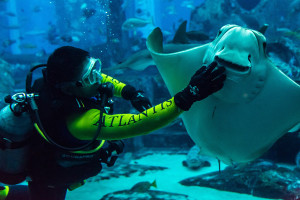
An aquarist cares for aquatic life in aquariums and marine facilities by maintaining healthy habitats, monitoring water quality, feeding animals, and educating the public about marine ecosystems. Most aquarists hold a bachelor's degree in marine biology or zoology and earn a median salary of $72,860 annually as part of the broader zoologists and wildlife biologists occupation category.
Welcome to your guide on becoming an aquarist. If you've ever stood mesmerized by a jellyfish exhibit or dreamed of working alongside sea turtles and tropical fish, this career path might be calling you. An aquarist is someone who cares for aquatic life in aquariums and marine facilities, maintaining healthy habitats and connecting the public with the wonders of marine ecosystems. This role combines hands-on animal care with education, conservation, and scientific research.
Whether you're a high school student exploring career options or considering a career change driven by your passion for marine life, this guide provides realistic insights into what aquarists actually do, how much they earn, and what it takes to break into this competitive field.
What Does an Aquarist Do?
Aquarists perform several different functions depending on their exact position and facility type. Many are directly involved with caring for marine life and properly maintaining the quality of their habitats. The daily work is both physically demanding and scientifically rigorous.
Animal care responsibilities include:
- Feeding animals according to specialized diets and schedules
- Observing animal behavior to detect signs of illness or stress
- Providing enrichment activities for intelligent species like octopuses and dolphins
- Capturing sick animals so they can be examined by veterinary staff
- Assisting with breeding programs and caring for juvenile animals
- Training animals for medical procedures and public presentations
Habitat maintenance duties involve:
- Monitoring and adjusting water temperature, salinity, and pH levels
- Testing water quality for ammonia, nitrites, and other chemical parameters
- Cleaning tanks, filtration systems, and exhibit windows
- Maintaining life support equipment, including pumps, filters, and protein skimmers
- Aquascaping exhibits with rocks, coral, and plants
- Troubleshooting equipment failures and performing repairs
Public education and research may include:
- Presenting educational programs to school groups and visitors
- Conducting diving demonstrations in large exhibits
- Designing new exhibits that balance animal welfare with public engagement
- Collecting data on animal behavior, reproduction, and health
- Assisting with conservation research projects
Where Does an Aquarist Work?
Most aquarists work in aquariums, which are private or public facilities where fish and other marine life are kept to educate the public and support conservation efforts. While this profession spends considerable time working hands-on with marine life, aquarists also work in office environments, designing exhibits, analyzing data, and preparing educational presentations.
Aquarists may also perform fieldwork outdoors, traveling to coastal areas, rivers, or oceans to collect specimens for the aquarium or participate in conservation research. This career path often requires significant physical activity, time spent in the water, and the ability to work in all weather conditions.
Most work part-time or full-time, though irregular hours are common because many animals require 24-hour care. Weekend and holiday work is typical, as aquariums remain open year-round. Fieldwork may require extensive travel and overtime hours. The job can be physically demanding, involving lifting heavy equipment, standing for long periods, and working in wet conditions.
Types of Aquarium Facilities
Aquarists work in various settings, each offering different experiences and opportunities. Understanding these facility types can help you target your career path.
| Facility Type | Examples | Typical Focus | Career Opportunities |
|---|---|---|---|
| Public Aquariums | Monterey Bay Aquarium, Georgia Aquarium, Shedd Aquarium | Education, conservation, tourism | Most positions, competitive entry, advancement opportunities |
| Zoos with Aquatic Exhibits | Bronx Zoo, San Diego Zoo | Diverse animal care, aquatic specialization within broader zoo | Cross-training with terrestrial animals, varied experience |
| Research Institutions | Woods Hole, Scripps Institution | Scientific research, conservation, breeding programs | Research-focused roles, graduate degree often required |
| Conservation Centers | Sea Turtle hospitals, Marine mammal rescue centers | Rehabilitation, release programs | Hands-on animal care, emergency response, seasonal positions common |
| Private/Specialty Aquariums | Hotel aquariums, corporate installations, private collections | Maintenance, aesthetics, client satisfaction | Smaller operations, independent contracting opportunities |
What Is the Average Aquarist Salary?
Aquarists are classified by the Bureau of Labor Statistics as zoologists and wildlife biologists. According to the most recent BLS data from May 2024, zoologists and wildlife biologists earned a median annual salary of $72,860. This means half of the professionals in this category earn more than this amount, and half earn less.
The salary range is quite broad. The lowest 10% earned less than $48,240 annually, while the highest 10% earned more than $113,350. Your actual salary as an aquarist depends on several factors, including your education level, years of experience, the type of facility, and geographic location.
Salary typically varies by experience and position level:
| Experience Level | Typical Salary Range | Position Types |
|---|---|---|
| Entry-Level (0-2 years) | $35,000 - $50,000 | Aquarist I, Assistant Aquarist, often part-time or seasonal; varies widely by facility type and location |
| Mid-Career (3-7 years) | $55,000 - $75,000 | Aquarist II, Senior Aquarist, specialized exhibit care |
| Experienced (8-15 years) | $75,000 - $95,000 | Lead Aquarist, Aquarium Supervisor, Exhibit Manager |
| Senior Leadership (15+ years) | $95,000 - $113,000+ | Curator of Fishes, Director of Husbandry, and research positions |
Employer type significantly affects compensation:
- Federal government positions (NOAA, Fish and Wildlife Service) typically offer higher salaries and comprehensive benefits
- Large public aquariums in major cities often pay competitively, but face high applicant competition
- State and local facilities may pay less but offer stable employment and pension benefits
- Research institutions attached to universities may offer lower base salaries but provide opportunities for graduate education
- Private facilities vary widely depending on budget and ownership
Geographic location matters considerably. Aquarists in states with major coastal aquariums and higher costs of living, such as California, Massachusetts, and Hawaii, typically earn above the national median. Those in smaller regional aquariums or states with lower costs of living may earn less.
What Is the Job Demand for Aquarists?
Employment of zoologists and wildlife biologists, which includes aquarists, is projected to grow 2% from 2024 to 2034, according to the Bureau of Labor Statistics. This growth rate is slower than the average for all occupations. Despite limited employment growth, approximately 1,400 openings for zoologists and wildlife biologists are projected each year over the decade.
However, it's important to understand that most of these openings result from the need to replace workers who transfer to different occupations or retire, rather than from job growth. The reality is that aquarist positions are highly competitive, particularly at well-known public aquariums.
Factors affecting job opportunities:
- High competition: Many passionate individuals pursue aquarist careers, creating more applicants than positions
- Volunteer and internship pathways: Most successful aquarists start as unpaid volunteers or interns, gradually working toward paid positions
- Turnover in entry-level roles: Higher turnover in positions involving more menial tasks creates some opportunities
- Conservation focus: Growing public interest in ocean conservation and environmental education may create new positions
- Geographic flexibility: Willingness to relocate significantly improves job prospects
The field of marine biology, which includes aquarists, marine biologists, and aquatic biologists, is well known and competitive among students interested in ocean science, though exact rankings of popularity vary. This high level of interest creates significant competition for available positions.
What Are the Education Requirements to Become an Aquarist?
Most aquarists have a bachelor's degree at a minimum. The most common majors include marine biology, zoology, biology, aquatic science, and related environmental science fields. Your coursework should emphasize marine ecosystems, animal physiology, chemistry, and ecology.
Recommended coursework includes:
- Marine biology and oceanography
- Animal behavior and physiology
- Water chemistry and aquatic ecosystems
- Ichthyology (study of fish) and invertebrate zoology
- Conservation biology
- Statistics and research methods
Students looking to gain an edge in the job market should pursue internships at local aquariums, zoos, or marine research facilities. Many successful aquarists began as volunteers, demonstrating their commitment and gradually building relationships that led to paid positions. Hands-on experience with animal care and husbandry is invaluable and often carries as much weight as formal education.
Required certifications:
- Scuba diving certification: Essential for most aquarist positions, as the majority of the workday involves being around and in water. PADI Open Water certification is typically the minimum requirement, though advanced certifications are beneficial.
- CPR and First Aid: Required for safety, both for handling emergencies with visitors and for working in potentially hazardous conditions
- Scientific diving certification: Some research-focused positions require certification through the American Academy of Underwater Sciences (AAUS)
When is a graduate degree needed?
A master's degree or Ph.D. becomes important for advancement into curatorial positions, research roles, or specialized work with endangered species. Graduate education is particularly valuable if you want to design exhibits, lead conservation programs, or conduct independent research. However, many successful aquarists build long careers with just a bachelor's degree and extensive hands-on experience.
Consider exploring marine biology degree programs that offer partnerships with aquarium internships or field stations with aquatic research facilities.
Aquarist - Related Degrees
Essential Skills for Aquarists
Success as an aquarist requires a combination of technical knowledge, physical capabilities, and interpersonal skills. While your degree provides the scientific foundation, these practical skills often determine your effectiveness in the role.
Technical skills:
- Water chemistry expertise: Understanding pH, salinity, ammonia, nitrite, and nitrate levels is fundamental to maintaining healthy aquatic environments
- Animal behavior observation: Recognizing subtle changes in behavior that indicate health problems, stress, or reproductive readiness
- Equipment maintenance: Troubleshooting life support systems, pumps, filters, and monitoring equipment
- Data collection and record-keeping: Maintaining detailed logs of water parameters, feeding schedules, animal behaviors, and health observations
- Species identification: Recognizing different fish, invertebrates, and aquatic plants, and understanding their specific care requirements
Physical capabilities:
- Swimming and diving proficiency: Comfort working underwater for extended periods, sometimes in challenging conditions
- Physical stamina: Lifting heavy buckets of water, moving equipment, and standing for long periods
- Manual dexterity: Handling delicate equipment and working carefully around fragile animals
- Environmental tolerance: Working in cold, wet conditions and adjusting to irregular schedules
Interpersonal and professional skills:
- Communication abilities: Explaining complex marine science concepts to diverse audiences, from children to adult visitors
- Teamwork: Collaborating with other aquarists, veterinary staff, educators, and facility maintenance crews
- Attention to detail: Noticing small changes in water quality or animal behavior before they become serious problems
- Problem-solving: Responding quickly to equipment failures, health emergencies, or unexpected animal behaviors
- Patience and dedication: Accepting that animal care doesn't follow a 9-to-5 schedule and that progress can be slow
Career Advancement Opportunities
Many aquarists start in entry-level positions and gradually advance through experience and additional training. Understanding the typical career progression can help you set realistic expectations and goals.
Typical career ladder:
Volunteer/Intern → Assistant Aquarist → Aquarist I/II → Senior Aquarist → Lead Aquarist → Supervisor/Coordinator → Curator
Advancement typically depends on work experience, additional education, and the availability of higher-level positions at your facility. At smaller aquariums, advancement opportunities may be limited, sometimes requiring you to move to larger institutions.
Specialization pathways:
- Exhibit specialist: Focusing on particular exhibits like tropical reefs, cold-water systems, or freshwater environments
- Animal husbandry specialist: Concentrating on specific taxa such as sharks, marine mammals, jellyfish, or corals
- Breeding program coordinator: Managing captive breeding efforts for endangered or difficult-to-breed species
- Dive safety officer: Overseeing all diving operations and training staff in underwater protocols
- Public programs aquarist: Focusing on educational presentations and visitor interactions
- Research aquarist: Supporting scientific studies and conservation projects
Curatorial and leadership roles:
With significant experience and often a graduate degree, aquarists can advance to curatorial positions. Curators oversee entire collections, design new exhibits, manage budgets, supervise staff, and represent the aquarium in conservation initiatives. These positions typically require 10-15 years of experience and demonstrated leadership abilities.
Some experienced aquarists transition into related fields such as oceanography, marine conservation, or environmental education. The skills and knowledge gained as an aquarist transfer well to these adjacent career paths.
Challenges and Work-Life Balance
Before committing to this career path, it's important to understand the realistic challenges aquarists face. This isn't a glamorous job where you play with dolphins all day—it's physically demanding work that requires significant personal sacrifice.
Schedule and lifestyle considerations:
- Irregular hours: Animals need care every day, including weekends, holidays, and overnight shifts. Expect to work when others are celebrating.
- On-call responsibilities: Emergencies don't wait for business hours. Equipment failures or animal health crises may require middle-of-the-night responses.
- Physical demands: Expect to get wet, cold, and tired. The work involves heavy lifting, extensive standing, and working in uncomfortable positions.
- Seasonal variation: Some facilities hire seasonal workers, making year-round employment challenging for entry-level aquarists.
Emotional challenges:
- Animal illness and death: You'll form attachments to the animals in your care. Losing an animal you've cared for can be emotionally difficult.
- Limited advancement: Small aquariums may offer few opportunities for promotion and may require relocation for career growth.
- Competitive field: Many qualified applicants compete for a few positions, which can be discouraging.
Financial realities:
- Starting salaries: Entry-level positions often pay modest salaries, particularly given the educational requirements and cost of diving certifications.
- Student debt: If you graduate with significant student loans from a marine biology degree, the starting salary may make repayment challenging.
- Geographic limitations: Major aquariums are primarily located in coastal cities or large metropolitan areas with higher cost of living.
Rewards that make it worthwhile:
Despite these challenges, many aquarists find the career deeply rewarding. The opportunity to work with fascinating marine life, contribute to conservation efforts, inspire public appreciation for ocean ecosystems, and turn a childhood passion into a profession outweighs the difficulties for those truly committed to this path.
Aquarist vs. Related Careers
If you're passionate about marine life, an aquarist isn't your only option. Understanding how this career compares to related fields can help you choose the best fit for your interests and goals.
| Career | Primary Focus | Work Environment | Education Required | Median Salary |
|---|---|---|---|---|
| Aquarist | Animal care, habitat maintenance, public education | Aquariums, hands-on with captive animals | Bachelor's degree, scuba certification | $72,860 (as zoologist/wildlife biologist) |
| Marine Biologist | Research, fieldwork, data analysis, conservation | Universities, research vessels, field stations, laboratories | Master's or Ph.D. for most positions | $72,860 (as zoologist/wildlife biologist) |
| Zoologist | Animal behavior, population studies, conservation | Zoos, universities, government agencies, field research | Bachelor's minimum, master's preferred | $72,860 |
| Animal Care Worker | Daily feeding, cleaning, basic animal care | Zoos, aquariums, animal shelters, veterinary clinics | High school diploma, on-the-job training | $30,000-$40,000 |
| Marine Science Educator | Public education, program development, outreach | Aquariums, environmental education centers, schools | Bachelor's degree, teaching experience helpful | $50,000-$65,000 |
Key distinctions:
Aquarists focus primarily on husbandry and care of animals already in captivity, while marine biologists conduct research on marine ecosystems and wild populations. If you prefer hands-on animal care over data analysis and research writing, aquarist work may suit you better. However, if you're fascinated by understanding marine ecosystems through scientific investigation, marine biology might be a better fit.
Animal care workers perform similar daily tasks but place less emphasis on marine science and typically earn lower compensation. Aquarists need to understand marine biology and chemistry more deeply to make informed decisions about animal health and habitat maintenance.
Is This Career Right for You?
Before investing in the education and certifications required to become an aquarist, consider these questions to help evaluate whether this career aligns with your interests, abilities, and lifestyle preferences.
Consider these questions honestly:
- Are you comfortable working weekends, holidays, and irregular hours consistently throughout your career?
- Do you have the physical stamina for demanding work that involves heavy lifting, extensive standing, and working in cold, wet conditions?
- Are you willing to start as a volunteer or intern, possibly without pay, to gain the experience necessary for employment?
- Can you handle the emotional aspect of caring for animals that may become ill or die despite your best efforts?
- Are you prepared to relocate to coastal areas or major cities where most aquariums are located?
- Do you enjoy hands-on animal care more than laboratory research or data analysis?
- Are you comfortable working both independently and as part of a team?
- Can you accept starting salaries that may be modest relative to your educational investment?
- Do you prefer working with captive animals in educational settings rather than studying wildlife in natural habitats?
- Are you patient enough to work your way up through several years of entry-level positions before advancing?
If you answered "yes" to most of these questions, aquarist work may be a good fit. If several of these considerations give you pause, you might want to explore related careers like marine biology research, environmental education, or marine conservation that offer different work environments and lifestyle demands.
Professional Organizations and Resources
Aquarists and those who wish to enter the field can access valuable resources through these professional organizations and societies:
Association of Zoos & Aquariums (AZA) - This non-profit organization provides many resources for aquariums, particularly concerning conservation, scientific study, and education. They offer resources to keep aquarists up to date on the latest conservation news and public education techniques. These resources can be especially useful for those working in an educational capacity. The AZA website also lists accredited facilities and job postings for aquarist positions.
International Association of Aquarium Curators (IAAC) - A professional organization specifically for aquarium staff focused on advancing aquarium husbandry practices. They host an annual conference where aquarists share research, techniques, and innovations in animal care.
American Association of Zoo Keepers (AAZK) - While focused on zookeepers broadly, AAZK includes many aquarists among its membership. They provide professional development opportunities, workshops, and networking connections. Many local chapters exist throughout the United States.
Regional Aquarium Associations - Most states or regions with significant aquarium presence have local professional groups. Search for organizations like the California Association of Aquariums or the Mid-Atlantic Aquarium Network. These regional groups often host workshops and facilitate job networking.
Society for Marine Mammalogy - Valuable for aquarists working with marine mammals such as seals, sea lions, dolphins, or whales. Provides specialized resources and research focused on marine mammal biology and conservation.
Frequently Asked Questions
Do I need to be a certified scuba diver to become an aquarist?
Yes, scuba diving certification is essential for most aquarist positions. Many facilities require at least a PADI Open Water certification, though some positions prefer advanced certifications. You'll spend significant time underwater cleaning exhibits, feeding animals, and performing maintenance. Some research-focused positions may require scientific diving certification through the American Academy of Underwater Sciences.
Can I become an aquarist without a college degree?
While possible, it's increasingly difficult. Most modern aquariums require at a minimum a bachelor's degree in marine biology, zoology, or a related field. However, you might start as a volunteer or in an animal care worker role without a degree, then pursue education while gaining experience. The competition for positions makes a degree nearly essential at reputable facilities.
What's the difference between an aquarist and a marine biologist?
Aquarists focus primarily on husbandry—caring for animals already in captivity at aquariums. Marine biologists typically conduct research on marine ecosystems, often studying wild populations through fieldwork and data analysis. Aquarists work mostly with captive animals in controlled environments, while marine biologists may spend time on research vessels or conducting field studies. Many aquarists hold degrees in marine biology, but they apply that knowledge to animal care rather than research.
How competitive is it to get hired as an aquarist?
Very competitive. Aquarist positions, especially at major public aquariums, receive many more qualified applicants than there are openings. Most successful aquarists start as volunteers or interns, sometimes for months or years, before securing paid positions. Flexibility in location, willingness to start in smaller facilities, and extensive volunteer experience significantly improve your chances. Be prepared for a lengthy job search and consider starting in related animal care positions.
Do aquarists only work with saltwater animals?
No, many aquariums feature both freshwater and saltwater exhibits. Aquarists may care for freshwater fish, amphibians, and aquatic reptiles alongside marine species. Some facilities specialize entirely in freshwater ecosystems. Your specific responsibilities depend on your facility's collection. Aquatic biologists working in freshwater research or river conservation represent another career pathway for those more interested in freshwater systems.
Can I work with specific animals like sharks or dolphins?
Possibly, but specialization typically comes with experience. Entry-level aquarists usually work with various species across multiple exhibits. As you gain experience and demonstrate competence, you may specialize in particular taxa. Working with marine mammals often requires additional training and certifications. Large aquariums with specialized exhibits offer more opportunities to focus on particular animal groups, but expect to spend years working with diverse species first.
Is aquarist work seasonal, or are there full-time positions?
Both exist. Major public aquariums typically offer full-time positions with benefits, though competition is fierce. Smaller facilities, seasonal attractions, or part-time positions are more common for entry-level aquarists. Some facilities increase staffing during busy tourist seasons. Many aquarists work part-time or seasonally while volunteering elsewhere to gain experience. Full-time positions become more available as you advance in your career.
Key Takeaways
- Career Overview: Aquarists care for aquatic life in aquariums and marine facilities, combining hands-on animal care with education, conservation, and habitat maintenance. The role requires physical stamina, scientific knowledge, and the ability to work irregular schedules, including weekends and holidays.
- Salary Reality: As part of the zoologists and wildlife biologists occupation category, aquarists earn a median annual salary of $72,860, according to May 2024 BLS data. Entry-level positions typically start at $35,000-$50,000, with pay varying widely by facility type and location, while experienced aquarists in senior or curatorial roles can earn over $95,000. Salary varies significantly by facility type, location, and experience level.
- Education Requirements: A bachelor's degree in marine biology, zoology, or a related field is essential for most positions. Scuba diving certification is mandatory, along with CPR and first aid certification. Graduate degrees become important for curatorial positions and research roles. Extensive volunteer experience and internships often matter as much as formal education.
- Job Outlook: Employment for zoologists and wildlife biologists is projected to grow only 2% from 2024 to 2034, slower than average. Approximately 1,400 openings occur annually nationwide, but competition is intense—particularly at major public aquariums. Success requires flexibility in location, willingness to start as a volunteer, and patience through a potentially lengthy job search.
- Honest Challenges: This career demands physical work in cold, wet conditions, irregular hours, modest starting salaries relative to educational investment, and emotional resilience when animals become ill or die. However, for those genuinely passionate about marine life and conservation education, the opportunity to work with fascinating aquatic animals and inspire public stewardship makes these challenges worthwhile.
Ready to explore your path toward an aquarist career? Research marine biology and zoology programs that offer aquarium partnerships, internship opportunities, and hands-on experience with aquatic animal care.

2024 US Bureau of Labor Statistics salary and job growth figures for zoologists and wildlife biologists reflect national data, not school-specific information. Conditions in your area may vary. Data accessed February 2026.