

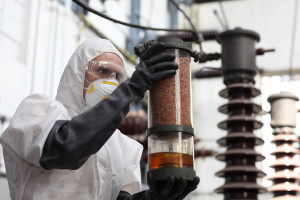
Nuclear engineers design, develop, and maintain systems that harness nuclear energy and radiation. They work across electric power generation, medical equipment manufacturing, national defense, and scientific research. Most nuclear engineers split their time between office-based design work and field operations at power plants or laboratories. The median salary reached $127,210 as of May 2023, with opportunities concentrated in states like Washington, New Mexico, and Virginia, where national laboratories and nuclear facilities operate.
Nuclear engineering represents one of the most specialized fields in engineering, combining physics, mathematics, and systems design to solve complex energy and radiation challenges. If you're considering this career path, you'll find a field that offers strong compensation and intellectually demanding work, though job growth remains modest as the industry focuses more on maintaining existing facilities than building new ones.
Here's what you need to know about becoming a nuclear engineer, what the work actually involves, and whether this career aligns with your interests and goals.
What Is a Nuclear Engineer?
Nuclear engineers spend their days designing equipment, analyzing data, and ensuring nuclear systems operate safely and efficiently. The work varies significantly based on your industry and specialization, but some core responsibilities remain consistent across the field.
Daily Responsibilities
On a typical day, you might design nuclear equipment for power plants, analyze radiation data from experiments, or monitor reactor operations. Many nuclear engineers work with computer simulations, running thousands of calculations to predict how nuclear systems will behave under different conditions. You'll review safety protocols constantly, since even small errors in nuclear work can have serious consequences.
If you work at a power plant, you'll monitor control systems, troubleshoot equipment issues, and coordinate with operations teams to maintain safe energy production. Research-focused engineers spend more time in laboratories, developing new reactor designs or studying how materials behave under radiation exposure. Medical equipment engineers design and test radiation therapy machines, working closely with healthcare professionals to improve cancer treatment technologies.
Emergency response forms another critical part of the job. When equipment malfunctions or safety concerns arise, nuclear engineers must diagnose problems quickly and implement solutions. This requires staying calm under pressure and having deep knowledge of how complex nuclear systems interact.
Industries and Specializations
Nuclear engineers work across four main sectors, each offering different types of work and challenges:
Electric power generation employs the largest share of nuclear engineers. You'll work at nuclear power plants, overseeing reactor operations, designing safety systems, and planning maintenance schedules. This work focuses heavily on ensuring reliable, safe energy production while meeting strict regulatory requirements.
Scientific research and development offers the highest salaries in the field, with median pay around $140,070. National laboratories like Los Alamos and Sandia employ hundreds of nuclear engineers researching everything from advanced reactor designs to nuclear weapons safety. You'll have more flexibility to explore theoretical problems and cutting-edge technologies.
Federal government positions include work for the Department of Energy, Nuclear Regulatory Commission, and Navy nuclear propulsion programs. These roles often involve regulatory oversight, policy development, or managing nuclear weapons programs. Government roles pay approximately 17-20% less than private research and development positions according to BLS industry breakdowns, but typically offer exceptional retirement benefits, job security, and work-life balance.
Medical equipment manufacturing represents a growing application of nuclear engineering. You'll design radiation therapy equipment, develop medical imaging technologies, or work on radioactive pharmaceutical production. This sector lets you apply nuclear engineering principles directly to healthcare challenges.
Where Do Nuclear Engineers Work?
Most nuclear engineers split their time between offices and operational facilities, though the exact balance depends on their role and employer. Understanding the work environment helps you determine if this career matches your preferences for workplace setting and daily routine.
Office and Field Work Balance
Office work dominates for many nuclear engineers. You'll spend significant time at computers, running simulations, analyzing data, designing equipment, and preparing technical reports. Modern nuclear engineering relies heavily on advanced modeling software, so expect to develop strong computational skills alongside your nuclear physics knowledge.
Field work at power plants or laboratories brings you face-to-face with actual nuclear systems. You'll wear protective equipment, follow strict safety protocols, and work in controlled environments where radiation monitoring is constant. Some engineers find this hands-on work energizing, while others prefer staying in design and analysis roles.
Travel requirements vary widely. National laboratory positions might keep you in one location, while consulting engineers could travel regularly to different facilities. Government positions occasionally require travel for site inspections or inter-agency coordination.
Typical Work Schedule
Most nuclear engineers work standard full-time schedules, typically 40 hours per week in office environments. However, power plant operations run 24/7, so engineers supporting these facilities may work rotating shifts, be on call for emergencies, or work extended hours during planned maintenance outages.
Research positions usually offer more schedule flexibility. You'll still work full-time, but you might have some control over your hours as long as you meet project deadlines and attend required meetings. Federal government positions typically follow standard business hours with a good work-life balance.
Stress levels fluctuate based on your specific role. Design and research work proceed at a measured pace most of the time, but operational roles can be high-pressure when equipment issues arise or during critical maintenance periods. The constant awareness of safety requirements means you can't afford to be careless, which some engineers find mentally taxing over long careers.
Nuclear Engineer Salary and Job Outlook
Nuclear engineering offers strong compensation that places it among the highest-paid engineering specialties. However, the job market presents a more complex picture, with modest employment declines offset by steady replacement needs as experienced engineers retire.
National Salary Data
Nuclear engineers earned a median annual salary of $127,210 as of May 2023 (the most recent data available), according to the Bureau of Labor Statistics. This represents a 9.5% increase from the $116,140 median reported in 2020, outpacing general inflation and demonstrating continued demand for specialized nuclear expertise.
Salary ranges vary considerably based on experience and employer. Entry-level engineers in the 10th percentile earn around $88,290 annually, while experienced engineers in the 90th percentile command $187,430 or more. The mean salary of $134,980 sits above the median, indicating that high earners pull the average upward.
These figures place nuclear engineers well above the median for all occupations and competitive with other specialized engineering fields. Only petroleum engineers and certain computer hardware engineers typically earn more among engineering specialties.
Geographic Salary Variations
Where you work significantly impacts your earning potential. The District of Columbia pays the highest wages at $163,610 annually, driven by federal agency concentration and defense contractor presence. New Mexico follows at $147,350, reflecting the major national laboratories in Los Alamos and Albuquerque.
The highest-paying metropolitan areas include Atlanta ($172,830), Los Angeles ($154,890), and the Washington, D.C. region ($152,060). These areas combine high costs of living with strong demand for nuclear engineering expertise.
States with the most nuclear engineering jobs include Washington (approximately 1,410 positions), New Mexico (1,190), Virginia (1,190), South Carolina (970), and Pennsylvania (730), based on May 2023 BLS regional employment estimates. If you're willing to relocate, these states offer the most opportunities and typically pay competitive salaries to match their labor market needs.
Note: Geographic salary data reflects May 2023 BLS Occupational Employment and Wage Statistics. State and metropolitan area wages are subject to annual revision as new survey data becomes available.
Industry Salary Breakdown
Your employer type affects your paycheck substantially. Scientific research and development services pay a median of $140,070, about 20% more than federal government positions at $116,230. Nuclear electric power generation offers $135,760 median salary, while general engineering services pay around $110,060.
Private sector research positions command premium wages because they require specialized expertise and often involve classified work or cutting-edge reactor development. Power plant positions balance strong salaries with excellent benefits packages. Government roles pay approximately 17-20% less than private research and development positions according to BLS industry breakdowns, but typically offer exceptional retirement benefits, job security, and work-life balance.
Note: The Bureau of Labor Statistics classifies all nuclear engineers under a single occupational code (SOC 17-2161) and does not separately report salary data for medical physics, defense, or research subspecialties. Industry-specific wage data reflects the primary employing sector but may include engineers performing various specialized roles within that industry.
Job Growth Projections (2022-2032)
Employment of nuclear engineers is projected to decline by 1% from 2022 to 2032, according to BLS projections. This modest decrease is substantially better than the 8% decline projected in 2020 for the previous decade, suggesting the field has stabilized more than earlier forecasts anticipated.
Despite the slight overall decline, the BLS projects approximately 700 job openings annually for nuclear engineers through 2032. These openings come from replacement needs as experienced engineers retire or change careers, not from industry growth. This creates genuine opportunities for new graduates, particularly as workforce demographics shift and experienced engineers reach retirement age.
The decline reflects several industry realities. New nuclear plant construction remains limited in the United States, with policy and investment increasingly focused on renewable energy sources like wind and solar. However, existing nuclear facilities still require engineering expertise to operate safely, and research into advanced reactor designs and small modular reactors continues at national laboratories.
Geographic concentration matters for job prospects. States with major nuclear facilities, national laboratories, or large Navy installations offer more opportunities. Washington state, New Mexico, Virginia, and South Carolina provide the strongest job markets based on current employment levels.
How to Become a Nuclear Engineer
Entering nuclear engineering requires specific educational preparation, with most positions demanding at least a bachelor's degree from an ABET-accredited program. The path is rigorous but straightforward if you have strong mathematics and physics aptitude.
Educational Requirements
You'll need a bachelor's degree in nuclear engineering or a closely related field like mechanical or electrical engineering with a nuclear focus. ABET accreditation is critical because employers and licensing boards use it to verify that your program meets rigorous educational standards. Don't skip this requirement when choosing schools.
Nuclear engineering programs combine theoretical physics with practical applications. You'll study nuclear reactor physics, thermodynamics, fluid mechanics, heat transfer, and radiation detection. Mathematics is fundamental throughout the curriculum. Expect courses in differential equations, linear algebra, and numerical methods alongside your engineering coursework.
Laboratory and fieldwork during college provide essential hands-on experience. Many programs include reactor simulator training or partnerships with nearby research reactors. Take advantage of every opportunity to work with actual nuclear systems, even in educational settings, because employers value practical experience alongside classroom knowledge.
Bachelor's Degree Programs
Most nuclear engineering bachelor's programs take four years to complete. Your coursework will progress from foundational mathematics and physics in the first two years to specialized nuclear engineering topics in your junior and senior years.
Core courses typically include nuclear reactor theory, radiation protection and shielding, nuclear materials, reactor thermal hydraulics, and nuclear measurements laboratory. You'll also take supporting courses in computer programming, materials science, and engineering ethics.
Look for programs that offer internship coordination or cooperative education opportunities. Summer internships at national laboratories, power plants, or Navy nuclear facilities can dramatically improve your job prospects after graduation. Some students secure full-time job offers from companies where they interned.
Consider schools with research reactors on campus or strong partnerships with nearby nuclear facilities. The University of Michigan, MIT, Purdue University, and Texas A&M University maintain campus research reactors that give students unique hands-on learning opportunities.
Other Degrees Related to Nuclear Engineering
Master's and Doctoral Programs
Many nuclear engineers pursue master's degrees to advance into senior technical roles, research positions, or management. A master's typically requires two additional years beyond your bachelor's degree, though some schools offer accelerated five-year bachelor's/master's programs that can save time and money.
Master's programs let you specialize in areas like reactor design, nuclear materials, medical physics, or radiation protection. You'll complete advanced coursework and usually a thesis project or capstone design experience. This specialization makes you more competitive for research positions and can lead to higher starting salaries.
Doctoral degrees are essential if you want to teach at universities or lead research programs at national laboratories. A PhD takes four to six years beyond your bachelor's degree and requires original research that advances the field. Most PhD students receive funding through research or teaching assistantships, so you typically won't pay tuition.
You don't need a PhD for most industry positions. Focus on a doctorate only if you're genuinely interested in academic research or want to lead advanced research programs. Industry values experienced master's-level engineers just as highly for most practical work.
Licensing and Certifications
Professional Engineer (PE) licensure isn't universally required in nuclear engineering, unlike fields like civil or electrical engineering. However, PE licensure becomes essential for roles involving public safety oversight, independent consulting, or signing off on engineering designs that require professional certification. Earning your PE can enhance career prospects, particularly if you work in consulting or eventually want to start your own firm.
To become a PE, you'll take the Fundamentals of Engineering (FE) exam after completing your bachelor's degree, work for four years under a licensed PE, then take the PE exam in nuclear engineering. Each state administers its own licensing, though most states recognize licenses from other jurisdictions.
Security clearances matter more than PE licenses for many nuclear engineering positions. Work at national laboratories, with nuclear weapons programs, or on Navy nuclear propulsion requires Department of Energy or Department of Defense security clearances. The clearance process is lengthy and invasive, examining your background, finances, and personal relationships.
Specialized certifications exist for health physics, radiation protection, and specific reactor types, but employers typically provide any necessary training. Focus first on getting your degree from an ABET-accredited program and building practical experience through internships.
Essential Skills for Nuclear Engineers
Success in nuclear engineering demands a combination of technical expertise, analytical thinking, and communication abilities. You'll need to master complex mathematics while also explaining your work clearly to colleagues and regulators who may not share your technical background.
Mathematical proficiency is non-negotiable. You'll use differential equations, linear algebra, and statistical analysis daily. Nuclear reactor physics relies on complex mathematical models, and you need to understand the math deeply enough to know when your calculations are producing reasonable results.
Physics understanding, particularly nuclear and radiation physics, forms the foundation of everything you'll do. You need an intuitive grasp of how radiation interacts with matter, how nuclear reactions progress, and how energy transfers through systems.
Computer skills have become increasingly important. Modern nuclear engineering relies on simulation software, computational fluid dynamics, and Monte Carlo radiation transport codes. You don't need to be a software engineer, but you should be comfortable writing scripts and working with specialized engineering software.
Attention to detail matters immensely because errors in nuclear engineering can have catastrophic consequences. You'll need to check and recheck calculations, follow procedures exactly, and maintain meticulous documentation. This careful, methodical approach must become second nature.
Problem-solving ability helps you diagnose unexpected behaviors in complex systems. Nuclear reactors don't always behave exactly as models predict, so you need to think creatively about what might be causing discrepancies and how to investigate them safely.
Communication skills are essential for writing technical reports, presenting findings, and explaining complex concepts to non-technical stakeholders. Regulators, managers, and sometimes the public need to understand your work, so you must translate technical jargon into clear language.
Teamwork and collaboration define daily work life. Nuclear projects involve dozens of engineers and specialists working together. You'll coordinate with mechanical engineers, electrical engineers, health physicists, and operations personnel constantly.
Career Path and Advancement Opportunities
Nuclear engineering careers typically follow a progression from entry-level design and analysis work through senior technical roles or management positions. Understanding this path helps you make strategic decisions about education, certifications, and job choices.
Most new graduates start as junior engineers working under experienced mentors. You'll perform calculations, assist with design work, analyze test data, and learn your employer's procedures and systems. This apprenticeship period typically lasts two to four years as you build practical knowledge and demonstrate competence.
Mid-career engineers take on more independent responsibilities. You might lead design projects, manage safety analyses, or oversee maintenance planning. Many engineers earn PE licenses during this phase and develop recognized expertise in specific reactor types or analytical methods. Salaries increase substantially as you demonstrate specialized knowledge and can work independently.
Senior technical roles let you focus on the most challenging engineering problems without managing people. You'll be the expert others consult when unusual problems arise, you'll mentor junior engineers, and you'll represent your organization in technical meetings with regulators or industry groups. This individual contributor track can be extremely rewarding if you prefer deep technical work over management.
Management tracks open up for engineers who show leadership ability and interest in organizational issues. You might become an engineering manager, overseeing a team of engineers, or move into plant management at a nuclear facility. Management positions typically pay more than senior technical roles but require different skills and less hands-on technical work.
Career pivots within the field are common. You might start in power generation, move to national laboratory research, then finish your career in consulting. Or you could transition from reactor design into nuclear medicine or radiation safety. The fundamental knowledge transfers well across different applications of nuclear technology.
Related Engineering Careers
If you're interested in nuclear engineering but want to explore related options, several engineering specialties share similar problem-solving approaches and technical foundations. These alternatives might offer better job growth prospects or align more closely with your specific interests.
Environmental engineers work on problems like water treatment, air pollution control, and waste management. If you're drawn to nuclear engineering's environmental protection aspects but want broader career options, environmental engineering offers stronger job growth (6% projected through 2034) and diverse industry opportunities.
Agricultural engineers apply engineering principles to farming and food production challenges. This field combines mechanical, electrical, and environmental engineering to develop sustainable agriculture systems. It's less specialized than nuclear engineering and offers more geographic flexibility.
Solar engineers design and develop photovoltaic systems and solar thermal technologies. If you're interested in energy engineering but prefer the renewable energy sector's growth trajectory, solar engineering offers expanding opportunities as the industry scales up rapidly.
Petroleum engineers work on oil and gas extraction technologies. While this field faces long-term transition challenges similar to nuclear engineering, it currently offers higher median salaries ($131,800) and more geographic opportunities in traditional energy states.
Mechanical engineering with an energy focus provides the broadest career flexibility. You'll study thermodynamics, fluid mechanics, and heat transfer-similar to nuclear engineering coursework-but you can work across industries from aerospace to power generation. This generalist approach offers more career pivot options if your interests change.
Professional Organizations and Resources
Nuclear engineers have access to several professional organizations that provide networking opportunities, technical resources, and career development support. Joining these groups while you're still a student can help you build connections and stay informed about industry trends.
The American Nuclear Society (ANS) is the primary professional organization for nuclear engineers in the United States. ANS publishes technical journals, hosts conferences where you can present research and meet employers, and offers student chapters at most universities with nuclear engineering programs. Membership gives you access to technical standards, position statements on industry issues, and networking with thousands of practicing engineers.
The World Nuclear Association (WNA) provides an international perspective on nuclear energy issues. If you're interested in how nuclear power fits into global energy strategies or want to work internationally, WNA offers valuable context on different countries' approaches to nuclear technology.
The North American Young Generation in Nuclear (NAYGN) specifically supports early-career nuclear professionals. They organize networking events, professional development workshops, and outreach activities that let you connect with peers facing similar career questions. Local chapters exist near most major nuclear facilities and offer volunteering opportunities that build your resume while you're still in school.
These organizations also advocate for the nuclear industry, engage with policymakers, and provide public education about nuclear technology. Your involvement helps shape how the industry evolves and how the public understands nuclear engineering's role in energy production and other applications.
Frequently Asked Questions
What does a nuclear engineer do on a daily basis?
Daily work varies significantly by employer and role. Office-based engineers spend most of their time running computer simulations, analyzing data, designing equipment, and writing technical reports. Field engineers at power plants monitor reactor operations, review safety systems, coordinate maintenance activities, and respond to equipment issues. Research engineers conduct experiments, test new materials or reactor designs, and collaborate with other scientists. Regardless of the setting, you'll spend significant time ensuring safety procedures are followed and documenting your work thoroughly.
How long does it take to become a nuclear engineer?
A bachelor's degree typically takes four years and is the minimum requirement for entry-level positions. Many engineers pursue master's degrees, adding two more years, though some schools offer five-year combined bachelor's/master's programs. If you include the time needed to gain security clearances for certain positions, which can take six months to a year, plan on at least four to five years from starting college to landing your first job. Doctoral degrees require four to six additional years beyond a bachelor's degree.
Is nuclear engineering a good career choice?
Nuclear engineering offers excellent compensation ($127,210 median salary) and intellectually challenging work, but job growth is minimal, with only 1% decline projected through 2032. The field suits you well if you enjoy complex problem-solving, have strong mathematics and physics skills, and don't mind working in a highly regulated environment. However, limited job growth means fewer opportunities than expanding fields like environmental or software engineering. Consider it a good choice if the technical work genuinely excites you and you're willing to relocate to areas with nuclear facilities or national laboratories.
Do nuclear engineers work with dangerous materials?
Yes, but safety protocols minimize risks significantly. Nuclear engineers working at power plants or research facilities follow strict safety procedures, wear protective equipment, and monitor radiation exposure constantly. Radiation doses are tracked carefully and kept well below safety limits. Many nuclear engineers work primarily in offices and control rooms where radiation exposure is negligible. The field has an excellent safety record due to rigorous training, multiple redundant safety systems, and a culture that prioritizes safety above all else. Actual radiation-related injuries among nuclear engineers are extremely rare.
What's the difference between nuclear engineering and other engineering specialties?
Nuclear engineering is more specialized than most engineering fields, focusing specifically on applications of nuclear physics and radiation. While mechanical or electrical engineers can work across dozens of industries, nuclear engineers typically work in electric power generation, national laboratories, medical equipment, or defense. The highly regulated nature of nuclear work means more paperwork, stricter procedures, and less flexibility than other engineering fields. However, this specialization also means less competition for positions and the opportunity to work on complex, impactful projects. Nuclear engineering requires stronger physics and mathematics backgrounds than many other engineering specialties.
Key Takeaways
- Strong Compensation: Nuclear engineers earned a median salary of $127,210 as of May 2023 (most recent BLS data), placing them among the highest-paid engineering professionals. Top earners in the 90th percentile command $187,430 or more annually.
- Specialized Education Required: A bachelor's degree from an ABET-accredited nuclear engineering program is mandatory for entry-level positions. Many engineers pursue master's degrees for advancement into research or senior technical roles, though PhDs are only necessary for academic or advanced research positions.
- Modest Job Decline with Steady Openings: Employment is projected to decline just 1% from 2022 to 2032, but approximately 700 annual job openings will emerge from retirement and career changes. Geographic flexibility helps, with Washington, New Mexico, Virginia, and South Carolina offering the strongest job markets.
- Diverse Work Settings: Nuclear engineers split time between office work (computer simulations, design, analysis) and field work (power plant operations, laboratory research). The balance depends on your employer and role, with research positions offering more office time and power plant roles requiring more hands-on facility work.
- Multiple Career Pathways: Opportunities exist in electric power generation, scientific research, federal government agencies, and medical equipment manufacturing. Each sector offers different advantages: research pays best ($140,070 median), government provides job security, and power generation offers a balance of salary and stability.
Ready to explore nuclear engineering programs? Find ABET-accredited degree programs that match your career goals and geographic preferences.

2023 US Bureau of Labor Statistics salary and job growth figures for nuclear engineers reflect national data, not school-specific information. Conditions in your area may vary. Data accessed January 2026.