

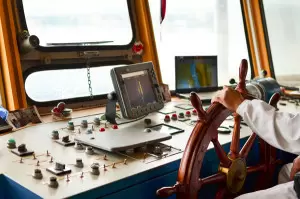
Hydrographic surveyors map underwater terrain and coastal features using specialized equipment like multibeam sonar and GPS systems on survey vessels. They earned a median salary of $72,740 in 2024, with experienced professionals earning over $110,000. Most positions require a bachelor's degree in geomatics, GIS, or related fields, though entry-level roles may accept high school diplomas with on-the-job training.
Hydrographic surveying combines cutting-edge technology with fieldwork to create detailed maps of our oceans, seas, rivers, and coastal zones. These maps serve critical purposes, from ensuring safe navigation for commercial shipping to planning offshore infrastructure projects and monitoring environmental changes. If you're drawn to a career that takes you out on the water while contributing to maritime safety and scientific understanding, hydrographic surveying offers a unique career path.
What Does a Hydrographic Surveyor Do?
Hydrographic surveyors use specialized equipment on survey vessels to map the geography of a body of water, including depth measurements, tide patterns, shoreline obstacles, and seafloor or riverbed features. They transform raw survey data into detailed hydrographic models for multiple applications.
Modern hydrographic surveyors rely on advanced technologies such as multibeam sonar, which emits multiple sound waves simultaneously to create detailed 3D maps of underwater terrain. Light detection and ranging (LiDAR) systems allow surveyors to penetrate shallow water and map coastal transitions between land and sea. GPS and inertial navigation systems ensure precise positioning of survey data, often accurate to within centimeters.
A typical survey project involves several stages. During the planning phase, surveyors review existing charts, consult with clients about project requirements, and determine the appropriate survey methods and equipment. In the field, survey crews spend days or weeks aboard vessels, operating sonar systems, monitoring data quality in real-time, and adjusting survey patterns to ensure complete coverage. Back in the office, surveyors process and analyze data, correct errors, and produce final deliverables, such as nautical charts, digital terrain models, and specialized engineering reports.
The applications of hydrographic survey data extend across numerous industries. Maritime navigation relies on accurate charts to keep vessels safe from underwater hazards. Offshore construction projects, from wind farms to oil platforms, require detailed seafloor surveys before breaking ground. Environmental scientists use hydrographic data to monitor coastal erosion, track changes in underwater habitats, and study the impacts of climate change on our oceans. Harbor authorities rely on regular surveys to maintain safe navigation channels and identify areas requiring dredging.
Where Does a Hydrographic Surveyor Work?
Hydrographic surveyors spend most of their time in the field, often in outdoor marine environments. The work requires extended periods on survey vessels, from small boats for nearshore projects to large oceanographic ships for deep-water surveys. Surveyors must work in various weather conditions, though extreme weather typically halts operations for safety reasons. The physical demands include managing heavy measuring equipment, maintaining balance on moving vessels, and occasionally working in challenging sea conditions.
The work environment varies significantly by project type and location. Nearshore surveys along coastlines might involve daily trips from port, allowing surveyors to return home each evening. Offshore projects often require living aboard survey vessels for weeks at a time, with crews working in rotating shifts to maximize data collection during good weather windows. International work is part of everyday life in the profession, with projects ranging from harbor surveys in developing nations to Antarctic research expeditions.
When not in the field, hydrographic surveyors work in office settings processing survey data, creating maps and charts, writing reports, and planning future surveys. Some surveyors specialize in data processing and rarely go to sea, instead focusing on transforming raw survey data into usable products. Others maintain and calibrate survey equipment, ensuring instruments are correctly configured and certified for accuracy.
Most hydrographic surveyors work full-time on regular schedules, though field schedules often intensify during summer months when weather conditions are most favorable for surveying. Surveyors maintaining GIS systems without fieldwork responsibilities generally follow standard office hours year-round. At times, shore-based surveyors may be called to join vessel crews to address technical issues or provide specialized expertise during critical survey operations.
Hydrographic Surveyor Salary & Compensation
According to the latest Bureau of Labor Statistics data, surveyors earned a median annual salary of $72,740 as of May 2024. Entry-level surveyors in the bottom 10% earned approximately $40,000, while experienced professionals in the top 10% earned more than $110,000 annually. Hydrographic surveyors with specialized certifications and extensive offshore experience typically command salaries at the higher end of this range.
Salary varies significantly based on several factors. Geographic location plays a significant role, with coastal regions and areas with active offshore industries generally offering higher compensation. Surveyors working in remote locations or on international projects often receive additional pay premiums and benefits. Certifications from organizations such as the National Society of Professional Surveyors or specialized hydrographic credentials may increase earning potential, though the exact impact varies by employer and region.
Experience level directly impacts compensation. Entry-level technicians typically start in the $40,000- $50,000 range, learning to operate equipment and basic survey techniques. Mid-career surveyors with 5-10 years of experience and proven skills in data processing and project management earn $65,000-$85,000. Senior hydrographic surveyors leading survey operations, managing teams, and interfacing directly with clients can earn $95,000-$120,000 or more.
| Career Level | Experience | Typical Salary Range | Key Responsibilities |
|---|---|---|---|
| Entry-Level Technician | 0-2 years | $40,000 - $50,000 | Equipment operation, data collection, basic processing |
| Survey Technician | 2-5 years | $50,000 - $65,000 | Independent surveys, quality controland , report preparation |
| Hydrographic Surveyor | 5-10 years | $65,000 - $85,000 | Project planning, advanced analysis, and client interaction |
| Senior Surveyor/Project Lead | 10+ years | $95,000 - $120,000+ | Team leadership, project management, business development |
Most hydrographic surveyors work for private engineering firms, surveying companies, or specialized hydrographic service providers. However, employment opportunities also exist with federal agencies such as the National Oceanic and Atmospheric Administration (NOAA), the U.S. Navy, and the U.S. Army Corps of Engineers. State and local governments hire hydrographic surveyors for port authorities, environmental agencies, and infrastructure planning departments. Some experienced surveyors work as independent consultants, providing specialized expertise to multiple clients.
Job Outlook & Employment Growth
The Bureau of Labor Statistics projects employment for surveyors to grow 4% between 2024 and 2034, adding approximately 2,200 new positions to the current workforce of 56,100 surveyors nationwide. This represents moderate but steady job growth, driven by ongoing demand for precise mapping and measurement services across multiple industries.
Several factors contribute to positive job prospects for hydrographic surveyors specifically. Advances in technology have made accurate, information-rich underwater mapping more accessible and cost-effective than ever before, leading to increased demand for hydrographic services. Offshore wind energy development requires extensive seafloor surveys for turbine placement and cable routing. Growing international trade means ports must maintain and expand navigation channels, creating consistent demand for harbor surveys.
Climate change and coastal management concerns are driving increased investment in coastal monitoring and adaptation planning. Rising sea levels, coastal erosion, and changing storm patterns require regular hydrographic surveys to track shoreline changes and shifts in underwater topography. Environmental regulations for offshore development projects mandate baseline surveys and ongoing monitoring, creating additional opportunities for hydrographic surveyors.
Infrastructure expansion in both expanding metropolitan areas and developing nations requires detailed maps for planning and construction. Underwater pipelines, communication cables, and bridge foundations all depend on accurate hydrographic data. As global navigation becomes more precise and autonomous vessels become more common, the demand for high-resolution, frequently updated nautical charts continues to grow.
Education & Training Requirements
Entry into hydrographic surveying can take several paths, depending on your career goals and educational background. Many hydrographic surveyors begin with only a high school diploma and learn most industry-specific skills through on-the-job training and apprenticeships. This entry path typically starts as a survey technician or deckhand on survey vessels, gradually taking on more responsibilities as you develop proficiency with equipment and techniques.
However, advancing into mapping positions, data processing roles, or project management typically requires formal education from institutions of higher learning. A bachelor's degree in geomatics or Geographic Information Systems (GIS) provides the strongest foundation for a career in hydrographic surveying. These programs cover essential topics including geodesy, cartography, remote sensing, spatial data analysis, and survey mathematics.
Related degree programs also provide excellent preparation. Geospatial science degrees focus on spatial data collection and analysis technologies directly applicable to hydrographic work. Earth science programs provide strong backgrounds in oceanography, geology, and environmental systems, enhancing understanding of the features being surveyed. Geoscience degrees offer comprehensive training in Earth systems and mapping technologies.
Coursework in these programs typically includes surveying fundamentals, GPS and satellite positioning, digital mapping and GIS software, statistics and error analysis, oceanography and marine geology, computer programming and data processing, and field methods and equipment operation. Many programs incorporate hands-on field projects in which students conduct surveys and process real data, providing practical experience before entering the workforce.
Formal licensure is not universally required for hydrographic surveyors, especially for roles focused on offshore or technical surveying. However, some states and roles may require professional licensure. Professional certifications significantly enhance career prospects and earning potential regardless of licensing requirements. The National Society of Professional Surveyors offers various certification levels for surveyors. The GIS Certification Institute provides credentials recognized across the geospatial industry. For those specializing in hydrographic work, the Hydrographic Society of America offers professional certifications specific to ocean and coastal surveying.
Continuing education remains vital throughout a hydrographic surveyor's career. Survey technologies evolve rapidly, with new sensors, processing software, and positioning systems emerging regularly. Professional development through workshops, conferences, and online courses helps surveyors stay current with industry standards and emerging capabilities.
Essential Skills for Hydrographic Surveyors
Success in hydrographic surveying requires a blend of technical expertise, physical capabilities, and interpersonal skills. Understanding which skills are most important can help you assess whether this career aligns with your strengths and interests.
Technical Skills
Proficiency with survey equipment represents the core technical requirement. Hydrographic surveyors must understand multibeam and single-beam sonar systems, side-scan sonar for seafloor imaging, GPS and inertial navigation systems, and LiDAR systems for shallow water and coastal zones. Beyond operating equipment, surveyors must calibrate instruments, troubleshoot technical issues, and optimize survey configurations to meet specific project requirements.
Data processing and analysis skills are equally critical. Modern surveys generate massive datasets requiring specialized software to process, clean, and visualize. Surveyors work with hydrographic processing software packages, GIS platforms for spatial analysis, CAD programs for chart production, and statistical tools for quality assessment. Strong computer skills and the ability to learn new software quickly are essential as technologies and industry standards evolve.
Mathematical and analytical abilities support accurate survey work. Surveyors apply principles of geodesy and coordinate systems, calculate tide corrections and water-level adjustments, perform statistical analyses to assess data quality, and understand the propagation of measurement uncertainty. While software handles many calculations, surveyors must understand the underlying principles to make sound decisions about survey design and data quality.
Physical and Environmental Skills
The marine environment demands specific physical capabilities and comfort levels. Hydrographic surveyors must maintain balance and function effectively on moving vessels, work outdoors in various weather conditions, lift and manage heavy equipment (sonar transducers, cables, deployment systems), and sometimes perform tasks requiring good vision, including distinguishing colors on data displays. While you don't need to be an exceptional swimmer, comfort in marine environments and basic water safety awareness are essential.
Professional and Interpersonal Skills
Project management abilities become increasingly crucial as surveyors advance in their careers. This includes planning survey operations within time and budget constraints, coordinating with vessel operators, clients, and regulatory agencies, managing survey teams and assigning responsibilities, and ensuring quality control throughout all project phases.
Communication skills play a vital role across all career levels. Surveyors must explain technical findings to non-technical clients, prepare clear written reports and documentation, collaborate with multidisciplinary teams, and, when required, present results to stakeholders or regulatory bodies. The ability to translate complex survey data into actionable information for clients distinguishes exceptional surveyors from merely competent ones.
Attention to detail and problem-solving orientation are fundamental to producing reliable survey data. Minor errors in setup or processing can propagate through entire datasets, potentially compromising navigation safety or project success. Surveyors must systematically check their work, identify and investigate anomalies, and develop solutions when equipment fails or conditions deviate from plan.
Career Path & Advancement Opportunities
Hydrographic surveying offers clear career advancement pathways, with opportunities to specialize in technical areas or transition into management roles.
Early Career (0-3 years)
Most hydrographic surveyors begin as survey technicians or junior field staff, focusing on learning to operate equipment and survey procedures. During this phase, you'll develop proficiency with survey instruments, gain experience with data quality assessment, buildan understanding of safety protocols for marine work, and begin learning data processing software. This period involves frequent mentorship from experienced surveyors and gradual increases in responsibility and independence.
Mid-Career Development (3-7 years)
With experience, surveyors take on more complex responsibilities. You might lead small survey crews or specific project components, perform advanced data processing and quality control, interact directly with clients regarding project requirements, or specialize in particular survey types or processing techniques. Many surveyors pursue professional certifications during this phase, enhancing both their capabilities and marketability.
Senior Roles (7+ years)
Experienced hydrographic surveyors can advance along several paths. Project managers oversee entire survey operations from planning through delivery, managing budgets, schedules, and client relationships. Technical specialists develop deep expertise in areas such as data processing, quality assurance, and emerging technologies, such as autonomous survey systems. Business development roles focus on identifying new opportunities and building client relationships. Some surveyors transition into consulting, providing expert advice on survey design, data standards, or regulatory compliance.
Specialization Opportunities
Hydrographic surveying encompasses various specializations. Nautical cartographers focus on creating and updating official navigation charts for government agencies. Offshore energy surveyors support oil, gas, and wind energy industries with specialized survey services. Archaeological surveyors locate and document underwater cultural heritage sites. Environmental surveyors monitor coastal changes, habitat conditions, and the impacts of pollution. Autonomous systems specialists develop and operate uncrewed survey vessels and platforms.
Related Career Transitions
The skills developed in hydrographic surveying transfer well to related fields. Some surveyors move into marine geophysics, studying subsurface geological structures. Others transition to oceanographic research, applying survey skills to scientific investigations. GIS analysis and spatial data management roles leverage the data processing expertise surveyors develop. Remote sensing positions that analyze satellite and airborne data utilize similar technical foundations.
Professional Organizations & Resources
Professional organizations provide valuable support for hydrographic surveyors and those considering this career path. These groups offer networking opportunities, continuing education, development of industry standards, and advocacy for the profession.
The Hydrographic Society of America (THSOA) is a non-profit professional organization dedicated to advancing the field of hydrography through educational efforts and conferences. Members gain access to THSOA-sponsored events, including regional workshops focused on emerging technologies and best practices. Industry-specific international conferences connect surveyors with peers worldwide and showcase cutting-edge equipment and techniques. The organization publishes Hydro International Magazine, which covers industry developments, technical innovations, and professional perspectives. THSOA also offers professional certification programs for hydrographic surveyors at various career levels.
National Society of Professional Surveyors (NSPS) encourages dialogue among professional surveyors across different fields nationwide. While not exclusively focused on hydrographic surveying, NSPS provides valuable resources for all surveying disciplines. The organization facilitates the exchange of ideas by holding regional and national meetings, sponsoring student chapters at universities offering surveying programs, providing extensive continuing education opportunities to maintain certifications and stay current with technologies, and publishing industry journals and technical papers that members can access. NSPS also advocates for the surveying profession at the state and federal levels regarding licensing requirements and professional standards.
Other Degrees Related to Hydrographic Surveyors
Frequently Asked Questions
What equipment do hydrographic surveyors use?
Hydrographic surveyors primarily use multibeam sonar systems that emit multiple sound beams simultaneously to measure water depth and map the seafloor in high resolution. Single-beam echo sounders provide depth measurements for simpler surveys. Side-scan sonar creates detailed images of seafloor features and objects. GPS and inertial navigation systems ensure the precise positioning of survey data. LiDAR systems use laser light to map shallow water areas and coastal transitions. Modern survey operations integrate all these technologies with specialized computers and software for real-time data visualization and quality control.
Is hydrographic surveying a good career choice?
Hydrographic surveying offers a rewarding career for individuals who enjoy combining technology with outdoor fieldwork. The profession provides moderate job growth, competitive salaries (especially with experience and certifications), opportunities to work on diverse projects from harbor development to environmental monitoring, and the potential for international travel. However, the career demands comfort working on vessels in various weather conditions, a willingness to spend extended periods away from home on offshore projects, and continuous learning as survey technologies evolve rapidly. For those who value hands-on technical work with real-world impact on navigation safety and marine infrastructure, hydrographic surveying can be highly satisfying.
Can you become a hydrographic surveyor with just a high school diploma?
Yes, you can enter hydrographic surveying with a high school diploma by starting in entry-level positions such as a survey technician or a deckhand on survey vessels. Through on-the-job training and apprenticeships, you'll learn equipment operation, survey procedures, and data collection techniques. However, advancing beyond technician roles into professional surveyor positions, data processing specialists, or project management typically requires a bachelor's degree in geomatics, GIS, or related fields. Many surveyors who start with high school diplomas pursue additional education through online programs or evening classes while gaining work experience.
What's the difference between a land surveyor and a hydrographic surveyor?
Land surveyors measure and map terrestrial features, property boundaries, and construction sites using instruments like total stations and GPS receivers while working on solid ground. Hydrographic surveyors map underwater terrain and features using sonar systems, working primarily from vessels on rivers, lakes, or oceans. Land surveyors focus on legal boundaries, elevation measurements, and supporting construction and development projects. Hydrographic surveyors concentrate on water depth, seafloor characteristics, and supporting maritime navigation, offshore construction, and coastal management. The two professions share fundamental surveying principles and mathematical foundations but differ significantly in equipment, work environments, and applications.
Do hydrographic surveyors need to be good swimmers?
While being a strong swimmer is not typically a job requirement, basic swimming ability and comfort in marine environments are essential for safety. Most hydrographic survey work happens aboard vessels rather than in the water itself. However, surveyors must wear personal flotation devices when working on deck, be comfortable on boats in various sea conditions, and understand basic water safety principles. Some specialized roles, such as installing or retrieving underwater equipment, may require diving certifications. If you're uncomfortable around water or prone to severe seasickness, you might consider specializing in shore-based data processing or GIS roles within hydrographic companies that don't require regular sea time.
Key Takeaways
- Modern Technology-Driven Career: Hydrographic surveying combines advanced technologies like multibeam sonar, GPS, and LiDAR to create detailed maps of underwater terrain and coastal features, supporting navigation safety, offshore development, and environmental monitoring.
- Competitive Compensation: Surveyors earn a median annual salary of $72,740, with experienced professionals earning $110,000 or more. Geographic location, certifications, and specialized skills significantly impact earning potential.
- Multiple Entry Paths: You can start with a high school diploma in entry-level positions, or pursue a bachelor's degree in geomatics, GIS, or related fields to advance more quickly into professional roles and project management.
- Fieldwork-Intensive Environment: The career involves extensive time on survey vessels in marine environments, requiring physical fitness, comfort with boats and water, and willingness to work in various weather conditions and potentially spend extended periods offshore.
- Steady Growth and Diverse Applications: With 4% projected job growth through 20,34 adding approximately 2,200 positions, opportunities are driven by offshore energy development, port expansion, climate change monitoring, and increasing demand for high-resolution nautical charts for modern navigation systems.


Ready to explore hydrographic surveying programs? Discover accredited degree programs in geomatics, GIS, and geospatial science that can launch your career mapping the world's waterways.
2024 US Bureau of Labor Statistics salary and job growth figures for surveyors reflect national data, not school-specific information. Conditions in your area may vary. Data accessed January 2026.