

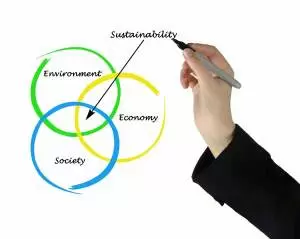
Environmental economists analyze the economic impacts of environmental policies, resource use, and sustainability initiatives. Most positions require a master's or doctoral degree in economics with environmental focus. The median annual wage for economists was $115,730 as of May 2024, with higher earnings in research and government roles. Employment is projected to grow 6% through 2032, creating steady opportunities in government agencies, consulting firms, and research organizations.
If you're drawn to both economic policy and environmental protection, environmental economics might be your path. This specialized field lets you apply economic tools to address real-world environmental challenges—from designing carbon-trading systems to evaluating the actual costs of renewable energy transitions. Environmental economists bridge the gap between economic theory and environmental sustainability, helping policymakers and businesses balance economic growth with environmental stewardship.
Environmental economics is more than just studying how much pollution costs. It's about understanding incentives, designing policies that actually work, and finding market-based solutions to environmental problems. Whether you're analyzing the economics of climate change, valuing ecosystem services, or assessing the cost-effectiveness of pollution controls, this career offers the chance to shape policies that affect millions of people and the planet's future.
What Is Environmental Economics?
Environmental economics is an area of economics dealing with the relationship between the economy and the environment. Environmental economists study the economics of natural resources from both sides—their extraction and use, and the waste products returned to the environment. They also study how economic incentives affect the environment, and how they can be used to create sustainable policies and environmental solutions.
The field emerged in the 1960s and 1970s as economists recognized that traditional economic models often failed to account for environmental costs and benefits. Today, environmental economics provides the analytical framework for addressing some of the world's most pressing challenges, including climate change, biodiversity loss, and pollution control. It combines rigorous economic analysis with environmental science, using tools like cost-benefit analysis, statistical modeling, and policy evaluation to inform decision-making.
Unlike environmental scientists who focus on measuring and understanding environmental phenomena, environmental economists focus on the human decision-making and policy frameworks that drive environmental outcomes. They ask questions like: What's the most cost-effective way to reduce carbon emissions? How should we value clean air and water? What economic incentives will change behavior most effectively?
What Does an Environmental Economist Do?
Environmental economists research the economics of environmental issues such as renewable energy use, construction of new hydroelectric power plants, or transnational pipelines, and pollution control measures. They conduct cost-benefit analyses of industrial activities or proposed regulations involving natural resources, often using a suite of advanced statistical and computational software. They may also run sophisticated environmental modeling programs that predict how policy changes will affect both environmental quality and economic outcomes. Based on these analyses, they develop cost-effective, sustainable policy recommendations and communicate them to policymakers through reports and presentations.
A typical week for an environmental economist might involve analyzing data on emission trends, building econometric models to predict the impacts of proposed regulations, writing technical reports for government agencies, and presenting findings to stakeholders. Senior economists spend considerable time consulting with policymakers, industry representatives, and environmental advocates to understand different perspectives and build consensus around solutions.
Here's a realistic breakdown of how environmental economists typically spend their time: data analysis and modeling (40-50%), writing reports and policy briefs (25-30%), meetings and presentations (15-20%), and staying current with research and policy developments (10-15%). The specific mix varies by employer and seniority level: junior economists do more analytical work, while senior economists focus more on strategic consultation and team leadership.
Environmental economists may study or develop policy recommendations relating to:
- Externalities: Unintended environmental or health impacts from economic activity. For example, when a factory pollutes a nearby river, cleanup costs are usually borne by taxpayers or downstream communities, not the company. Economists analyze these misaligned incentives and design policies that make polluters account for their full costs.
- Permit trading (cap-and-trade): This market-based approach was successfully used to address acid rain in the 1990s and has been proposed as a policy tool to address greenhouse gas emissions. Economists design these trading systems, evaluate their effectiveness, and recommend improvements.
- Cost-benefit analysis of environmental regulations: Before implementing new environmental rules, agencies need to understand whether the benefits (cleaner air, healthier ecosystems) justify the costs (compliance expenses, economic impacts). Environmental economists conduct these analyses.
- Environmental technologies and industries: The economics of biofuels, waste management, land cleanup, renewable energy, and other environmental sectors require specialized analysis. Economists assess market viability, policy support needs, and investment potential.
- Valuation and ecosystem services: How much is clean water worth? What's the economic value of a forest's role in preventing erosion or a wetland's water filtering capacity? Valuation assigns dollar values to natural resources and nature-provided services, helping decision-makers understand what's at stake.
Real-world examples bring this work to life. An environmental economist might evaluate the costs and benefits of expanding offshore wind farms, analyze the economic impacts of stricter air quality standards on local industries, or design carbon pricing mechanisms that reduce emissions while minimizing economic disruption. These aren't just academic exercises—they directly influence policies that affect energy costs, job markets, and environmental quality.
Where Does an Environmental Economist Work?
According to recent data, the majority of environmental economists work in federal or state government or in professional, scientific, and technical services. However, the field has expanded significantly, and larger environmental consulting firms now regularly hire economists. Professionals in these positions help determine the financial and environmental costs of development projects and may help project planners mitigate those costs.
In government roles, environmental economists typically work in agencies such as the Environmental Protection Agency (EPA), the Department of Energy, the Department of Agriculture, or state environmental departments. These positions usually offer stable employment, good benefits, and the opportunity to influence public policy directly. The work environment is primarily office-based, though some positions involve occasional site visits or fieldwork to understand project contexts firsthand.
Consulting firms offer a different experience. Economists in these settings work on diverse projects for multiple clients—one month analyzing renewable energy incentives, the next evaluating remediation options for contaminated sites. The work tends to be faster-paced with tighter deadlines and may require more frequent travel to client sites and conferences. Many consultants appreciate the variety and the chance to work across different environmental issues and geographic regions.
International development organizations, such as the World Bank and the U.S. Agency for International Development (USAID), employ environmental economists as project managers and policy advisors. These positions often involve significant international travel and the opportunity to work on environmental challenges in developing countries. Economists in these roles might spend several months overseas helping design national environmental policies or evaluating the economic impacts of conservation programs.
Academic and research institutions provide another pathway. Universities, think tanks, and research organizations employ environmental economists to conduct original research, publish findings in academic journals, and train the next generation of economists. These positions offer intellectual freedom and the chance to pursue long-term research questions, though they typically require a PhD and a strong publication record.
Work-life balance varies by sector. Government positions generally offer predictable schedules and generous leave policies. Consulting can be more demanding during project deadlines, but often provides flexibility between major engagements. Academic positions offer scheduling flexibility but require significant time for research and publication outside regular work hours.
Remote work has become increasingly common in environmental economics, particularly for analysis and writing tasks. Many positions now offer hybrid arrangements, with some days in the office for meetings and collaboration, and other days working from home for focused analytical work.
What Is the Average Environmental Economist Salary?
The U.S. Bureau of Labor Statistics (BLS) does not collect salary data specifically for environmental economists; instead, it reports on economists as a broad occupational category. The median annual wage for all economists was $115,730 as of May 2024. Salary varies significantly by sector and experience level. Those working in scientific research and development services earned the highest median wage at $128,230, while economists in federal government positions earned a median of $118,970. State government economists typically earn somewhat less, with median wages around $75,000 to $85,000, though this varies considerably by state.*
Based on job market data and industry surveys, entry-level positions with a master's degree typically start in the $60,000 to $75,000 range in government or consulting. However,gh specific figures vary by employer, location, and candidate qualifications. With 3-5 years of experience, economists often advance into the $85,000-$110,000 range. Senior economists with 10+ years of experience, particularly those in leadership roles or specialized consulting, can earn $130,000 to $180,000 or more, based on reported compensation in senior-level positions.
Geographic location significantly affects compensation. Environmental economists in major metropolitan areas with high concentrations of government agencies and consulting firms—such as Washington, D.C., San Francisco, Boston, and Seattle—typically earn 20-30% more than the national median. Cost-of-living differences partially offset these higher salaries, but career advancement opportunities are often greater in these hubs.
Benefits packages vary by sector. Government positions typically offer excellent health insurance, generous retirement contributions (often including pension plans), and substantial paid leave. Consulting firms may offer higher base salaries but less robust benefits. Academic positions offer unique perks, such as sabbaticals, research funding, and tuition benefits for continuing education.
It's worth noting that many environmental economists supplement their income through consulting work, expert testimony, or grant-funded research projects. These opportunities are widespread for academics and senior government economists with specialized expertise.
Environmental Economics Jobs & Job Description
An environmental economist studies and predicts the impacts of environmental events at local, national, and global scales. Environmental economics jobs apply field research data to economic incentives and use the resulting models to assess labor markets, trading systems, and policy outcomes. While environmental economist jobs vary significantly by sector and seniority level, most positions share everyday responsibilities focused on rigorous analysis and policy development.
Entry-level and mid-career environmental economists typically spend most of their time on analytical work. They conduct research based on literature reviews, sample findings, and predictive computer data. They analyze historical data and historical issues to formulate economic theories that explain behavior, then apply these theories to current circumstances. Much of the day-to-day work involves building and refining econometric models, running statistical analyses, and documenting findings in technical reports.
A core responsibility is analyzing ecological and economic trends and cycles, using model data to forecast future trends. Environmental economists hypothesize how environmental events or trends cause specific economic outcomes and estimate the magnitude of these impacts. They look for the economic incentives that lead people or companies to behave in specific ways—whether that's investing in pollution controls, adopting renewable energy, or resisting environmental regulations.
Communication is equally important. Environmental economists prepare reports regarding economic findings for diverse audiences, from technical peer reviewers to non-specialist policymakers. They consult with policymakers, industry leaders, and other stakeholders to understand concerns and build support for recommended policies. The ability to translate complex economic analyses into clear, actionable recommendations often determines whether research influences actual policy decisions.
Environmental economists make predictions by identifying, collecting, analyzing, and using environmental and historical economic information. They assess and assign economic value to an industry or company's tasks, strategies, and past and future outcomes. Increasingly, they also evaluate the effectiveness of existing environmental policies and regulations, identifying what's working and what needs adjustment.
Senior environmental economist positions involve additional responsibilities. Senior economists source and oversee data and concepts from literature reviews, research, and predictive computer models, often managing teams of junior analysts. They act as the point of contact for external stakeholders concerned about economic performance and impacts. They provide high-level consultation to agencies, professionals, and researchers from an environmental-economy perspective.
Leadership roles include establishing a workgroup culture that fosters a positive, challenging work environment and mentoring junior colleagues. Senior economists often represent their organizations at conferences, serve on expert panels, and build relationships with policymakers and industry leaders. They may also be responsible for securing funding through grant applications or business development.
The analytical toolkit for environmental economists has expanded significantly. Most positions now require proficiency in statistical software like Stata, R, or SAS, as well as programming skills in Python or similar languages. Geographic Information Systems (GIS) skills are increasingly valuable for spatial economic analysis. Familiarity with environmental modeling software and databases is often essential.
What Is the Job Demand for Environmental Economists?
Employment of economists is projected to grow 6% between 2022 and 2032, about as fast as the average for all occupations. This growth translates to approximately 1,400 new economist positions annually across all specializations. Many of the new jobs are expected to be in firms specializing in research and consulting services, which is particularly favorable for environmental economists, given the growing demand for environmental policy expertise.*
Several factors drive demand for environmental economists. Climate change policy at the federal, state, and international levels creates ongoing needs for economic analysis of mitigation and adaptation strategies. The expansion of renewable energy and clean technology industries requires economic feasibility studies, market analysis, and policy design. Increasing attention to corporate sustainability and environmental, social, and governance (ESG) investing has created new opportunities in the private sector.
Federal and state environmental regulations continue to require cost-benefit analyses and economic impact assessments before implementation. As environmental challenges grow more complex—from plastic pollution to biodiversity loss to environmental justice concerns—the need for rigorous economic analysis grows accordingly.
That said, competition for positions can be intense, particularly for prestigious government and international organization roles. While a bachelor's degree in economics is adequate for some entry-level positions, applicants without advanced degrees will generally be at a disadvantage in the job market. Most professional environmental economist positions require at least a master's degree, and many senior positions prefer or require a PhD.
Geographic concentration affects job availability. Positions are most abundant in major metropolitan areas with significant government presence (Washington, D.C., state capitals) or strong environmental consulting sectors (San Francisco, Boston, Seattle, Denver). Smaller markets may have limited opportunities, though remote work arrangements are expanding geographic flexibility.
The field rewards specialization. Economists with deep expertise in specific areas—carbon markets, water resource economics, renewable energy policy, or environmental valuation—often have better career prospects than generalists. Building this expertise through graduate research, work projects, and continuous learning creates competitive advantages in the job market.
What Are Environmental Economist Education Requirements?
Some government positions are available to workers with bachelor's degrees in economics, environmental studies, or related fields. However, most professional positions in environmental economics require advanced degrees. The majority of environmental economists hold master's degrees in economics, environmental economics, or related fields such as agricultural or resource economics. Many senior economists and academics have doctoral degrees.
The typical pathway starts with a bachelor's degree in economics, though some students major in environmental studies, mathematics, or related fields, as long as they complete substantial coursework in economics and mathematics. Strong undergraduate preparation includes microeconomics, macroeconomics, econometrics, calculus, linear algebra, and statistics. Many successful applicants also take courses in environmental science to build domain knowledge.
Graduate programs in environmental economics are offered at the master's and doctoral levels. Environmental economics degree programs typically require 1-2 years for a master's degree and 4-6 years for a PhD (beyond the bachelor's). Master's programs emphasize applied skills—econometric analysis, environmental policy evaluation, cost-benefit analysis—preparing students for immediate employment. Doctoral programs focus more on original research and theoretical development, preparing students for academic careers or senior research positions.
Some students pursue applied economics programs that include environmental concentration options. These programs often emphasize practical skills and real-world applications, which can be advantageous for consulting or government careers.
Graduate school admissions typically require strong GRE scores (particularly in the quantitative section), a solid undergraduate GPA in economics and mathematics courses, letters of recommendation, and a clear statement of research interests. Most competitive programs prefer applicants with some research experience, whether through undergraduate research assistantships, internships, orother relevant work.
Graduates must have a strong background in mathematics and statistics. If your undergraduate preparation in these areas is weak, you may need to complete additional coursework before or during your graduate program. Many programs offer summer preparatory courses or recommend self-study in calculus, linear algebra, and probability theory.
Positions in business and consulting often require relevant work experience in addition to a graduate degree. Seek out internships during your graduate program to gain practical experience in economic analysis, policy evaluation, or consulting. The EPA, state environmental agencies, environmental consulting firms, and think tanks all offer internship opportunities. These experiences not only build skills but also provide networking connections that often lead to job offers.
Professional development doesn't stop with degree completion. The field evolves rapidly, and successful environmental economists engage in continuous learning. This might include attending professional conferences, taking workshops on new analytical methods, obtaining professional certifications in specialized areas, or pursuing executive education programs.
What Kind of Societies and Professional Organizations Do Environmental Economists Have?
Professional organizations play a vital role in career development, networking, and staying current with research and policy developments in environmental economics.
The Association of Environmental and Resource Economists (AERE) is the premier professional organization specifically for environmental and resource economists. AERE publishes leading academic journals, including the Journal of the Association of Environmental and Resource Economists and the Review of Environmental Economics and Policy. The organization holds annual conferences that bring together academics, government economists, and practitioners to share research and discuss policy challenges. AERE's job board lists positions specifically in environmental and resource economics, making it an essential resource for job seekers. The membership directory helps members connect with colleagues working on similar issues.
Student memberships are available at significantly reduced rates and provide access to all the same resources as regular memberships. Many graduate students find that presenting research at AERE conferences and networking with established economists leads directly to job opportunities and research collaborations.
The American Economic Association (AEA) is the foremost association for economists in the United States across all specializations. While not environmental-specific, AEA membership offers valuable resources, including prestigious academic journals, the EconLit database for literature searches, an influential annual conference, webcasts on economic research and policy, and extensive links to economic data and resources. AEA's job board, Job Openings for Economists (JOE), is the primary venue for academic job searches and lists many government and research positions.
Both organizations offer career development resources particularly valuable to those early in their careers. AERE provides mentoring programs that pair students with experienced professionals, and both organizations host professional development sessions at their conferences on topics such as navigating the job market, publishing research, and transitioning between sectors.
Regional and specialized organizations also serve environmental economists. The European Association of Environmental and Resource Economists (EAERE) serves members internationally but focuses on European perspectives. The Agricultural and Applied Economics Association includes many resource and environmental economists, particularly those working on agricultural sustainability and natural resource issues. The National Association of Environmental Professionals welcomes economists working on interdisciplinary environmental projects.
Active participation in these organizations—attending conferences, presenting research, serving on committees, reviewing journal submissions—helps build professional reputation and opens doors to collaboration and career opportunities. Many environmental economists credit their professional network, built primarily through these organizations, as essential to their career success.
Frequently Asked Questions
What's the difference between an environmental economist and an environmental scientist?
Environmental scientists focus on measuring and understanding environmental phenomena through field research, laboratory analysis, and environmental monitoring. They study ecosystems, pollution levels, and environmental processes. Environmental economists, in contrast, analyze the economic dimensions of environmental issues—how human decision-making affects the environment, how to design cost-effective policies, and how to value environmental goods and services. While environmental scientists might measure water pollution levels, environmental economists would analyze the most cost-effective strategies to reduce that pollution and estimate the economic benefits of cleaner water.
Do I need a PhD to work as an environmental economist?
No, a PhD is not required for most environmental economist positions. Many successful environmental economists work in government, consulting, and research with master's degrees in economics or related fields. However, a PhD is typically necessary for tenure-track academic positions, senior research roles at prestigious institutions, and some high-level government economist positions. If you're interested in conducting original research, publishing in academic journals, or teaching at the university level, a PhD is generally required. For applied policy work and consulting, a master's degree combined with relevant experience is usually sufficient.
What industries hire environmental economists?
Environmental economists work across diverse sectors. Government agencies like the EPA, Department of Energy, Department of Agriculture, and state environmental departments employ the most significant numbers. Environmental consulting firms hire economists to conduct impact assessments, policy analyses, and regulatory compliance studies for clients. International development organizations, such as the World Bank and regional development banks, employ economists to design and evaluate environmental projects. Universities and research institutions hire environmental economists as faculty and research staff. Energy companies, particularly renewable energy firms, employ economists for market analysis and policy evaluation. Environmental nonprofits and think tanks hire economists to conduct research supporting their policy advocacy. Even financial services firms increasingly employ environmental economists to assess climate-related financial risks and ESG investment opportunities.
How much do environmental economists make in government versus private sector positions?
According to BLS data for all economists, federal government economists earned a median salary of $118,970 as of May 2024, while state government economists earned a median salary of $ 85,000 to $ 85,000, depending on the state and cost of living. Private sector consulting firms often offer higher base salaries—with mid-career economists typically earning $90,000 to $140,000, according to industry reports—though specific figures vary by firm, location, and expertise. Government positions typically provide excellent health insurance, pension contributions, job security, and generous leave, which significantlyadds to total compensation. Consulting offers higher earnings potential for senior economists, as well as the possibility of bonuses tied to project success or business development. The choice often comes down to preferences for job security and work-life balance (government) versus higher earning potential and project variety (consulting).
What software or tools do environmental economists use?
Environmental economists rely on several categories of analytical tools. Statistical software like Stata, R, SAS, or SPSS is essential for econometric analysis and data manipulation. Many economists also use programming languages such as Python and MATLAB for custom analyses and automation. Spreadsheet software (such as Excel with advanced functions and macros) remains essential for financial modeling and presenting results. Geographic Information Systems (GIS) software, such as ArcGIS or QGIS, is increasingly common for spatial economic analysis. Environmental modeling platforms specific to the issue being studied—like AERMOD for air quality modeling or water quality simulation tools—are used depending on the economist's specialization. Database management systems help handle large datasets, and visualization tools like Tableau help communicate findings effectively. Most graduate programs in environmental economics provide training in these tools, and continued skill development through workshops and self-study is standard throughout your career.
Key Takeaways
- Interdisciplinary Career Path: Environmental economics combines rigorous economic analysis with environmental policy, offering the chance to address critical sustainability challenges through market-based solutions and cost-effective policy design.
- Advanced Education Standard: While some entry-level positions accept bachelor's degrees, most professional environmental economist roles require at least a master's degree in economics, with many senior positions preferring doctoral degrees. Strong quantitative skills in mathematics, statistics, and econometrics are essential.
- Competitive Compensation: Environmental economists earn a median annual wage of $115,730, with significant variation by sector and experience level. Research and federal government positions offer the highest median salaries at $128,230 and $118,9,7,0, respectively.
- Diverse Work Settings: Opportunities span federal and state government agencies, environmental consulting firms, international development organizations, universities, research institutions, and, increasingly, private-sector companies focused on sustainability and ESG performance.
- Growing Demand: The field is projected to grow 6% through 2032, driven by increasing attention to climate policy, renewable energy expansion, environmental regulations, and corporate sustainability initiatives. Specialization in areas like carbon markets or renewable energy economics enhances career prospects.
Ready to explore environmental economics as your career path? Discover graduate programs that combine economic theory with environmental policy analysis and sustainability solutions.

*2024 US Bureau of Labor Statistics salary and job growth figures for economists reflect national data for the general economist occupation, not environmental economists specifically. BLS does not track environmental economist salaries separately. Salary ranges for entry-level and senior positions are estimates based on job market data and industry surveys. Conditions in your area may vary. Data accessed January 2026.