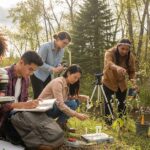


Montana offers bachelor's, master's, and online environmental science degree programs at institutions like University of Montana, Montana State University, and University of Montana-Western. Environmental scientists in Montana earn an average annual salary of $80,630, with the field projected to grow 13.6% through 2032, creating approximately 40 new positions annually. Montana's diverse ecosystems, from the Rocky Mountains to Yellowstone National Park, provide exceptional hands-on learning opportunities in conservation, wildlife management, and ecological research.
Montana's environmental landscape offers more than breathtaking views. It provides an ideal educational setting for aspiring environmental scientists. From Yellowstone's geothermal ecosystems to the eastern plains' grasslands, Montana students gain hands-on experience with diverse ecosystems while earning accredited degrees. According to the Montana Department of Labor, approximately 400 environmental scientists and specialists currently work in Montana, with that number projected to grow to 450 by 2032. Montana programs prepare graduates for rewarding careers in conservation, research, and environmental management.
Environmental Science Careers in Montana
Montana's environmental clean-up and remediation sector offers substantial career opportunities for environmental science graduates. Companies like Tetra Tech and Cardno maintain active operations throughout the state, addressing legacy pollution from historic bulk plants and refineries. The state's annual wildfire seasons create ongoing demand for reforestation specialists and ecological restoration experts who help recover slopes left barren after devastating fires.
Montana universities themselves serve as major employers of environmental science specialists. Whether as faculty members, field researchers, or laboratory technicians, many graduates find that their alma mater becomes their employer. These academic positions allow environmental scientists to contribute to cutting-edge research while mentoring the next generation of environmental professionals.
The compensation for environmental science work in Montana reflects the field's importance and the expertise required. According to the Bureau of Labor Statistics, environmental scientists and specialists in Montana earn an average annual salary of $80,630. Entry-level positions start around $61,100 annually, while experienced professionals in the 90th percentile can earn up to $104,970. The median wage stands at $78,510, providing a solid middle-class income for Montana residents.
Career pathways extend beyond traditional environmental science roles. Montana's vast wilderness areas create demand for park ranger positions managing Yellowstone, Glacier, and numerous state parks. The state's agricultural sector requires expertise in agrarian engineering to balance productivity with environmental stewardship. Mining reclamation projects require environmental toxicologists to assess and remediate contaminated sites from Montana's historic mining operations.
Job Outlook and Growth Projections
Montana's environmental science employment landscape shows robust growth potential through 2032. The state currently employs 400 environmental scientists and specialists, with projections indicating that the number will grow to 450 by 2032. This represents a 13.6% increase, outpacing many other professional fields and reflecting Montana's ongoing commitment to environmental protection and natural resource management.
The Montana Department of Labor projects approximately 40 annual job openings in environmental science fields through 2032. These openings stem from both new position creation and replacement needs as current professionals retire or transition to other roles. The combination of steady growth and regular turnover creates consistent opportunities for new graduates entering the field.
Several factors drive this positive employment outlook. Montana's extensive public lands require ongoing environmental monitoring and management. Climate change impacts on the state's ecosystems necessitate increased research and adaptation strategies. Water quality concerns in Montana's rivers and lakes demand continuous assessment and protection efforts. Additionally, the state's commitment to balancing resource extraction with environmental preservation creates demand for professionals who can navigate complex regulatory frameworks and develop sustainable practices.
Career advancement opportunities extend beyond Montana's borders. Many graduates use Montana programs as springboards to federal positions with agencies such as the Environmental Protection Agency, the U.S. Forest Service, or the National Park Service. Others transition into sustainability careers with national corporations seeking expertise in environmental compliance and corporate responsibility.
Why Study Environmental Science in Montana
Montana's 147,000 square miles encompass extraordinary environmental diversity, making it an unparalleled living laboratory for environmental science students. The state contains more than 20 million acres of designated wilderness, providing research opportunities unavailable in more developed regions. Students gain direct experience with ecosystems ranging from high-altitude alpine tundra to shortgrass prairie, from old-growth forests to geothermal features found nowhere else on Earth.
Yellowstone National Park serves as a world-renowned research site where students participate in ongoing studies of geothermal ecology, wildlife population dynamics, and ecosystem restoration following the 1988 fires. Glacier National Park offers insights into the impacts of climate change, with rapidly receding glaciers providing real-time evidence of warming. The Greater Yellowstone Ecosystem, one of the last intact temperate ecosystems on the planet, allows students to study apex predators, migration patterns, and complex species interactions.
Montana's environmental challenges provide practical learning opportunities that translate directly to career skills. Students work on actual wildfire recovery projects, learning reforestation techniques and erosion control methods. Water quality monitoring programs in the Clark Fork River teach field sampling, data analysis, and regulatory compliance. Abandoned mine reclamation projects introduce students to environmental toxicology, remediation strategies, and the intersection of environmental science with environmental law careers.
The state's relatively small population and vast landscapes create unique student-to-faculty ratios and research opportunities. Unlike crowded programs in metropolitan areas, Montana students often lead their own research projects as undergraduates, gaining valuable experience in study design, data collection, and scientific writing. Field research doesn't mean weekend trips. It means weeks-long expeditions into backcountry areas, building practical skills in wilderness navigation, wildlife observation, and environmental sampling under real field conditions.
Bachelor's Degree Programs in Montana
Montana's bachelor's degree programs in environmental science emphasize experiential learning and broad-based scientific training. Students develop a comprehensive understanding of environmental systems before specializing in particular areas, ensuring versatility in an evolving job market.
Montana State University-Billings offers a Bachelor of Arts in Environmental Studies dedicated to community collaboration and hands-on learning. The program's broad foundation allows students to sample multiple environmental specializations before customizing their course plan. Students work directly with conservation organizations in the Billings area, gaining professional experience while completing degree requirements. The program's flexibility accommodates students interested in environmental policy, education, or scientific research.
University of Montana-Western takes full advantage of Montana's outdoor assets through its field-intensive Bachelor of Science in Environmental Science. Students learn environmental science in the hills and valleys of southwest Montana, participating in active conservation and research programs throughout their undergraduate years. The program ranks among the top environmental science programs in the region for hands-on learning opportunities. Students graduate with extensive field experience, laboratory skills, and the scientific knowledge needed for graduate programs or immediate employment.
Carroll College, a private institution in Helena, delivers rigorous natural science training through its environmental science program. The college's smaller class sizes enable personalized mentoring and research opportunities typically reserved for graduate students. Carroll students benefit from proximity to Montana's state capital, facilitating internships with state environmental agencies and exposure to environmental policy processes. The program emphasizes the ethical dimensions of environmental science, preparing students to navigate complex decisions balancing human needs with ecological protection.
All Montana bachelor's programs require substantial coursework in biology, chemistry, geology, and mathematics, building the scientific foundation essential for environmental science careers. Field methods courses teach students proper sampling techniques, data collection protocols, and safety procedures for working in remote environments. Many programs incorporate Geographic Information Systems (GIS) training, recognizing the importance of spatial analysis in modern environmental work.
Master's Degree Programs in Montana
Montana's graduate programs offer specialized training for students seeking advanced positions in environmental science. While fewer in number than bachelor's programs, Montana's master's programs offer comprehensive education across multiple environmental disciplines.
The University of Montana Environmental Studies graduate program exemplifies Montana's approach to graduate education. Rather than narrow specialization, the program offers seven distinct focus areas covering the breadth of environmental science: indigenous knowledge and natural resource management, sustainable food and farming systems, climate change science and policy, conservation biology, environmental philosophy and ethics, environmental education, and terrestrial and aquatic ecosystem science. This structure allows students to develop expertise in one area while understanding how it connects to broader environmental systems.
The program's intimate ties to on-the-ground environmental work distinguish it from larger programs elsewhere. Graduate students don't just study Montana's environmental challenges. They work directly on solving them. Thesis projects address real problems facing state agencies, tribal nations, and conservation organizations. Students collaborate with working professionals, building networks that often lead directly to employment upon graduation.
Graduate coursework combines classroom learning with intensive field research. Students spend weeks in the field collecting data, returning to campus to analyze results and present findings. The thesis requirement ensures every graduate contributes original research to the environmental science knowledge base, developing the critical thinking and scientific writing skills essential for professional advancement.
Online and Flexible Learning Options
Montana's vast geography and dispersed population have made the state a leader in distance education. Montana universities developed practical online courses to fulfill their educational mission in the third-least densely populated state in the nation. These programs now serve students nationwide who seek Montana's environmental expertise without relocating.
Montana State University leads Montana's online environmental education through its Master of Science in Land Resources and Environmental Sciences. The program offers graduate-level training across agricultural systems, soil science, environmental quality, and natural resource management. Students complete coursework online while maintaining full-time employment, with flexible attendance and completion timelines accommodating working professionals.
The online format doesn't eliminate hands-on learning. Students complete required field projects in their local areas, applying Montana's environmental science principles to diverse ecosystems across the country. Summer intensive sessions bring students to campus for concentrated laboratory work and field experiences in Montana ecosystems. Faculty provide individual mentoring through video conferencing, ensuring online students receive the same support as on-campus learners.
The program's multi-level approach to ecological issues prepares graduates for diverse roles in environmental management, consulting, research, and policy. Graduates work for federal and state agencies, private consulting firms, agricultural businesses, and conservation organizations. The combination of scientific rigor and practical application makes Montana State's online master's program valuable for both career advancement and career change.
Frequently Asked Questions
What environmental science degrees can I earn in Montana?
Montana universities offer bachelor's and master's degrees, as well as online graduate programs, in environmental science and related fields. Bachelor's options include programs at the University of Montana-Western, Montana State University-Billings, and Carroll College. The University of Montana provides a comprehensive master's program with seven focus areas. Montana State University offers an online Master of Science in Land Resources and Environmental Sciences for working professionals. Programs range from broad environmental studies to specialized training in conservation biology, soil science, and environmental policy.
How much do environmental scientists make in Montana?
Environmental scientists and specialists in Montana earn an average annual salary of $80,630 according to 2024 Bureau of Labor Statistics data. Entry-level positions (10th percentile) start around $61,100 annually, while the median salary is $78,510. Experienced professionals in the 90th percentile can earn up to $104,970 per year. Montana's environmental science salaries reflect the expertise required and provide comfortable middle-class incomes, particularly given Montana's relatively lower cost of living compared to coastal states.
What is the job outlook for environmental scientists in Montana?
Montana projects 13.6% employment growth for environmental scientists through 2032, adding approximately 50 new positions to the current base of 400 professionals. The state anticipates 40 annual job openings through 2032 from both new positions and replacement needs. This growth rate exceeds that of many other professional fields and reflects Montana's commitment to environmental protection, natural resource management, and addressing climate change impacts on the state's diverse ecosystems.
Which Montana universities offer the best environmental science programs?
University of Montana-Western ranks highly for hands-on field learning and active conservation participation. Montana State University-Billings excels in community collaboration and flexible specialization options. Carroll College provides personalized attention and intense preparation for graduate programs. The University of Montana's graduate program stands out for its seven specialized focus areas and connections to real-world environmental projects. Program selection should align with your specific interests, including field research, policy, education, or a technical specialization, as well as your preferred learning environment.
Can I earn an environmental science degree online in Montana?
Yes, Montana State University offers an online Master of Science in Land Resources and Environmental Sciences designed for working professionals. The program provides flexible attendance and completion timelines while maintaining rigorous academic standards. Students complete coursework online, conduct field projects in their local areas, and attend summer intensive sessions on campus for concentrated laboratory and field experiences. This format allows students nationwide to access Montana's environmental science expertise while continuing their careers.
Key Takeaways
- Competitive Salaries: Environmental scientists in Montana earn an average of $80,630 annually, with experienced professionals making over $104,000, providing solid compensation in a state witha relatively affordable cost of living.
- Strong Job Growth: Montana projects 13.6% employment growth through 2032, creating approximately 40 annual job openings in environmental science fields, reflecting an ongoing commitment to environmental protection and natural resource management.
- Unmatched Field Experience: Montana's 20 million acres of wilderness, including Yellowstone and Glacier National Parks, provide hands-on learning opportunities unavailable in more developed regions, with students conducting fundamental research on working ecosystems.
- Comprehensive Program Options: Students can choose from bachelor's programs emphasizing field experience, master's programs with seven specialized focus areas, or flexible online graduate degrees, with options at both public universities and private colleges.
- Real-World Applications: Montana students work on actual environmental challenges, including wildfire recovery, abandoned mine reclamation, water quality monitoring, and wildlife management, building practical skills that translate directly to employment.
Ready to explore Montana's environmental science programs? Compare degree options and find the program that matches your career goals in conservation, wildlife management, or ecological research.

2024 US Bureau of Labor Statistics salary and job growth figures for Environmental Scientists and Specialists reflect state and national data, not school-specific information. Conditions in your area may vary. Data accessed January 2026. Bureau of Labor Statistics