

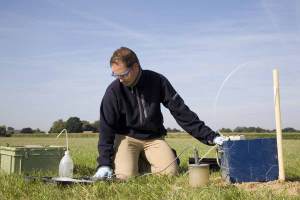
Groundwater protection specialists inspect, analyze, and protect local groundwater resources from contamination. As a specialization within the broader "Environmental Scientists and Specialists" occupational category, they earn a median salary of $80,060 nationally, with demand projected to grow 6% through 2032. Most positions require at least an associate's degree in environmental science, geology, or hydrology, with bachelor's degrees preferred for advanced roles.
Groundwater provides drinking water for millions of Americans and supports entire ecosystems. When contamination threatens this vital resource, groundwater protection specialists step in to identify problems, develop solutions, and safeguard our water supply for current and future generations. This career specialization falls within the broader field of environmental science, combining water resource expertise with regulatory knowledge. If you're passionate about environmental protection and enjoy combining fieldwork with laboratory analysis, this career offers meaningful work with competitive compensation.
What Does a Groundwater Protection Specialist Do?
Groundwater protection specialists serve as guardians of underground water resources. Your primary responsibility involves monitoring groundwater quality, identifying contamination sources, and implementing strategies to prevent or reduce pollution. This work requires understanding local, state, and federal environmental regulations while applying scientific expertise to real-world water protection challenges.
The role combines scientific investigation with practical problem-solving. You might spend one day collecting water samples from monitoring wells at an industrial site, then analyze those samples in the laboratory the next day. When contamination is detected, you develop remediation plans, coordinate with regulatory agencies, and work with facility managers to implement solutions. The interdisciplinary nature means you'll collaborate with environmental engineers, hydrologists, chemists, and policy makers.
This career appeals to those who appreciate variety. No two sites are identical—you might investigate agricultural runoff affecting rural wells one week, then assess industrial contamination at a manufacturing facility the next. Each project presents unique technical challenges requiring both analytical thinking and creative problem-solving.
Work Environment & Daily Responsibilities
Groundwater protection specialists divide their time between field sites and laboratory settings. Fieldwork takes you to diverse environments, including industrial facilities, agricultural areas, construction sites, remediation projects, and natural wetlands. You'll need versatility and physical stamina—field conditions range from comfortable outdoor settings to challenging weather and occasionally hazardous contaminated sites.
Safety is paramount in this profession. You'll receive training in proper handling of potentially contaminated samples, use of personal protective equipment, and protocols for working in restricted or dangerous areas. Many specialists become certified in hazardous materials handling and confined space entry. The work can be physically demanding, requiring you to operate monitoring equipment, collect samples from wells, and sometimes navigate difficult terrain.
Laboratory work provides the other half of your professional experience. In controlled lab environments, you analyze water samples using sophisticated testing equipment, interpret data, prepare reports, and document findings for regulatory compliance. This work demands attention to detail and a thorough understanding of testing protocols and quality assurance procedures.
Your typical responsibilities include:
- Monitoring water quality: Collect samples from monitoring wells, test for contaminants, and track changes over time to identify emerging problems.
- Operating treatment systems: Ensure wastewater treatment equipment functions properly and meets regulatory requirements.
- Coordinating maintenance: Work with maintenance staff to keep monitoring and treatment equipment operational.
- Regulatory compliance: Maintain records, prepare reports, and ensure all activities meet federal, state, and local environmental regulations.
- Equipment operation: Safely operate vehicles and specialized equipment needed for fieldwork and sampling.
Most positions are full-time with standard business hours, though occasional overtime, evening work, or weekend field visits may be necessary. Some roles, particularly with consulting firms, involve regional travel to multiple client sites.
As you gain experience and move into senior or management roles, your responsibilities expand to include:
- Laboratory oversight: Ensure testing instruments are calibrated properly and processes comply with quality standards.
- Data analysis and reporting: Review laboratory results, identify trends, and make recommendations for process adjustments.
- Project management: Coordinate teams, manage budgets, and oversee complex remediation projects.
- Stakeholder communication: Explain findings to facility managers, regulatory officials, and community members.
- Policy development: Contribute to the development of improved monitoring procedures and protection strategies.
Groundwater Protection Specialist Salary
Groundwater protection specialists fall within the broader Bureau of Labor Statistics category of "Environmental Scientists and Specialists, Including Health." As of May 2024, environmental scientists and specialists earned a median annual salary of $80,060 nationally. This represents solid compensation for meaningful environmental work, with significant room for growth as you gain experience and specialize.
Salary ranges vary considerably based on experience, education, certifications, employer type, and geographic location:
| Percentile | Annual Salary | Experience Level |
|---|---|---|
| 10th Percentile | $50,130 | Entry-level positions, associate degree |
| 25th Percentile | $62,090 | Early career, bachelor's degree |
| Median (50th) | $80,060 | Mid-career, specialized experience |
| 75th Percentile | $103,730 | Senior specialists, management roles |
| 90th Percentile | $134,830 | Specialized consultants, senior management |
Several factors influence earning potential within this field. Education level matters significantly—bachelor's degree holders typically earn more than those with associate's degrees, while master's degrees can open doors to higher-paying senior positions. Professional certifications in wastewater treatment operations, hazardous materials handling, or specialized testing procedures strengthen your earning potential.
Employer type also affects compensation. Private environmental consulting firms often pay higher salaries than government agencies but may offer less job security. Federal government positions typically provide excellent benefits packages and clear advancement pathways. Private laboratories and industrial facilities fall somewhere in between, with compensation varying by company size and industry sector.
Geographic location creates substantial salary variation. Regions facing water scarcity or contamination challenges—such as areas affected by industrial pollution, agricultural runoff, or emerging contaminants like PFAS—often pay premium salaries to attract qualified specialists. Urban areas with higher costs of living typically offer higher base salaries to offset living expenses.
Beyond base salary, consider total compensation. Many employers offer health insurance, retirement contributions, paid time off, continuing education support, and professional development opportunities. Government positions often include pension plans and robust benefits packages. Consulting firms may offer performance bonuses and profit-sharing arrangements.
Job Outlook & Career Growth
Employment for environmental scientists and specialists, including groundwater protection specialists, is projected to grow 6% from 2022 to 2032. This growth will create approximately 6,900 job openings annually nationwide—openings that come from both new positions and the replacement of retiring workers.
Several factors drive demand for groundwater protection specialists. Growing environmental pressures from population growth, industrial expansion, and climate change intensify the need for water resource monitoring and protection. Public concern about water quality—heightened by high-profile contamination cases—increases funding for groundwater protection programs. Aging infrastructure requires monitoring and upgrades to prevent contamination from failing systems.
Emerging challenges create new specialization opportunities. PFAS (per- and polyfluoroalkyl substances) contamination has become a priority concern, with specialists needed to identify sources, assess risks, and develop remediation strategies. Climate change impacts on groundwater recharge patterns and quality require ongoing monitoring and adaptive management. Agricultural intensification raises concerns about nitrate contamination and pesticide residues in groundwater.
Geographic demand varies significantly. States with intensive agriculture, significant industrial activity, or known contamination issues often have stronger job markets. Regions facing water scarcity place a higher priority on protecting existing groundwater resources. Coastal areas concerned about saltwater intrusion into freshwater aquifers need specialists to monitor and model groundwater dynamics.
Career advancement opportunities are plentiful for skilled specialists. Many professionals progress from field technician roles to senior scientist positions, then into project management or program coordination. Some specialize in particular aspects such as remediation design, regulatory compliance, or specific types of contamination. Others transition into environmental engineering, policy development, or consulting roles where they can leverage their field experience.
Skills for Success
Successful groundwater protection specialists develop a combination of technical expertise, physical capabilities, and interpersonal skills. Technical proficiency forms the foundation—you need a strong understanding of hydrology, chemistry, and geology to interpret what's happening underground. Data analysis skills are essential for recognizing patterns, identifying trends, and drawing meaningful conclusions from monitoring data. Geographic Information Systems (GIS) software helps you map contamination plumes and analyze spatial relationships.
Laboratory skills matter tremendously. You'll use sophisticated analytical equipment to test for various contaminants, so comfort with scientific instrumentation and testing protocols is necessary. Attention to detail prevents errors that could compromise data quality or lead to incorrect conclusions about water safety.
Physical capabilities shouldn't be overlooked. Field work requires stamina for outdoor work in various weather conditions, the ability to carry equipment to sampling locations, and sometimes tolerance for uncomfortable situations like confined spaces or muddy conditions. You need mechanical aptitude to operate monitoring equipment, pumps, and occasionally vehicles like four-wheel-drive trucks needed to reach remote sites.
Communication skills prove surprisingly important in this technical field. You'll regularly explain complex scientific findings to facility managers, regulatory officials, and community members who lack technical backgrounds. Written communication is equally critical—detailed reports document your findings for regulatory compliance and potential legal proceedings. Clear verbal and written communication separates specialists who merely collect data from those who drive meaningful environmental protection decisions.
Problem-solving ability and critical thinking separate good specialists from great ones. Each contamination scenario presents unique challenges requiring creative solutions. You need to think systematically about how contaminants move through groundwater, identify likely sources, and develop practical remediation strategies that balance effectiveness with cost.
These skills develop through your educational program and early career experiences. Coursework in environmental science provides the theoretical foundation. Laboratory courses teach proper testing techniques. Internships or entry-level positions build practical field skills. Professional certifications demonstrate competency in specialized areas. Continuing education keeps your knowledge current as new contaminants emerge and testing technologies improve.
Educational Pathways & Requirements
Educational requirements for groundwater protection specialists vary by position level and employer. Understanding the different pathways helps you plan your education efficiently and set realistic career expectations.
Associate Degree Path: An associate's degree in environmental science, environmental technology, public health, geology, or hydrology provides entry-level access to the field. Two-year programs typically cover fundamental chemistry, biology, geology, water quality testing, and environmental regulations. This pathway works well if you want to enter the workforce quickly and are comfortable starting in technician or field assistant roles. Many community colleges offer these programs with hands-on laboratory components and internship opportunities.
Associate's degree holders typically start as field technicians or laboratory assistants, collecting samples, conducting routine tests, and maintaining equipment under supervision. Salaries begin at the lower end of the range, and advancement opportunities may be limited without further education. However, this path allows you to gain paid experience while deciding if the field suits you, and many employers support continuing education for dedicated employees.
Bachelor's Degree Path: A four-year bachelor's degree is the preferred qualification for most groundwater protection specialist positions. Relevant majors include environmental science, geology, hydrology, chemistry, or environmental engineering. Bachelor's programs provide deeper scientific knowledge, more extensive laboratory training, and often include capstone projects or research experiences that develop critical thinking skills.
Coursework should emphasize natural sciences—chemistry and biology form the foundation for understanding contaminant behavior and biological processes affecting water quality. Physical sciences like geology and physics help you understand how groundwater moves through different soil and rock formations. Statistics and computer science enable proper data analysis. Many programs now include GIS and environmental modeling courses that are increasingly valuable in the field.
Bachelor's degree holders qualify for positions with greater responsibility and independence. You'll design monitoring programs, interpret complex data, interact with regulators, and make decisions about remediation strategies. Career advancement to senior specialist or management roles becomes much more accessible. Starting salaries are significantly higher, typically in the $60,000-$70,000 range, depending on location and employer.
Master's Degree Considerations: Graduate degrees in environmental science, hydrology, or related fields aren't required for most positions but can accelerate advancement into specialized or leadership roles. Master's programs allow deep specialization in areas like contaminant transport modeling, remediation technology, or water resource management. Research experience during graduate study demonstrates advanced analytical capabilities that employers value.
Consider a master's degree if you're interested in research positions, want to teach at the community college level, or aim for senior technical or management positions. The investment makes most sense after gaining some field experience, when you understand which specializations interest you most and can pursue targeted graduate education.
Online vs. Campus Programs: Both traditional campus-based and online environmental science degree programs can prepare you for this career. Campus programs offer direct access to laboratory facilities, field equipment, and face-to-face mentorship. Online programs provide flexibility for working professionals or those balancing family responsibilities. Some programs combine online coursework with periodic on-campus laboratory intensives, offering the best of both approaches.
Regardless of format, ensure your program includes substantial hands-on laboratory work. Employers value practical skills that can only be developed through direct experience with sampling techniques, analytical equipment, and field instruments.
Internships and Practical Experience: Internships are nearly essential for launching your career. They provide real-world experience that complements classroom learning, help you build professional networks, and often lead directly to job offers. Many environmental science careers require at least one internship or field experience before considering candidates for permanent positions.
Seek internships with environmental consulting firms, government agencies (EPA, state environmental departments), water utilities, or industrial facilities with environmental compliance departments. Summer positions are common, but part-time academic-year internships can be equally valuable. Some programs offer academic credit for internship experiences.
Timeline to Career Readiness: With an associate's degree, you can enter the field in 2 years, though with limited initial responsibilities. A bachelor's degree requires 4 years but qualifies you for standard specialist positions immediately upon graduation. Adding a master's degree extends education by 1.5-2 years, but can shorten the time to reach senior positions. Including internship experience, plan on 2-3 years for the associate's path or 4-5 years for the bachelor's path from starting college to launching your career.
Certifications & Licensing
Professional certifications and licenses strengthen your credentials and are sometimes required for specific positions. Requirements vary significantly by state and employer, so research expectations in your target geographic area and industry sector.
Wastewater Treatment Operator Certification: Many positions, particularly those involving treatment plant operations, require certification as a wastewater treatment plant operator. State environmental agencies typically administer these certifications, which involve passing examinations demonstrating knowledge of treatment processes, equipment operation, and regulatory requirements. Certification levels progress from entry-level operator to advanced operator positions, with higher levels requiring more experience and knowledge.
The certification process usually involves completing required training hours, gaining documented work experience, and passing a written examination. Study guides and preparatory courses are available through professional associations and community colleges. Many employers support certification efforts by providing study time and covering examination fees.
Environmental Health Licensing: Some states require specialists to hold environmental health licenses or registrations, particularly if your work involves regulatory enforcement or public health protection roles. These licenses ensure professionals understand applicable regulations and can make decisions compatible with state and local laws. The licensing process varies, but typically includes educational requirements, examinations, and sometimes practical experience components.
Requirements are most common in states with stringent environmental regulations or significant groundwater concerns. Check with your state's environmental department or health department to understand specific requirements in your area.
Specialized Certifications: Additional certifications can enhance your marketability and expertise:
- Hazardous Materials Handling: OSHA certifications in hazmat operations (HAZWOPER) are valuable for specialists working at contaminated sites.
- Equipment Operation: Certifications for operating front-end loaders, backhoes, scissor lifts, or other specialized equipment expand your capabilities.
- Professional Geologist (PG): In some states, geology-focused work may benefit from or require professional geologist licensure.
- Laboratory Certifications: Certifications in specific analytical methods or quality assurance procedures demonstrate specialized laboratory competency.
While certifications require investment of time and sometimes money, they typically pay for themselves through increased job opportunities and higher salaries. Many employers provide financial support and study time for relevant certifications.
Professional Development & Organizations
Professional associations provide valuable resources for career development, continuing education, and professional networking. Active membership demonstrates commitment to your field and keeps you connected to evolving best practices and emerging challenges.
National Ground Water Association (NGWA): The NGWA (www.ngwa.org) brings together groundwater professionals from around the world, with a strong focus on the United States. Membership provides access to technical journals like Ground Water and Ground Water Monitoring & Remediation, which publish peer-reviewed research on the latest science and technology.
The association hosts annual conferences and regional meetings where you can learn about new monitoring techniques, remediation technologies, and regulatory developments. These events offer exceptional networking opportunities—you'll meet potential employers, collaborators, and mentors. NGWA also provides continuing education courses that help you maintain certifications and stay current with field developments.
Student memberships are available at reduced rates, making it affordable to join while completing your education. Early participation helps you build professional connections before entering the job market. Many employers value NGWA membership and support employee participation in association activities.
Environmental Protection Agency (EPA): The EPA's water resources division (water.epa.gov) provides current information on federal policies, regulations, and guidance documents affecting groundwater protection. The site offers technical resources, training materials, and updates on emerging contaminants and treatment technologies. Following EPA developments keeps you informed about regulatory changes that affect your work.
State Groundwater Associations: Many states have their own groundwater associations that focus on regional issues, state-specific regulations, and local networking. These organizations understand challenges unique to your region—whether that's agricultural contamination in Iowa, industrial legacy pollution in the Rust Belt, or water scarcity in the Southwest. State associations often host more accessible regional meetings and provide connections to local employers and regulators.
Active participation in professional organizations provides multiple benefits. You'll stay informed about technological advances and regulatory changes through publications and conferences. Networking connections often lead to job opportunities, as many positions are filled through professional relationships before being publicly advertised. Continuing education offerings help you maintain certifications and develop new expertise. Leadership opportunities within associations build management skills and professional reputation.
Many specialists credit professional associations with accelerating their career advancement and keeping their work engaging throughout their careers. The investment of membership dues and conference attendance pays dividends through enhanced knowledge, expanded professional networks, and increased career opportunities.
Related Careers in Water & Environmental Protection
If groundwater protection interests you, several related careers might also appeal to your combination of environmental passion and scientific aptitude. Understanding these adjacent fields helps you make informed educational decisions and recognize potential career pivot points:
Hydrologist: Hydrologists study the distribution, movement, and properties of water throughout the environment—not just groundwater but also surface water, precipitation, and water cycling through the atmosphere. This broader focus involves more modeling and predictive work. Hydrologists typically need bachelor's degrees in hydrology, geoscience, or environmental science, with many positions requiring master's degrees. The work involves less hands-on sampling and more data analysis and computer modeling than groundwater protection specialist roles.
Water Quality Specialist: Water quality specialists focus specifically on monitoring and protecting water quality in lakes, rivers, streams, and coastal waters. The role is similar to groundwater protection but deals with surface water systems. You'll collect water samples, perform laboratory analysis, and work on pollution prevention and remediation. Educational requirements and salary ranges are comparable to groundwater specialists, with similar work environments mixing field and laboratory time.
Environmental Engineer: Environmental engineers design systems and solutions for environmental problems, including water treatment facilities, pollution control systems, and remediation technologies. This career requires stronger mathematics and engineering fundamentals, typically involving a bachelor's degree in environmental engineering. The work is less field-intensive and more focused on design, planning, and project management. Salaries tend to be higher than those in scientist positions, reflecting the engineering credential requirements.
Water Resource Engineer: Water resource engineers specialize in designing and managing water supply systems, flood control structures, and irrigation systems. They combine engineering principles with hydrology to create infrastructure that delivers water where needed while protecting water quality. Like environmental engineers, water resource engineers need engineering degrees and typically earn higher salaries than science-focused positions.
These related careers share your interest in protecting water resources but emphasize different skill sets and responsibilities. Your coursework and internships can keep multiple pathways open while you gain experience and refine your interests. Many professionals move between these roles throughout their careers as interests and opportunities evolve.
Frequently Asked Questions
Do I need a bachelor's degree to become a groundwater protection specialist?
While associate's degrees provide entry-level access to the field, bachelor's degrees in environmental science, geology, or hydrology are preferred for most positions and required for roles involving complex data analysis and regulatory compliance. Bachelor's degree holders typically earn higher salaries and advance more quickly. If you start with an associate's degree, plan to complete a bachelor's degree within a few years to access better opportunities.
What's the work environment like for groundwater protection specialists?
The career involves both laboratory work and fieldwork. Field sites range from industrial facilities to natural outdoor areas, requiring specialists to work in various weather conditions and sometimes encounter hazardous materials. Laboratory work provides a controlled environment for sample analysis and data interpretation. Most positions are full-time with occasional overtime, night hours, or travel requirements. Expect to spend 40-60% of your time in the field and the remainder in the laboratory or office.
How does a groundwater specialist's salary compare to that of general environmental scientists?
Groundwater protection specialists fall within the broader "environmental scientists and specialists" category, which shows a median salary of $80,060 nationally as of May 2024. Specialized expertise in groundwater and water quality can lead to higher compensation, particularly when working for consulting firms or in regions facing significant water resource challenges. Geographic location, experience level, and certifications significantly influence salary within the field.
What certifications help groundwater protection specialists advance?
Many positions require wastewater treatment plant operator certification. Some states mandate environmental health licensing to ensure compliance with local regulations. Additional valuable certifications include HAZWOPER (hazardous materials handling), equipment operation certifications, and specialized laboratory method certifications. Professional geologist licensure may be beneficial in some states. These certifications strengthen your resume, increase earning potential, and open opportunities for advancement into senior or specialized roles.
What's the job outlook for groundwater protection specialists?
Employment is projected to grow 6% from 2022 to 2032, creating approximately 6,900 annual job openings nationwide. Growth is driven by increasing environmental pressures, public concern about water quality, aging infrastructure requiring monitoring, and emerging challenges like PFAS contamination. States with intensive agriculture, significant industrial activity, or known contamination issues typically offer stronger job markets. The field provides stable career prospects with multiple pathways for advancement.
Key Takeaways
- Competitive Compensation: Median earnings of $80,060 nationally, with experienced specialists in senior roles earning $103,730 to $134,830 annually, depending on specialization, location, and employer type.
- Diverse Work Settings: Career combines fieldwork at industrial sites, agricultural areas, and natural environments with laboratory analysis, requiring versatility, physical stamina, and adaptability to various conditions.
- Accessible Entry Pathways: Associate's degrees provide entry-level access, while bachelor's degrees open standard positions and higher earning potential. Master's degrees accelerate advancement to specialized or leadership roles.
- Growing Demand: Projected 6% employment growth through 2032, driven by environmental concerns, water quality awareness, infrastructure aging, and emerging contaminants like PFAS requiring specialized expertise.
- Critical Environmental Mission: Specialists protect groundwater—the drinking water source for millions and a vital ecosystem component—through monitoring, contamination prevention, and remediation efforts that safeguard public and environmental health.
Ready to protect one of our most vital resources? Explore environmental science degree programs that can prepare you for a career safeguarding our nation's groundwater.
2024 US Bureau of Labor Statistics salary and job growth figures for Environmental Scientists and Specialists reflect state and national data, not school-specific information. Conditions in your area may vary. Data accessed January 2026. Bureau of Labor Statistics Occupational Outlook Handbook: Environmental Scientists and Specialists.