
Environmental Compliance Inspectors conduct site inspections to ensure projects comply with environmental regulations. This role falls under the Bureau of Labor Statistics category of "Environmental Scientists and Specialists," with a median salary of $80,060 as of May 2024. Most positions require a bachelor's degree in environmental science or a related field, with job growth projected at 4% through 2034. Inspectors split time between office work and fieldwork, documenting violations and ensuring regulatory compliance.
Think of Environmental Compliance Inspectors as environmental watchdogs with legal clipboards. They visit construction sites, factories, and development projects to ensure compliance with federal and state environmental regulations. It's detective work meets environmental advocacy—documenting violations, verifying permits, and protecting natural resources while keeping projects moving forward legally.
The work is divided approximately evenly between office and field. You'll review project plans and permits at your desk, then head to job sites to inspect erosion controls, waste management practices, and water quality protections. When violations occur, you document them, work with contractors to fix issues, and follow up to ensure compliance. Most inspectors hold a bachelor's degree in environmental science or a related field. If you're detail-oriented, enjoy both outdoor work and documentation, and care about environmental protection, this career offers a clear path to making a tangible impact.
What Does an Environmental Compliance Inspector Do?
Environmental Compliance Inspectors search job sites for environmental code violations and take proper actions to restore compliance. They review permits, licenses, and records to verify everything's been done correctly. They must stay current with the latest regulations relevant to their field, which means regularly reading EPA updates and state environmental agency guidance.
After finding a violation, inspectors don't just write tickets and walk away. They work with site managers to develop corrective action plans, set compliance deadlines, and conduct follow-up inspections. This collaborative approach helps projects stay on track while protecting the environment. You're part educator, part enforcer—most contractors want to do the right thing but need guidance on complex regulations.
Where Does an Environmental Compliance Inspector Work?
Most Environmental Compliance Inspectors spend roughly equal time in office environments and conducting fieldwork. From the office, you document findings, review permit applications, research regulatory requirements, and communicate with project managers. But the fieldwork is where the job gets interesting—and sometimes challenging.
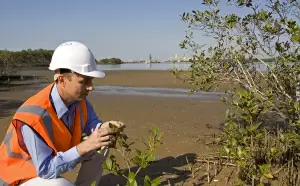
You'll visit actual job sites to determine whether the rules are being followed correctly. Sometimes you work outdoors in adverse weather conditions. Other times, you work in industrial environments surrounded by noisy, heavy machinery. One day, you're walking a construction site in mud and rain; the next, you're inspecting an indoor manufacturing facility. The variety keeps the work engaging, but you need to be comfortable with both settings.
Most Environmental Compliance Inspectors work full-time with standardized schedules. However, traveling to job sites may require overtime hours and overnight stays in various locations, especially if you cover a large geographic region.
Essential Skills and Competencies
Success as an Environmental Compliance Inspector requires a specific blend of technical knowledge and interpersonal abilities. You're not just reading regulations—you're interpreting them, applying them to real-world situations, and explaining them to people who may not have environmental backgrounds.
Technical skills matter most: You need a solid understanding of environmental regulations at the federal, state, and local levels. This means knowing the Clean Water Act, Clean Air Act, RCRA, and how they apply to different project types. You'll analyze site conditions, identify potential violations, and determine appropriate corrective actions. Many inspectors develop expertise in specific areas like stormwater management, hazardous waste, or air quality.
Communication skills are equally important. You explain complex regulations to contractors, site managers, and property owners in plain language. Your written reports need to be clear, thorough, and legally defensible. You'll testify about violations if cases go to court. Balancing firmness with professionalism helps maintain working relationships while ensuring compliance.
Attention to detail separates good inspectors from great ones. You notice the improperly installed erosion control barrier, the hazardous waste container without proper labeling, and the stormwater outlet discharging sediment. Small details matter because environmental violations can have serious consequences.
A Day in the Life
Your typical day starts in the office, reviewing your inspection schedule and checking for any emergency complaints. You pull up permit documents for today's sites, refresh your memory on specific requirements, and pack your field equipment—camera, sampling gear, protective equipment, and inspection checklists.
By mid-morning, you're at a commercial construction site. You walk the perimeter checking erosion control measures, photographing areas where sediment has breached barriers, and noting proper and improper waste disposal. You talk with the site superintendent about three violations you've identified, explain what needs correction, and set a deadline for fixes.
After lunch, you inspect the hazardous waste storage areas at an industrial facility. You verify container labels, check for leaks, confirm secondary containment systems are working, and review waste manifests. Everything checks out here—you note their excellent compliance in your report.
Back at the office, you spend the late afternoon writing detailed inspection reports, uploading photos, entering data into the compliance database, and emailing follow-up requirements to this morning's construction site. Before leaving, you schedule next week's inspections and respond to a contractor's question about permit requirements.
Environmental Compliance Inspector Salary
Environmental compliance inspectors fall under the Bureau of Labor Statistics category of "Environmental Scientists and Specialists, Including Health." As of May 2024, professionals in this category earn a median salary of $80,060 (BLS, May 2024), with solid earning potential and room for growth. Salary varies based on experience, location, employer type, and specialization.
| Percentile | Annual Salary | What This Means |
|---|---|---|
| Lowest 10% | $50,130 | Entry-level positions, smaller municipalities |
| Median (50th percentile) | $80,060 | Mid-career inspectors, the most common salary |
| Highest 10% | $134,830 | Senior roles, specialized expertise, federal positions |
Most Environmental Compliance Inspectors work for federal government agencies, where salaries tend to be at the higher end of the range. State and local governments also employ many inspectors, typically with competitive benefits packages. Private consulting firms and insurance companies also hire compliance inspectors, offering different compensation structures and career advancement paths.
Geographic location significantly impacts salary. Inspectors in areas with high costs of living or strong environmental regulations typically earn more. California, Massachusetts, and Washington tend to offer above-average salaries, while rural areas and states with fewer environmental programs pay less.
Environmental Inspector Jobs and Job Description
Environmental inspectors perform on-site analysis for engineering projects and businesses, providing oversight to ensure compliance with federal, state, and local regulations. While jobs vary from project to project, you can expect consistent core responsibilities.
You assess environmental conditions in the field to evaluate potential environmental impacts from the project. This means walking sites before, during, and after construction, noting changes to soil, water, vegetation, and wildlife habitat. You communicate necessary environmental controls to personnel throughout the project—from project managers to equipment operators.
Inspection and documentation consume much of your time. You verify compliance with the project's environmental requirements, noting both successes and violations. Your daily written inspection reports provide up-to-date photographic documentation of activities observed in the field. These reports become the legal record if violations lead to enforcement actions.
You work independently in a fast-paced environment, often managing multiple active projects simultaneously. This requires excellent organization and time management. You communicate effectively and professionally with project staff, contractors, clients, and other stakeholders—sometimes delivering news they don't want to hear.
Your work environment varies constantly. You need to be comfortable in industrial settings, outdoor construction sites, laboratories, and office spaces. You operate hardware and software for data tracking and recordkeeping, monitor compliance with environmental permits and authorizations, and stay current with evolving regulations.
Senior Environmental Inspectors take on additional responsibilities beyond fieldwork. With considerable experience, you might prepare and conduct training for junior team members, approve field inspection reports, and interact directly with regulatory agency staff and landowners. You provide critical input on complex compliance issues, review project documents for environmental adequacy, and oversee proper implementation of mitigation measures. Senior roles often involve less fieldwork and more oversight, strategy, and mentoring.
Job Outlook and Demand
The job outlook for Environmental Compliance Inspectors remains positive, driven by continued environmental awareness and regulatory enforcement. According to the Bureau of Labor Statistics, employment of environmental scientists and specialists (which includes compliance inspectors) is projected to grow 4% from 2024 to 2034, about as fast as the average for all occupations.
| Metric | Current (2024) | Projected (2034) | Details |
|---|---|---|---|
| Total Employment | 90,300 jobs | 94,000 jobs | 3,700 new positions over a decade |
| Growth Rate | — | 4% | As fast as the average for all occupations |
| Annual Job Openings | — | 8,500 per year | Includes replacements and new positions |
As environmental awareness continues growing and regulations become more comprehensive, demand for compliance officers will increase. Climate change initiatives, infrastructure projects, and renewable energy development all require environmental oversight. Many job openings result from the need to replace retiring or transitioning workers, creating steady opportunities for new inspectors.
Federal environmental regulations aren't going away, and many states are adopting stricter standards. This regulatory environment ensures ongoing demand for qualified inspectors who can help organizations navigate complex compliance requirements.
Education Requirements
Becoming an Environmental Compliance Inspector typically requires a bachelor's degree, preferably in environmental science, natural resource management, environmental law, or a related field. Some positions accept degrees in biology, chemistry, geology, or engineering, provided they are combined with relevant coursework in environmental regulations and policy.
Your coursework should cover environmental science fundamentals, ecology, chemistry, and particularly environmental law and policy. Understanding the regulatory framework matters as much as knowing the science. Many environmental science degree programs include courses specifically focused on environmental compliance and enforcement.
Beyond formal education, you'll receive moderate on-the-job training lasting anywhere from a month to a year. During this period, you shadow experienced inspectors, learn agency-specific procedures and software systems, and become familiar with the geographic area and common project types you'll oversee. Many agencies provide formal training programs covering inspection techniques, report writing, and communication skills.
While not always required, professional certifications can boost your career prospects and earning potential. The Certified Environmental and Safety Compliance Officer (CESCO) credential, offered by the National Registry of Environmental Professionals, demonstrates a solid understanding of environmental laws essential to protecting U.S. land and resources. Some employers prefer or require this certification, particularly for senior positions.
Career Path and Advancement
Most Environmental Compliance Inspectors start in entry-level inspector positions, often with state or local government agencies. You'll handle routine inspections under supervision, gradually taking on more complex projects as you demonstrate competence. After 2-3 years, you typically work independently on most inspection types.
With 5-7 years of experience, you might advance to Senior Inspector roles with higher pay and more responsibility. You'll tackle complex compliance issues, mentor junior staff, and possibly specialize in areas such as hazardous waste, air quality, or wetlands protection. Some inspectors move into compliance program management, overseeing teams of inspectors and developing enforcement strategies.
Career transitions are common in this field. Many inspectors move into related roles as environmental scientists, consultants, or agricultural inspectors in specialized industries. Some transition to the private sector as environmental compliance managers for corporations, helping companies stay ahead of regulations rather than enforcing them. Others pursue environmental law degrees and become attorneys specializing in environmental cases.
The skills you develop—regulatory knowledge, attention to detail, report writing, stakeholder communication—transfer well to many environmental careers. If you decide this path isn't quite right, you have options to explore other environmental careers without starting over completely.
Professional Organizations and Resources
Environmental Compliance Inspectors and those aspiring to become inspectors can look to the following government websites for guidance:
- Environmental Protection Agency (EPA) — The EPA is a federal agency that maintains the most up-to-date record of policies relevant to environmental issues. This resource helps Environmental Compliance Inspectors stay current on the latest federal laws and regulations implemented to preserve land and conserve natural resources.
Environmental Compliance Inspectors can also browse through these organizations and websites for valuable resources:
- Ethics & Compliance Office Association (ECOA) — Though this non-profit organization isn't explicitly targeted toward Environmental Compliance Inspectors, it provides a solid network that all compliance officers can use. It also offers ethics courses and events that compliance officers may attend to improve their performance in the field.
- National Registry of Environmental Professionals (NREP) — NREP offers certifications for environmental professionals, including Environmental Compliance Inspectors. Becoming a Certified Environmental and Safety Compliance Officer (CESCO) demonstrates a strong foundation in environmental laws essential to the preservation of U.S. land and resources.
Other Recommended Resources
- Environmental Assessment Association
- Indoor Environmental Association
- National Environmental Health Association
Frequently Asked Questions
How much do environmental compliance inspectors make?
Environmental compliance inspectors earned a median annual salary of $80,060 (BLS, May 2024), according to the Bureau of Labor Statistics. Entry-level positions start around $50,130, while experienced inspectors in senior roles or federal positions can earn up to $134,830. Salary varies significantly based on location, employer type, and specialization.
What degree do you need to become an environmental compliance inspector?
Most positions require a bachelor's degree in environmental science, natural resource management, environmental law, or a related field. Some employers accept degrees in biology, chemistry, geology, or engineering combined with relevant environmental coursework. You'll also receive on-the-job training lasting from one month to a year after being hired.
Is environmental compliance inspection a promising career?
Yes, for the right person. This career offers job stability with 4% projected growth through 2034, competitive salaries, and the satisfaction of protecting the environment. It's ideal if you're detail-oriented, enjoy both fieldwork and documentation, and can communicate effectively with diverse stakeholders. The work provides tangible impact—you see direct results from your inspections.
Where do environmental compliance inspectors work?
Environmental compliance inspectors split their time between office environments and field sites. You'll work at construction sites, industrial facilities, manufacturing plants, and development projects in all weather conditions. Most inspectors work for federal, state, or local government agencies, though private consulting firms and insurance companies also employ inspectors.
What's the difference between an environmental compliance inspector and an environmental scientist?
Environmental compliance inspectors focus on enforcement and verification—ensuring that projects comply with environmental regulations through site inspections and documentation. Environmental scientists conduct research, collect data, and develop solutions to environmental problems. Inspectors apply existing regulations; scientists often inform what those regulations should be. Both roles require knowledge of environmental science but serve different functions.
Key Takeaways
- Strong Earning Potential: Environmental compliance inspectors earn a median annual salary of $80,060 (BLS, May 2024), with experienced professionals in federal positions earning $134,830 or more. Entry-level positions start around $50,130.
- Stable Job Growth: The field is projected to grow 4% from 2024 to 2034 with approximately 8,500 job openings annually. Increased environmental awareness and regulatory enforcement ensure ongoing demand for qualified inspectors.
- Balanced Work Environment: The role is divided approximately evenly between office work (permit reviews, report writing) and fieldwork (site inspections under varied conditions). This variety keeps the work engaging while requiring adaptability.
- Clear Educational Path: Most positions require a bachelor's degree in environmental science or a related field, followed by on-the-job training. Professional certifications like CESCO can enhance career prospects and earning potential.
- Meaningful Impact: Inspectors directly protect natural resources and public health by ensuring projects comply with environmental regulations. You see tangible results from your work and play an essential role in environmental protection.


Ready to start your environmental compliance career? Explore accredited degree programs that prepare you for this essential role in environmental protection.
2024 US Bureau of Labor Statistics salary and job growth figures for environmental scientists and specialists reflect national data, not school-specific information. Conditions in your area may vary. Data accessed January 2026.